
Lesson 4 - Malting Process
This lesson deals with the malting process. We investigate each stage of the malting process in detail. We describe the required physical and biochemical changes involved in the conversion of barley to malt. We also discuss the vessels used for malting and explain how they help to produce malt of optimum quality.
Physical and Chemical Changes - Kilning
Although kilning kills the embryo, we can preserve the barley enzymes to varying degrees with the correct application of heat. It is essential that the enzymes are preserved for use in the mashing process in the brewery, where protein and starch breakdown are completed.
The figure below shows the varying abilities of malt enzymes to withstand heating. The most heat stable enzymes can withstand higher temperatures.
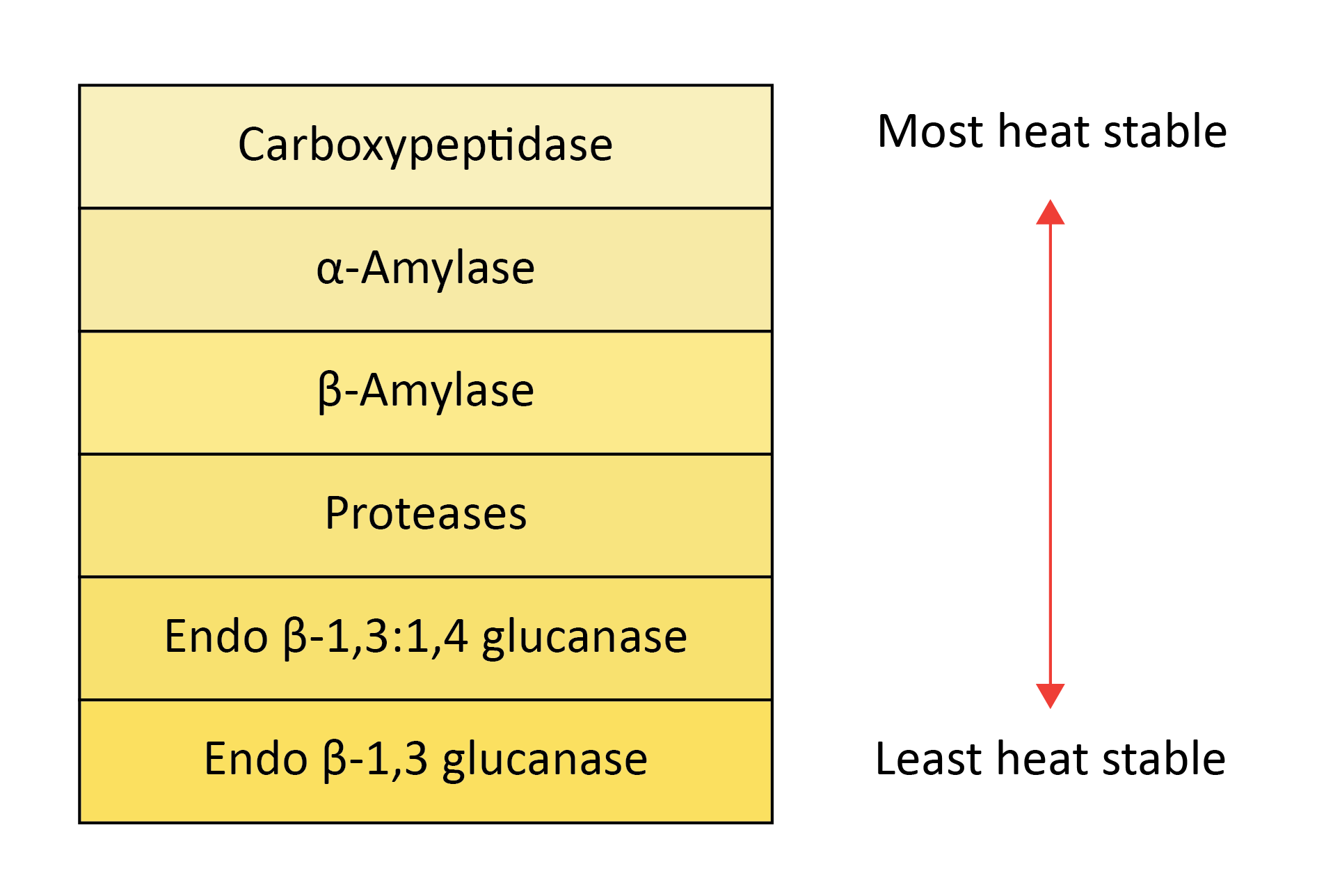
Figure: Heat stability of malt enzymes
Key point:
Low temperatures during the initial stages of kilning help preserve enzymes.
Flavour and colour formation
When sugars from starch modification and amino acids from protein modification are exposed to heat, they react to form a range of Maillard or non-enzymatic browning products. These reactions are known as the Maillard reaction.
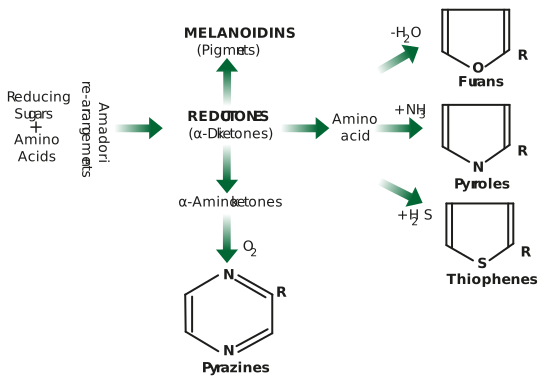
Figure: The Maillard reaction
Maillard reaction products give malt its colour and characteristic flavour. Ale malts have more intense kilning regimes than lager malts and as a result are more highly coloured and flavoured. In the figure below, we can see that specific amino acids combine with a particular sugar to produce compounds that contribute to the colour and flavour of the malt.
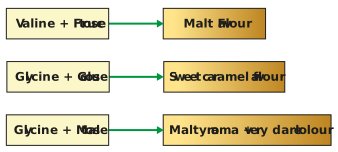
Figure: Maillard reaction products
Dimethyl Sulphide (DMS)
The conversion of the precursor S-methylmethionine (SMM) to dimethyl sulphide (DMS) is another reaction that occurs during kilning. DMS imparts a vegetable-, cabbage- or sweetcorn-like flavour to beer, which is considered undesirable in some beers.
The developing embryo forms the compound SMM during germination. When heated, SMM splits into dimethyl sulphoxide (DMSO) and free DMS. DMS evaporates easily and is removed in the exhaust air during kilning. However, not all the SMM in the malt is converted by the time the kilning operation has been completed. This is why malt analysis results show SMM levels (sometimes called DMS-p where the ‘p’ stands for precursor), rather than DMS levels. SMM levels are higher in malts that have fast, vigorous germination (for example with the use of higher germination temperatures and use of GA) and higher protein levels. The higher the kilning temperature and the longer the kilning time, the more SMM is removed. Therefore ale malts which are kilned at a higher temperature have much lower levels of SMM than lager malts, kilned at a lower temperature.
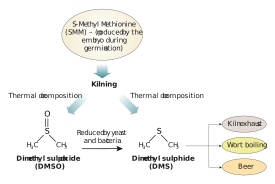
Figure: Formation of DMS
A summary of DMS in malt and beer can be found here:
Nitrosodimethylamine (NDMA)
Nitrosodimethylamine is water soluble, toxic to human organs and causes cancer. Historically, using direct-fired kilns increased the risk of NDMA formation, as the nitrogen oxides (NOx) from the fuel passed through the bed producing NDMA.
Although radiators indirectly heat the kilns nowadays, there is still a risk of NDMA in the malt due to air pollution. Only a very low level of NDMA is allowed in the malt. A level of 2.5 μg/kg is reported in some textbooks, but an industry standard is below 1 μg/kg. Many breweries set a limit of 1 μg/kg in malt specifications.
NDMA is formed when its precursor hordenine, (mostly found in the malt rootlets), reacts with NOx rich air at high temperatures. The figure below shows the formation of NDMA from hordenine. Hordenine is a dimethyl derivative of tyramine. Tyramine comes from the amino acid tyrosine which is part of barley protein.
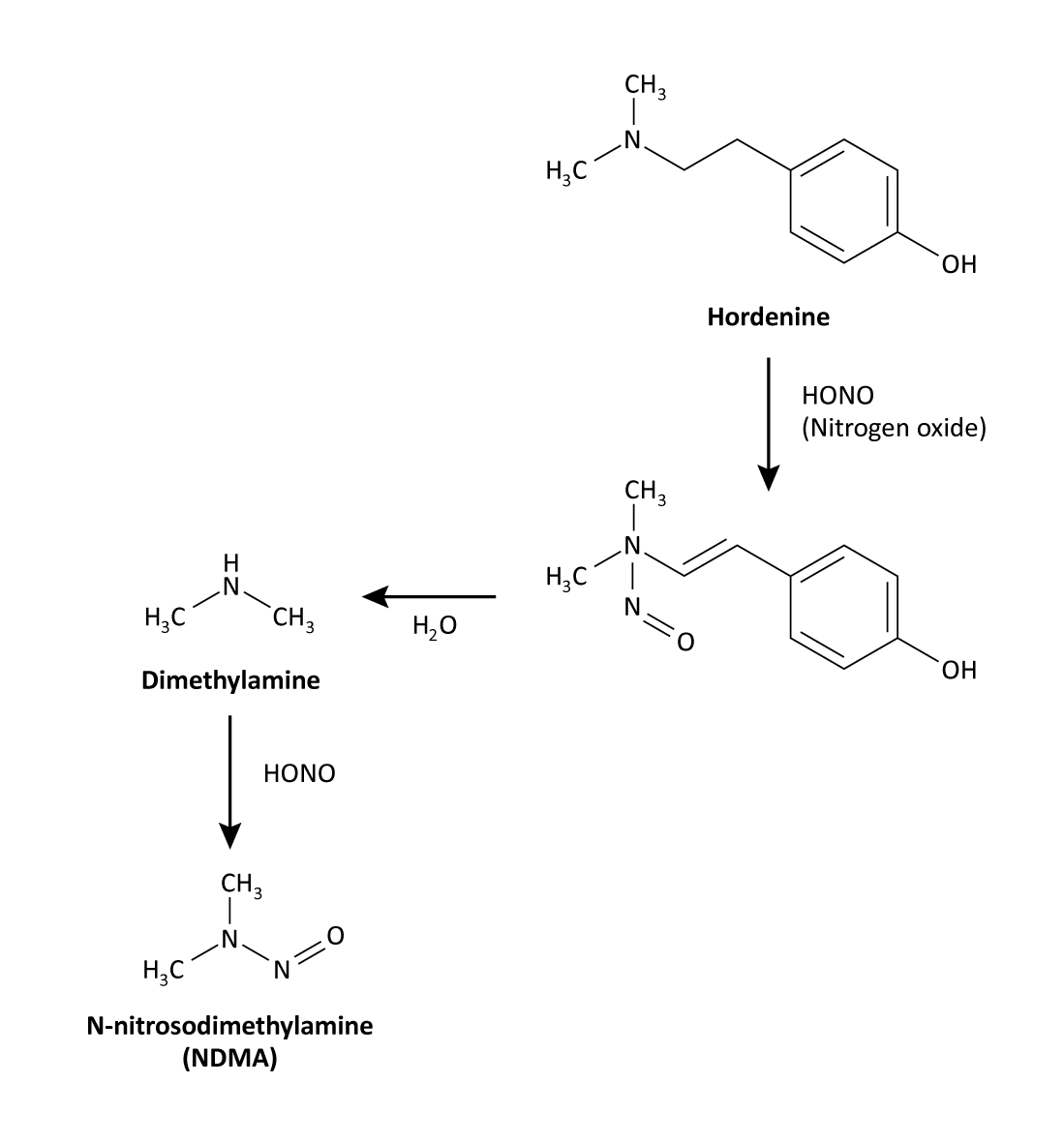
Figure: Formation of NDMA from hordenine
Control of lipoxygenase
Malt contains enzymes called lipoxygenase (LOX). LOX gives the green flavours we associate with some vegetables. In the brewing process LOX can cause beers to develop a stale cardboard-like flavour as they age. LOX can be removed by higher temperatures in kilning and some malt specifications require the malt to be tested to ensure LOX is only present below a specific level. Some barley varieties are available that cannot produce LOX and some breweries specify that these varieties are used for their malt.