
Lesson 4 - Malting Process
This lesson deals with the malting process. We investigate each stage of the malting process in detail. We describe the required physical and biochemical changes involved in the conversion of barley to malt. We also discuss the vessels used for malting and explain how they help to produce malt of optimum quality.
Factors Influencing Water Uptake in Barley Grains
Temperature
Water uptake is faster at higher temperatures. After six hours of steeping, there is not much difference between the water uptake at 10°C and that at 20°C. So, all barley in this temperature range increases in moisture content from 12% to 25%. However, after a further 14 hours of steeping, the moisture levels increase to about 36% at 20°C but only to around 30% at 10°C. The figure below shows moisture uptake at varying temperatures.
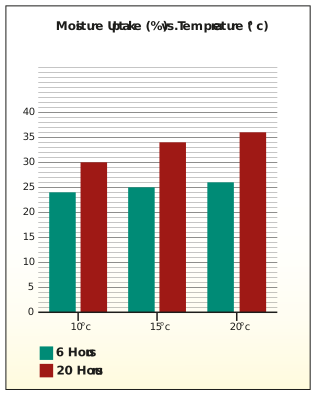
Figure: Moisture level at varying temperatures
Using higher temperature steep water to speed up grain hydration can limit the production of α-amylase.
Grain size
Smaller grains absorb water faster than larger grains. As the initial water uptake is a physical process, it makes sense that smaller grains reach higher levels of moisture faster than bigger grains. This is because you have less material to hydrate, and smaller distances for the water molecules to migrate across.
Protein content and endosperm composition
We know that protein content differs between kernels, resulting in mealy and steely grains. Steely grains draw water up more slowly as the protein slows its movement. The steely endosperm is like a stone, while the mealy endosperm is more like a bath sponge. Water enters a sponge a lot more easily than it can enter a stone! Grains with endosperms that have both mealy and steely areas are difficult to malt because steeping the grain long enough to hydrate the steely area, risks overhydrating the mealy area. These grains usually modify unevenly.
Husk integrity
Rain during a specific stage of ear filling can lead to the husk splitting due to a rapid increase in grain volume. Grains with split husks hydrate faster than those with intact husks.