
Lesson 4 - Malting Process
This lesson deals with the malting process. We investigate each stage of the malting process in detail. We describe the required physical and biochemical changes involved in the conversion of barley to malt. We also discuss the vessels used for malting and explain how they help to produce malt of optimum quality.
Physical and Chemical Changes During Germination
During germination, the enzymes break down the structures of the endosperm. They do this in a sequential manner due to the physical structure of the endosperm cells.
The pentosan layer is a porous layer which contains organic acids. This layer must be broken down by several enzymes including xylanases before the β-glucanases can begin to degrade the rest of the cell walls containing β-glucan.
β-glucan solubilase, which is present in the barley at harvest, attacks the protein links that keep the β-glucan chains rigid and insoluble. The resulting long chains of β-glucan are soluble but very viscous. The endo-β-glucanases which are present in barley in minute amounts even before germination, degrade the long, viscous chains of β-glucan to form short, non-viscous chains.
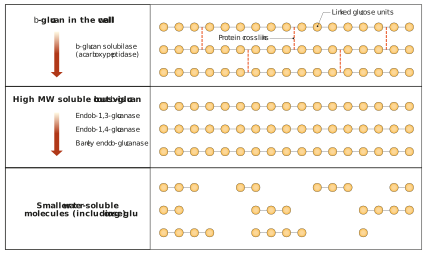
Figure: Breakdown of the β-glucan cell wall
Once the β-glucan cell wall has been opened, the proteases begin to degrade the protein matrix that surrounds and protects the starch granules. The endoproteases break down larger proteins from the inside, forming polypeptides. The exoproteases and carboxypeptidase break down these polypeptides into smaller peptides and free amino nitrogen (FAN) consisting mainly of amino acids. The following process parameters promote protease formation:
- Higher moisture content
- Lower germination temperatures
We aim to find a balance in protein breakdown, or proteolysis, as too little will result in incomplete modification and hard ends (areas of unmodified endosperm at the tip of the grain), while too much destroys the proteins needed for beer foam.
Starch breakdown in germination also requires balance. The small starch granules must be degraded otherwise they go on to form unfilterable beer haze. The large starch granules on the other hand need to be left largely intact to be converted into sugar in the mash.
Both α-amylase and β-amylase degrade starch, producing a mixture of short chain sugars (available for embryo growth) and longer chain dextrins. α-Amylase randomly breaks glucose links within the starch molecule. β-Amylase is more selective, producing two glucose units (called maltose) from the chain ends. Limit dextrinase breaks the branch points, creating shorter chains.
The combined action of the starch-degrading enzymes is shown below:
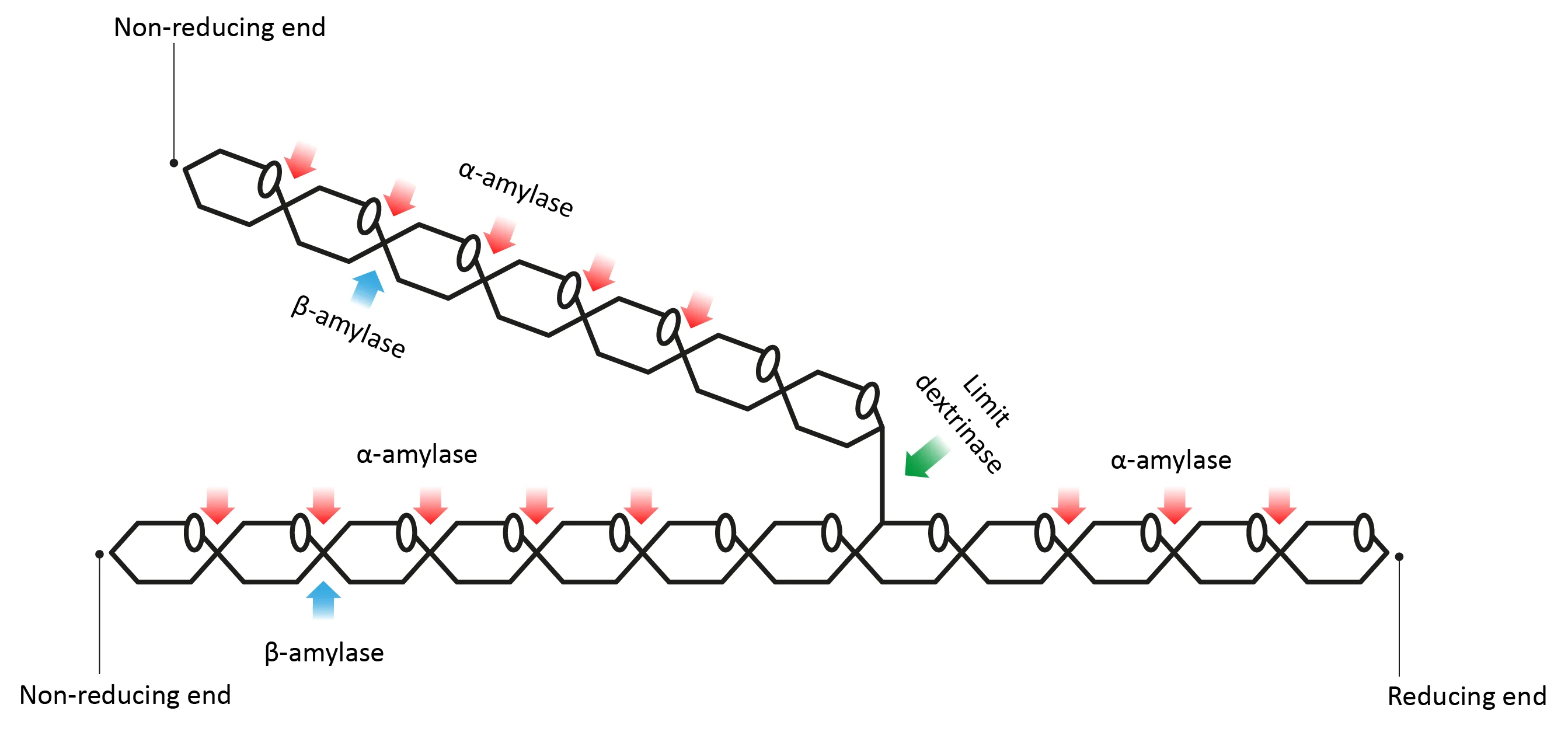
Figure: Activity of the starch-degrading enzymes
The level of α- and β-amylases depends on several factors:
- Can be determined by barley variety, but it can also be affected by climatic conditions.
- Large kernels produce more amylase enzymes than are produced by small kernels of the same variety.
- Higher moistures in green malt favour increased amylase levels.
- Cooler germination temperatures always yield higher amylase levels.
Phytase
Phytase is an enzyme that produces phosphate from the barley storage material phytic acid, which is found in the embryo and aleurone layer. The phosphate is used in cellular functions such as energy release.
Lipase
Lipases and phospholipases are active during germination as part of the growth of the barley embryo. These enzymes breakdown the lipids (fats) in the grain to produce fatty acids which are a vital source of energy for the developing embryo and are used to make new plant cells. Some fatty acids are important for yeast nutrition.
The lipoxygenase enzymes (LOX) can oxidise fatty acids in the mash. Oxidation of linoleic acid forms E-2-nonenal precursors which go on to form E-2-nonenal as beer ages. E-2-nonenal has a cardboard aroma/flavour and is a significant stale beer flavour compound.
Further reading on LOX and beer oxidation:
https://onlinelibrary.wiley.com/doi/pdf/10.1002/jib.122
To reinforce our understanding of enzyme action on the endosperm cells, here are some electron micrographs showing the cells before and after modification:
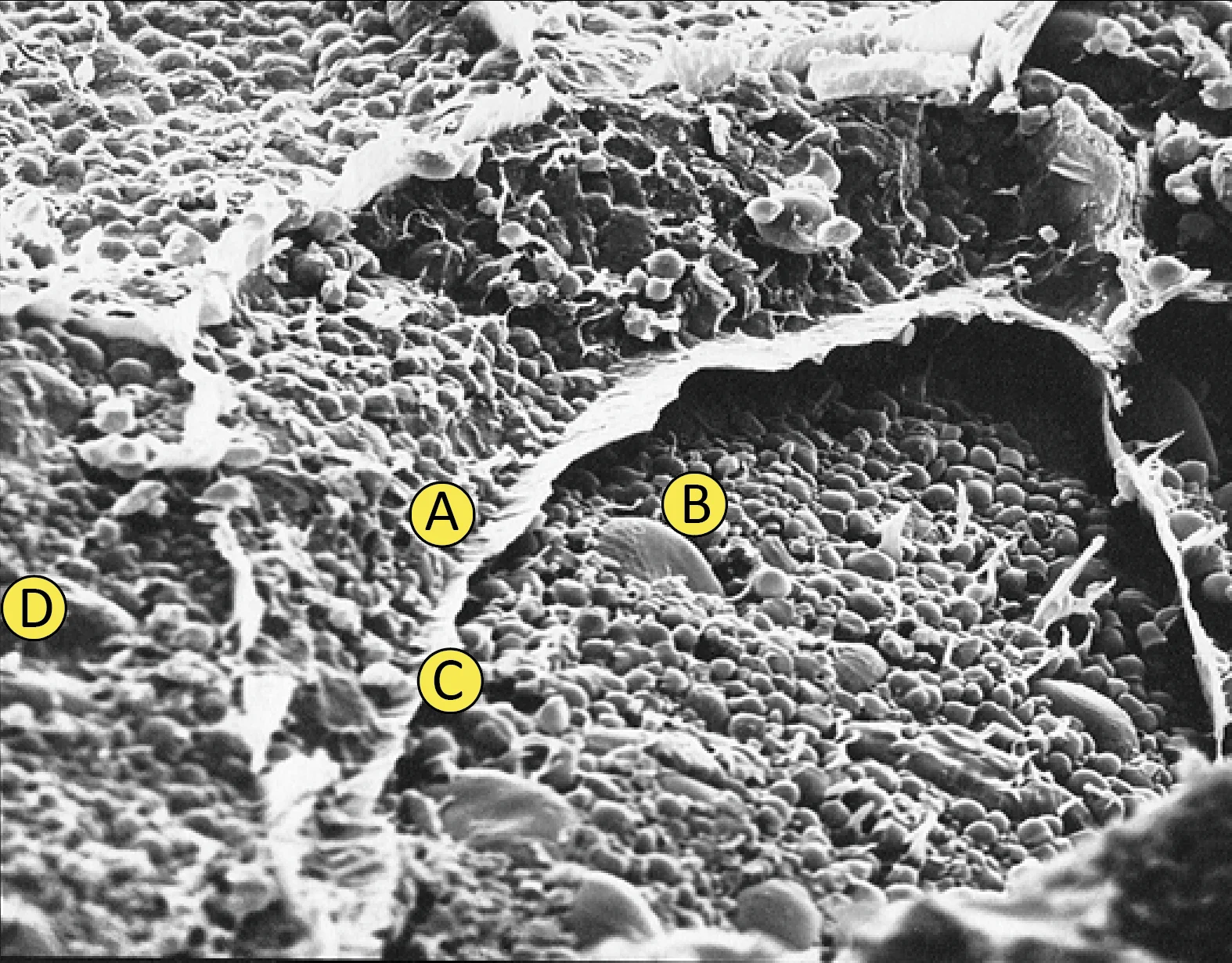
Figure: Scanning electron micrograph of barley endosperm before modification
A. Small starch granules which outnumber the large ones by about 10:1.
B. Large starch granule.
C. Interconnected cell walls surrounding the starch granules. These are mainly β-glucan.
D. Protein matrix in which the starch granules are embedded. (The protein matrix is anything inside the cell that does not look like a pebble or rock.)
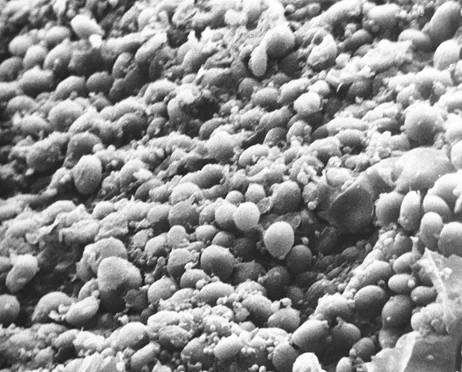
Figure: Scanning electron micrograph of a fully modified area of malt endosperm
In the above image you can see that the cell walls, protein matrix, and most of the small starch granules have been digested, leaving the large starch granules exposed and free of protein.
The degree of modification is dependent to a large extent on the density of the protein matrix. If farmers use excess fertiliser in the field, the density is high, leaving the grains hard and steely, and resistant to protein-degrading enzymes. In the images above, the grains appear to have been mealy with loosely packed protein that was easily degraded. Grains with high total nitrogen (TN) tend to be more steely than those with lower TN.
Gibberellic acid (GA)
Gibberellic acid (GA) is produced by the embryo. It stimulates enzyme production. A wide range of gibberellins are found in nature. Some maltsters use commercially produced GA in germination to improve the malting process. The figure below shows the structure of the commercially produced GA3. It is made by the fungi, Fusarium moniliforme or Gibberella fujikuroi, in a submerged fermentation or in solid-state fermentation processes.
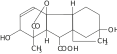
Figure: Chemical structure of gibberellic acid (GA3)
The table below shows the effect of GA on the malting process.
Table: Effect of GA on malting process
|
Properties increased by GA |
Properties decreased by GA |
|
Extract |
Germination time |
|
Soluble proteins |
|
|
Colour |
|
|
α-Amylase |
Next, we discuss germination technology.