
Lesson 4 - Wort and Beer Analysis
This lesson looks at how to analyse the composition of wort and beer. It covers the current methods for each analysis, outlining the basics of how they are undertaken. It then explains the methods and standards used to ensure that analysis is both precise and accurate. Finally, it discusses how laboratories collaborate so that proficiency levels can be determined.
Analyses Principally on Beer (Oxygen)
Oxygen can have a devastating impact on flavour stability. On the other hand, oxygen in wort can be life for yeast (newly budded yeast at least). Therefore, we need the means to measure it down to parts per billion (µg/L) level.
Dissolved oxygen (DO2) by optochemical measurement
The most modern method for DO2 analysis is optochemical oxygen measurement. The optical sensor is made up of three elements. There is a layer of polymer impregnated with a luminescent dye which is in contact with the sample to be measured. An LED illuminates the polymer through a filter which adjusts the light hitting the polymer to the required wavelength. A photodetector measures light emitted by the luminescent dye in response to the stimulation by the LED light. The components of the optical sensor are illustrated below.
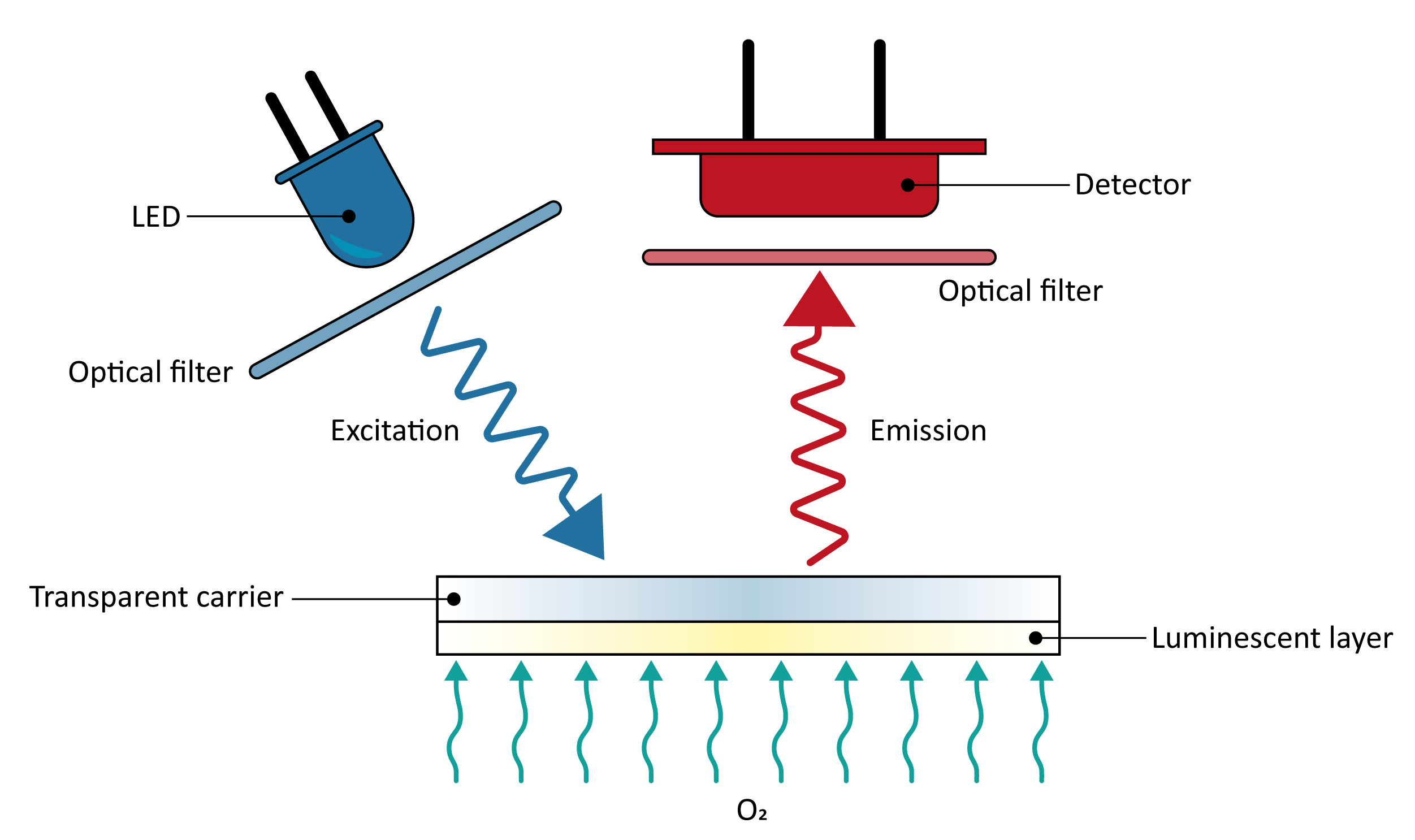
Figure: The optical oxygen sensor
The oxygen in the sample absorbs some of the energy from the luminescent layer, which reduces the amount of luminescence. As the amount of oxygen in the sample increases, the luminescence of the dye decreases, which affects the level of light measured by the photodetector. The processor in the machine uses this measurement to calculate the concentration of DO2.
The optical sensor can measure the DO2 in both liquid and gaseous samples effectively. It reads oxygen levels more rapidly than oxygen electrodes, and can be cleaned in place or autoclaved without damage. It is calibrated using saturated solutions of water.
The oxygen electrode
The oxygen electrode is also known as the Clark electrode and was developed by Leland Clark to measure oxygen in blood. Its operation is based on the reduction of molecular oxygen to hydroxyl ions under appropriate conditions. This process is shown in the equation below:

The electrode compartment is isolated from the sample by a thin membrane. The membrane is permeable to oxygen, so oxygen molecules migrate across it. Oxygen which has crossed the membrane is reduced electronically at the cathode. The number of electrons consumed in the above reaction are directly related to the concentration of oxygen in the sample so the current (flow of electrons) is measured and used to calculate the DO2 in the sample. Below is a picture of an oxygen electrode
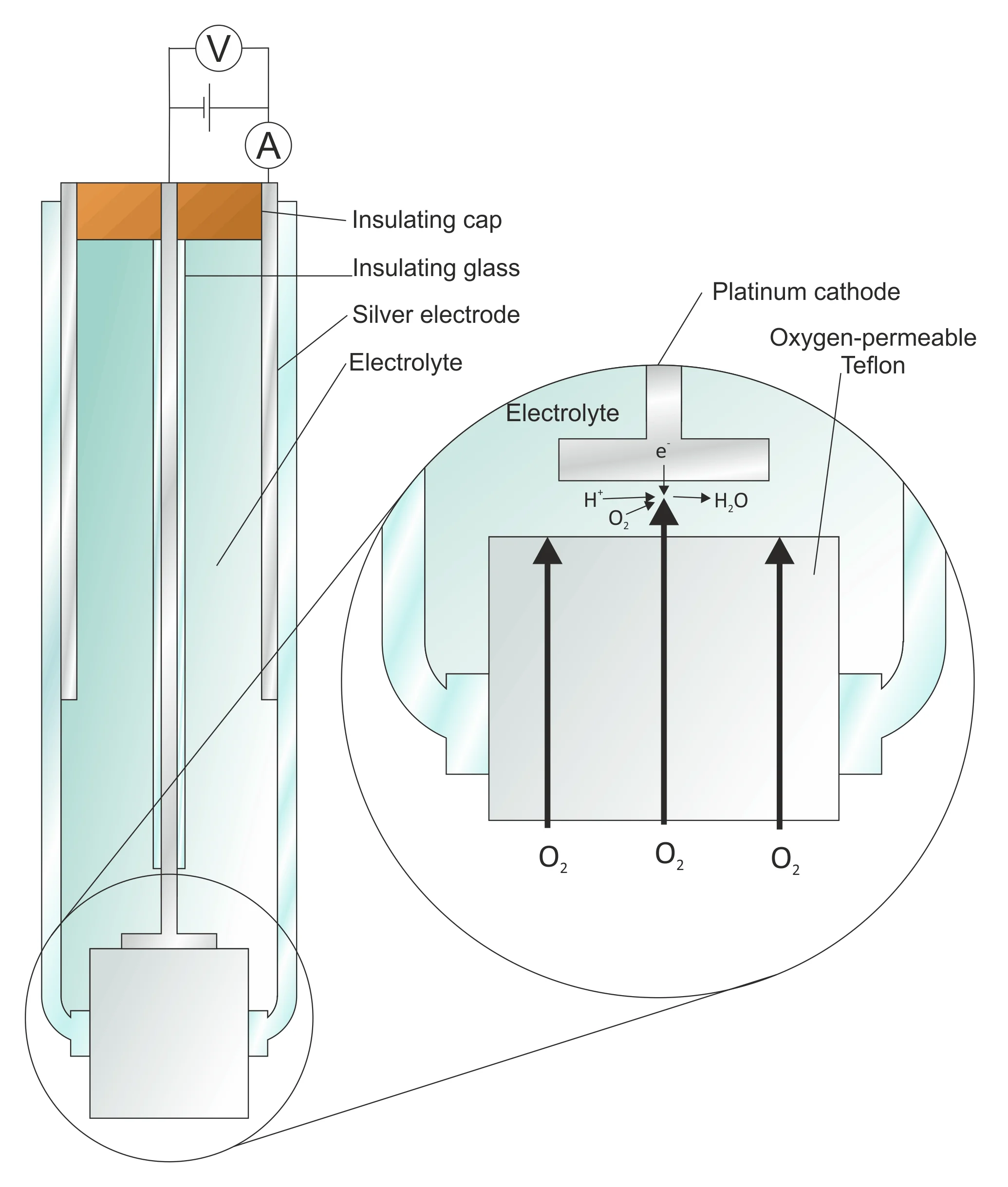
Figure: Inside an oxygen electrode
Oxygen electrodes are currently a more established technology than optical sensors. The probes are more delicate and will not tolerate repeated CIP and autoclaving. Oxygen electrodes are also more difficult to calibrate.