
Lesson 4 - Wort and Beer Analysis
This lesson looks at how to analyse the composition of wort and beer. It covers the current methods for each analysis, outlining the basics of how they are undertaken. It then explains the methods and standards used to ensure that analysis is both precise and accurate. Finally, it discusses how laboratories collaborate so that proficiency levels can be determined.
Analyses Principally on Beer (Foam)
Foam is important to the sensory appeal of beer. Two elements of foam quality are measured: stability (also called head retention) and cling. Stability relates to how quickly the head collapses and cling relates to the lacing of foam on glassware.
In the NIBEM system, a piercing device uses CO2 to push beer out of the package to a flashing device above a cuvette.
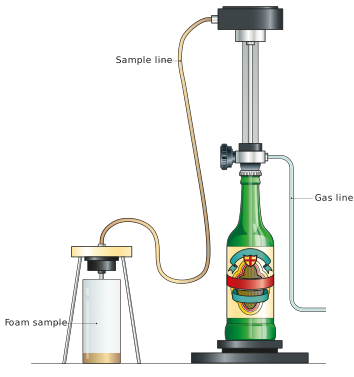
Figure: NIBEM foam – sampling, foam flashing, and measurement
The cuvette is placed in the foam stability tester. In the foam stability tester, electrodes are fixed to a rod which is moved down by a motor. If the electrodes detect foam, the rod does not move. As soon as no foam is detected the motor moves the rod down until foam is sensed by the electrodes. The time taken for the rod to move 30 mm is referred to as the NIBEM foam stability (NFS). An NFS of < 200 seconds is considered poor and > 250 seconds good. As temperature, atmospheric pressure, and humidity all affect the rate of foam collapse, modern machines measure and adjust the result accordingly.
Here is a video of the NIBEM foam stability tester in action (without the piercing device and flashing device):
There are several other methods of foam measurement. Details can be found on the following links and in the DB2 foam lesson.
http://methods.asbcnet.org/summaries/beer-22.aspx
https://brewup.eu/ebc-analytica/beer/foam-stability-of-beer-using-the-NIBEM-t-meter/9.42.1
https://www.mebak.org/img/methodensammlungen-2016/inhaltsverzeichnis-wort-beer-beer-b..pdf
Cling using NIBEM cling meter
In the NIBEM cling meter, the beer is flashed in a cuvette to produce foam. After the foam has collapsed, the glass is rotated and a scanner measures the amount of foam lacing the glass. The percentage of the glass covered by foam is calculated and this is called the cling value.
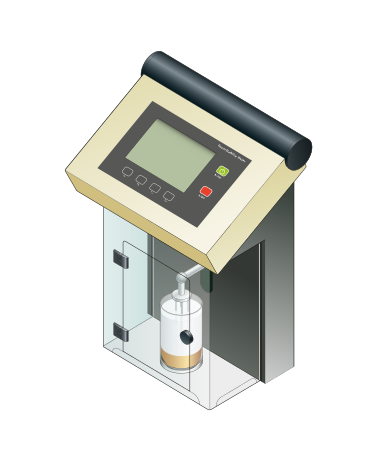
Figure: NIBEM cling meter