
Lesson 4 - Wort and Beer Analysis
This lesson looks at how to analyse the composition of wort and beer. It covers the current methods for each analysis, outlining the basics of how they are undertaken. It then explains the methods and standards used to ensure that analysis is both precise and accurate. Finally, it discusses how laboratories collaborate so that proficiency levels can be determined.
Analyses on Wort and Beer (Haze)
Haze is considered a positive attribute in some beer styles and forms of brewing and a distinctly negative aspect in others. In both cases in order to meet the needs of the consumer we need to measure haze.
We measure haze using a process called nephelometry. When light is shone through beer/wort, haze particles reflect light. By measuring the intensity of scattered light at a specific angle to the light shone into the beer/wort (incident light) we can quantify the haze (see figure below).
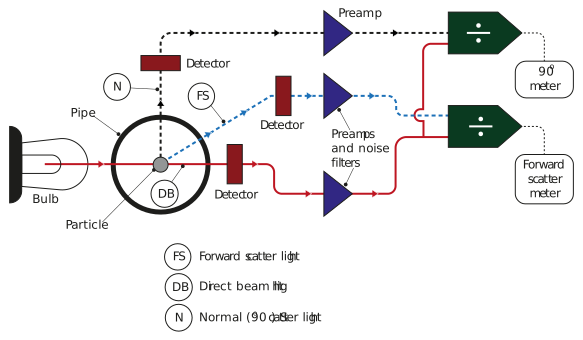
Figure: Set up of 90° and forward scatter haze meters
We use the polymer formazin as the basis of the scales for quantifying haze. The scales used relate to hazes of increasing concentrations of formazin.
ASBC haze units are Formazin Turbidity Units (FTU). EBC units are formazin haze units, and just called EBC. 1 EBC = 69 FTU.
Table: Haze descriptors at increasing haze units
|
Brilliant |
|
|
EBC |
0.0 to 0.5 |
|
ASBC |
0.0 to 34.5 |
|
Almost Brilliant |
|
|
EBC |
0.5 to 1.0 |
|
ASBC |
34.5 to 69 |
|
Very Slightly Hazy |
|
|
EBC |
1.0 to 2.0 |
|
ASBC |
69 to 138 |
|
Slightly Hazy |
|
|
EBC |
2.0 to 4.0 |
|
ASBC |
138 to 276 |
|
Hazy |
|
|
EBC |
4.0 to 8.0 |
|
ASBC |
276 to 552 |
|
Very Hazy |
|
|
EBC |
> 8.0 |
|
ASBC |
> 552 |
Measuring light scattered at 90° is good for quantifying the haze from small haze particles, while 11°, 13°, and 25° are better for larger particles like yeast cells, trub particles, and calcium oxalate crystals.
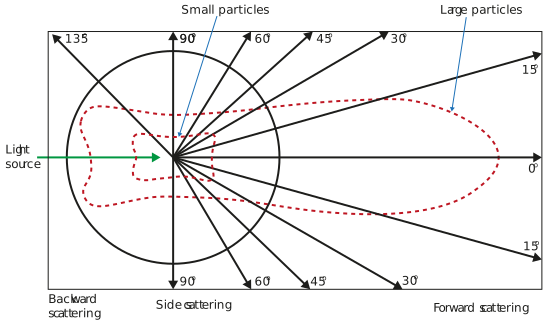
Figure: Light scattering
Modern haze meters can change the wavelength of light by the use of different filters. They can also automatically rotate samples to take multiple readings.
When taking haze readings, it is essential that the bottle or cuvette used to hold the beer in the meter is completely clean or the dirt will be read as haze. Some haze meters can measure haze directly from the bottle into which the beer has been packaged which saves time and prevents sample preparation affecting the result.
We have now covered some of the analyses undertaken on wort and beer. Next we look at analyses undertaken on only beer.