
Lesson 2 - Malt Intake, Handling, and Storage
This lesson details the principles and operations of malt intake, handling, and storage. It explains how and why malt is checked on delivery to the brewery. It also covers how it is taken in, processed, and stored, as well as how safety is maintained during malt handling.
Speciality Malts
Speciality malt is typically used in much smaller quantities than base malts. Some varieties are also very brittle. We therefore tend to handle it differently and minimise both the distance it is moved and its impacts on the grains.
Most speciality malts are very high in colour. Therefore, it is important to handle them separately to pale malts. Where they are used as part of a recipe, they are processed first so the pale malt can flush any residues out and prevent contaminating another brew.
Where use is quite high, they are stored in dedicated silos. However, most speciality malts are delivered in either one or half tonne bulk bags, (also known as totes or super sacks) or 25 kg bags. The figure below shows a system for adding malt from bulk bags.
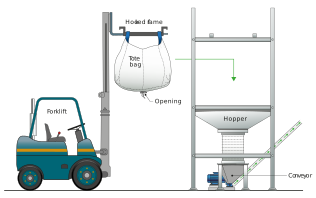
Figure: Using bulk bags
25 kg sacks are usually handled manually and are tipped into a hopper close to the mill. Storage of both bulk bags and sacks is usually on pallets. These must be stored away from the wall to reduce the likelihood of rodent infestation, as shown in the figure below.
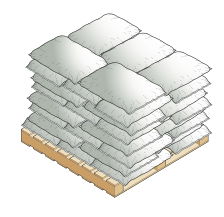
Figure: Sack storage
Black malt and roasted barley are particularly brittle and are therefore unsuitable for hammer milling. Some caramel and crystal malts are also not suited to hammer milling because they can stick to the mill surfaces.