
Lesson 2 - Malt Intake, Handling, and Storage
This lesson details the principles and operations of malt intake, handling, and storage. It explains how and why malt is checked on delivery to the brewery. It also covers how it is taken in, processed, and stored, as well as how safety is maintained during malt handling.
Working Safely with Dust
Every time grain is moved, dust is generated. Malt handling produces around 0.4-1.4 kg of dust per 100 kg malt. Dust is dangerous stuff. It can cause harm to our lungs and can cause catastrophic explosions! In this section, we discuss how dust is removed from grain handling equipment and what we need to do to avoid dust explosions.
Dust explosions, although rare, can and do kill. In 2011, a grain elevator in Kansas exploded and killed six people. In 2015, one person was killed and four injured in Ontario, Canada when a dust collection system exploded. Grain handling systems have all the elements required to cause an explosion, as shown in the diagram below.
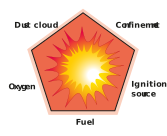
Figure: Factors involved in dust explosions
So how do we manage the risk of dust explosion? We can approach this in three ways:
1. Prevent or stop the spark and ignition
Grain cleaners and magnets remove objects which, when in contact with moving parts like conveyor flights, will cause a spark. Modern grain handling equipment can also have spark arrestors which catch and smother any sparks that do form; this prevents them from igniting the dust. Ensuring all the equipment in the grain handling system is electrically earthed also helps to prevent sparks. On bucket elevators, rotation sensors and speed detectors are fitted to the bottom pulley to detect any belt slippage, which can cause heat and ignite the dust. The system is shut down if the belt slips. Spark detection systems may also be employed, which will stop the system if sparks are detected.
It should go without saying, but activities like welding, soldering, and smoking should not be permitted anywhere where there is chance of an explosive atmosphere!
2. Control the dust
Modern grain handling systems have dust aspiration systems. These keep the level of dust to a minimum by removing it as it is being produced.
Aspiration systems maintain a negative pressure in the malt handling system so minimise dust leaks from joints.
The systems work by sucking dust from the air and passing it through cyclones which empty into waste sacks (rather like a domestic cyclone vacuum cleaner) and filters. Cyclones work by causing the dusty air to spin. As the dust particles are heavier than air, they are thrown to the outside of the cyclone and removed. The figure below shows a cyclone.
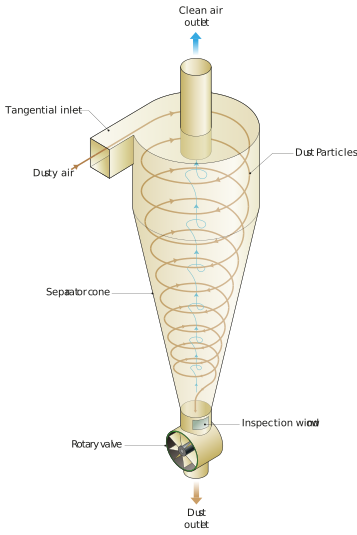
Figure: Cyclone
Where a cyclone is not used, fans draw dusty air from the grain handling plant and pass it to filters. The filters remove the dust from the air, and a cleaning system then uses compressed air to remove the accumulated dust from the filters and into a storage bin for disposal. The figures below show a dust filter and the filter cartridge being cleaned using a blast of compressed air.
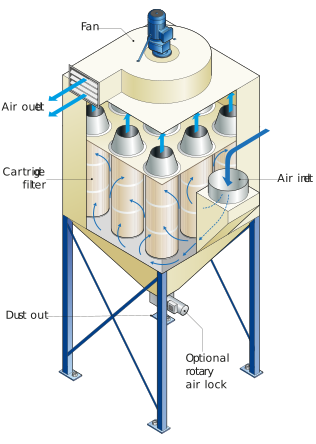
Figure: Dust filter
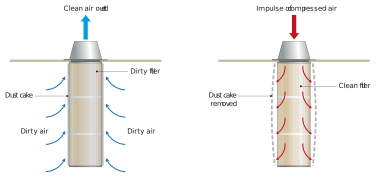
Figure: Dust filter cartridge cleaning
Some breweries add some of the dust collected at particular points in the malt handling system back to the grist after milling to reduce malt losses.
All types of aspiration system must be properly maintained and regularly inspected to ensure they are effective. Good standards of housekeeping are also essential. Accumulations of dust are particularly dangerous as they provide fuel for secondary explosions. Some aspiration systems have hoses attached that can be used like vacuum cleaners to remove dust from surfaces in the malt storage area.
3. Limit the explosion
Even the best-designed grain handling systems have a risk of explosion. They need to be fitted with explosion relieving vents which take the energy out of the explosion before it gets a chance to spread and increase in severity. These need to be linked to the system controlling the operation, so when one is opened, the system is immediately shut down. Some systems have explosion suppression systems that use inert gas to starve any ignitions of oxygen, stopping the explosion from developing. Rotary valves, which rapidly shut and isolate the explosion, can also be used.
In Europe, the ATEX directive covers explosive atmospheres and sets out the kind of equipment and activities allowed in areas where the risk of explosions exists. Qualified professionals assess areas where there is a risk of explosions and categorise them using the following criteria:
-
Zone 20 – a place in which an explosive atmosphere (in the form of a cloud of combustible dust in air) is present continuously, or for long periods, or frequently.
-
Zone 21 – a place in which an explosive atmosphere (in the form of a cloud of combustible dust in air) is likely to occasionally occur in normal operation.
-
Zone 22 – a place in which an explosive atmosphere (in the form of a cloud of combustible dust in air) is not likely to occur in normal operation. However, if it does occur, it will persist for a short period only.
Grain handling equipment needs to be designed to provide the highest ATEX zone possible. Any motors or switches on equipment need to be ATEX rated for the zone as classified. As do the tools and practices used when maintaining the equipment. Below are the categories of equipment for each type of ATEX zone.
-
Zone 20 - Category 1 equipment
-
Zone 21 - Category 2 equipment
-
Zone 22 - Category 3 equipment
The figure below shows an ATEX label for a piece of work equipment. The D stands for dust.
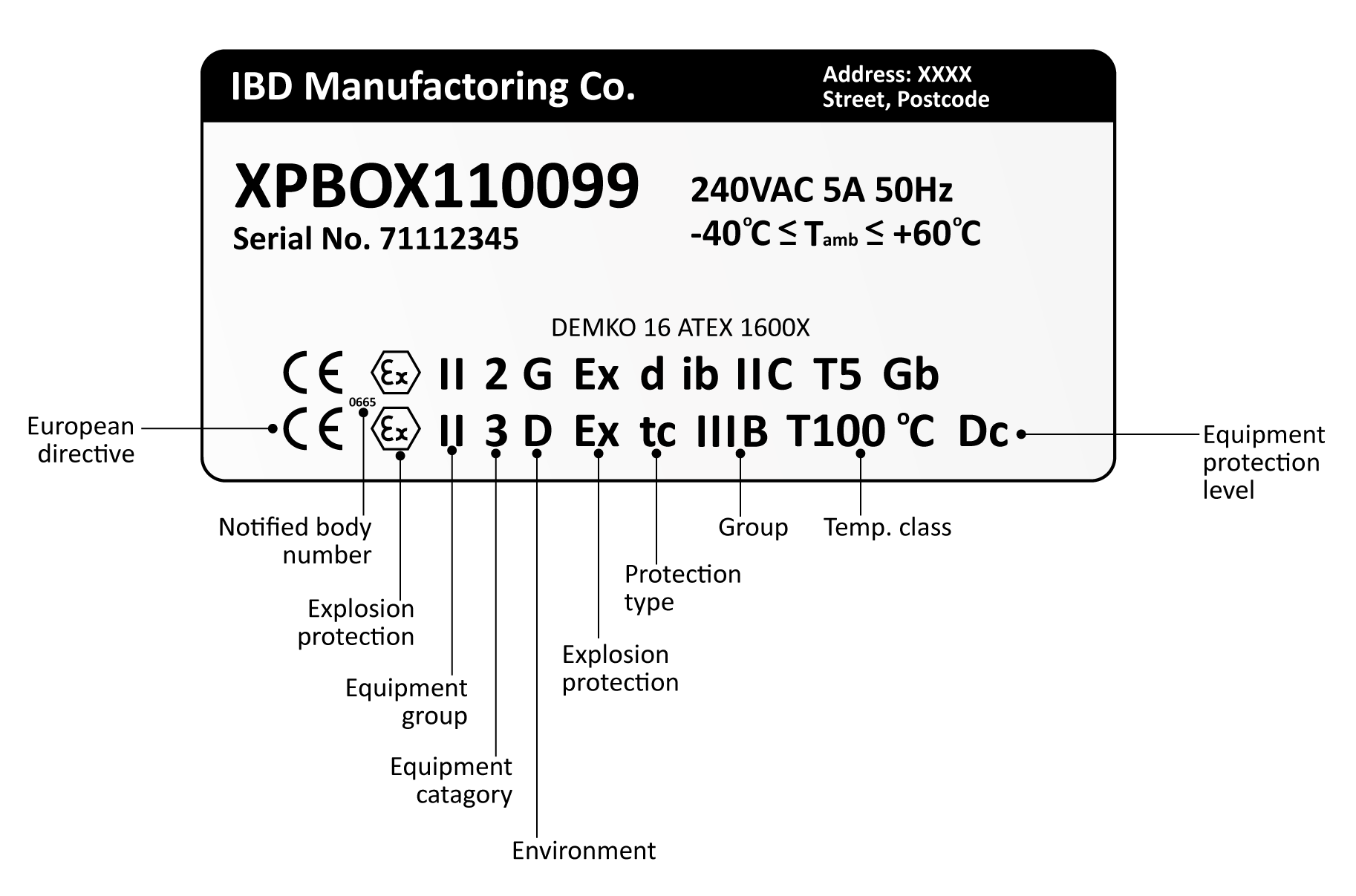
Figure ATEX label on equipment
The whole grain handling system should be subject to regular maintenance and formal inspection to assess the level of risk and effectiveness of controls.
Dust as a respiratory hazard
Dust is a respiratory sensitiser that can trigger asthma attacks and long-term exposure can lead to farmer’s lung and alveolitis. It can even cause contact dermatitis (chronic skin inflammation) in sensitive individuals. The means of dust control we detailed above can help to protect against the exposure to dust, but the most effective control of the hazard is to keep people out of the malt handling area. Staff who do need to work in areas where there is a risk of exposure to dust must be protected with appropriate personal protective equipment (PPE). The PPE must be designed specifically for the hazard and must fit the user. It must also be inspected before use to ensure it is clean and undamaged. It is good practice to carryout regular health screening that includes lung function and skin condition checks.