
Lesson 2 - Malt Intake, Handling, and Storage
This lesson details the principles and operations of malt intake, handling, and storage. It explains how and why malt is checked on delivery to the brewery. It also covers how it is taken in, processed, and stored, as well as how safety is maintained during malt handling.
Intake Tests
Unloading a truck full of barley or a load of malt infested with insects is a very expensive mistake! Intake tests are designed to help ensure that we unload what we have ordered, not just what has arrived. Let’s find out more!
Sampling
Before anything is done, the load is visually inspected for signs that something has gone wrong in transit, e.g. that a cover has been damaged or the inside of the transport looks dirty. There is little point in sampling a load that is clearly wet or has evidence of infestation, like dead birds or very happy looking rats.
When checking/testing/analysing anything in the brewing process, the sample you take must be representative of the whole batch you are sampling. As we can imagine, obtaining a representative sample from a 25 kg sack is a lot easier than from a 200 t ship. A common method in larger breweries is to use an auto sampler. Here, a sampling probe is plunged into the grain at several points, and a sample is withdrawn. The individual samples are combined to create a representative composite sample. Some smaller breweries may take these samples from the truck manually but this can be hazardous due to the heights involved.
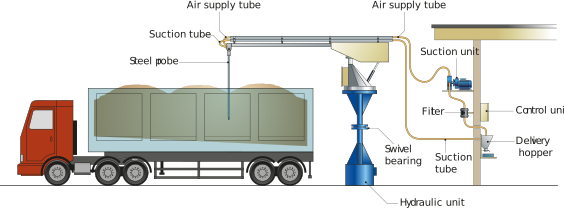
Figure: Automated truck sampling system
To produce the final sample, a common sampling technique for 30 t truckloads is to take eight subsamples in a domino pattern. Each set of subsamples is mixed, ensuring that every portion removed from the sample for analysis is representative of the whole batch. This is the International Organisation for Standardisation (ISO) recommended method for truck sampling and many large breweries will use this as the basis of their standard method.
Sampling sacks is less common, but where it is undertaken, a sack sampler like the one in the figure below is used.
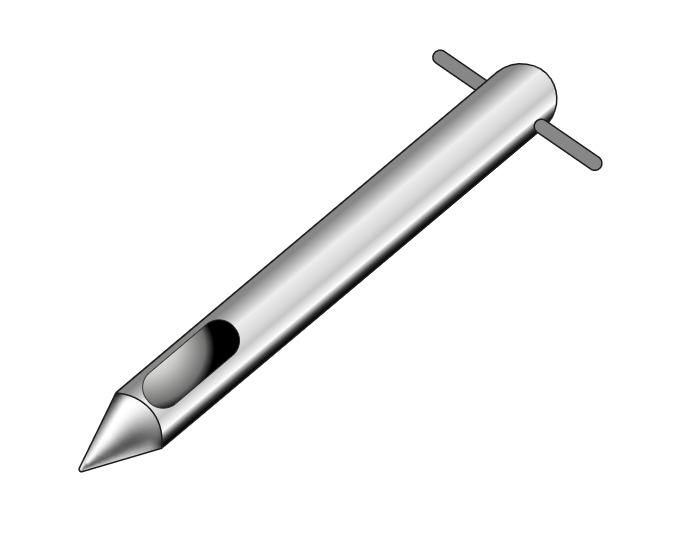
Figure: Sack sampler
For the purposes of physical and organoleptic (sensory) analysis, a single grab sample is often used. This can be withdrawn from the load using a device which is a longer version of the bag sampler. This is shown in the figure below.
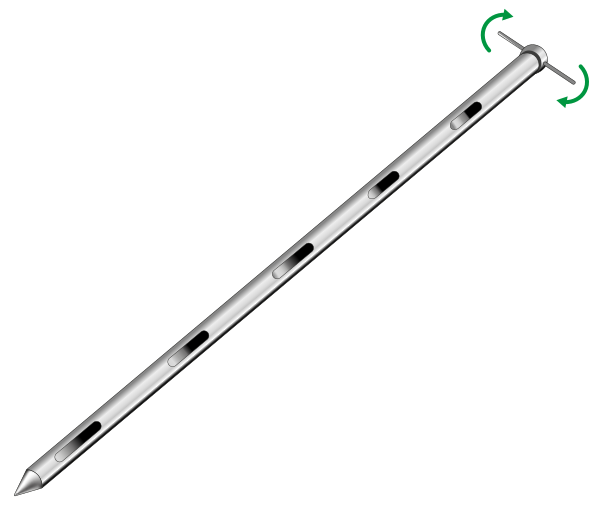
Figure: Malt grab sampler
These will give you a snapshot of the load rather than a full picture.
Samples are analysed in three ways. These are:
-
Physical and organoleptic analysis
-
Rapid testing
-
Laboratory testing
We will find out more about each next.