
Lesson 6 - Electricity
In this lesson we take a closer look at electricity from a utilities perspective. We will review the basics of electricity and consider the different forms (direct current and alternating current, single phase, and three phase) and voltages. The basic reticulation systems within the brewery will also be covered
Electrical Safety
The dangers of electricity cannot be overstated. Earthing, grounding, and overload protection all form important components that protect equipment and the environment and keep people from harm.
Before we continue, we must emphasise that only correctly qualified and certified people should work on electrical equipment. Higher voltages require even greater care.
Earth leakage
Electrical earthing refers to the discharge of electrical energy directly to the earth by using a low resistance cable.
So why is this necessary? Just like a roof can become leaky due to damage, so can electrical equipment. This means that the current from the equipment can leak into the body of the equipment. This is dangerous as it can cause serious injury or death. It can also cause damage to the electrical equipment and even start a fire. If the electrical energy leaks and a person touches it, the energy will run through them and this will result in an electrical shock and possibly injury or death. The figure below shows what can happen with and without earthing.
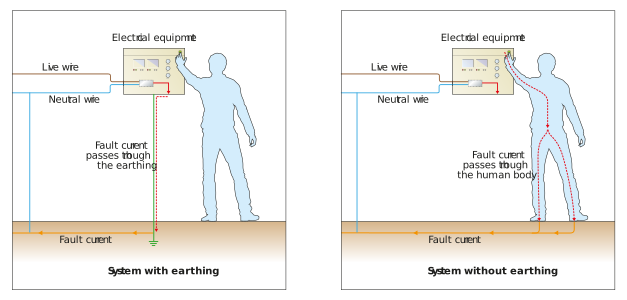
Figure: System with and without earthing
It is important to distinguish between earthing and grounding, as these terms mean very different things. Earthing means the equipment (the non-current-carrying components) is connected to the earth. With grounding, the wiring (the current-carrying components) is connected to the earth.
The figure below illustrates the difference between earthing and grounding.
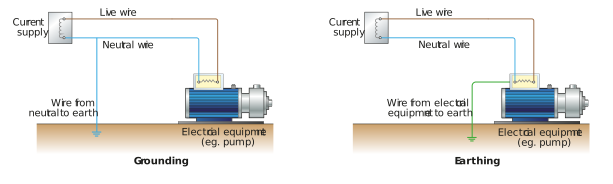
Figure: The difference between earthing and grounding
Grounding is designed to protect the equipment itself, whilst earthing is designed to prevent unsafe conditions in the environment.
When leakage occurs, the system is also protected by earth leakage circuit breakers.
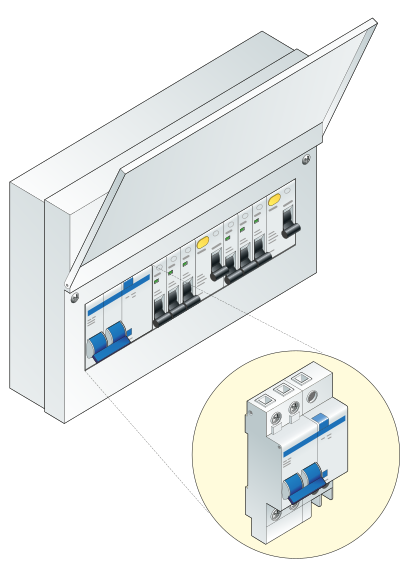
Figure: Typical earth leakage circuit breaker
As soon as voltage (or in some cases a current) is detected on the earthing circuit, circuit breakers will ‘trip’ or switch. This turns the power off and protects the system. The figure below is an indication of how they are wired.
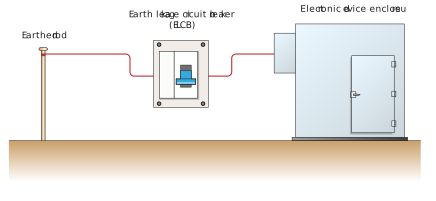
Figure: Wiring of an earth leakage circuit breaker
More recent ELCB installations use residual-current devices (RCDs) which detect current leakage instead of voltage leakage.
For more information, follow the link below.
Now we have covered the basics of earth leakage, we will move on to look at overload protection.