
Lesson 6 - Electricity
In this lesson we take a closer look at electricity from a utilities perspective. We will review the basics of electricity and consider the different forms (direct current and alternating current, single phase, and three phase) and voltages. The basic reticulation systems within the brewery will also be covered
Internal Power Distribution
How power is distributed within a brewery needs to be carefully designed.
Two factors are involved. Firstly, infrastructure costs must be kept as low as possible. Secondly, distribution must be done in a way that ensures each section of the brewery can be separated. This is important to ensure that you do not have to shut down the entire plant to work on one area, and it allows for power consumption to be measured for each piece of plant.
The higher the voltage, the lower the current has to be for the same amount of power. This means that the cables can be relatively smaller. The table below shows typical values for different cable thicknesses.
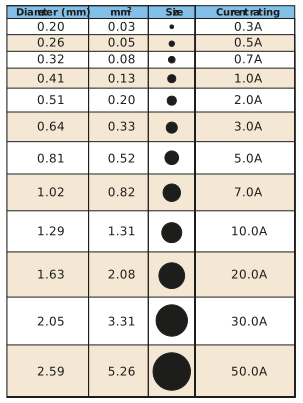
Figure: Cable thickness vs current rating
Power is often supplied off the grid at higher voltages such as 11 kV or 5.5 kV. This may be different in different countries, but the principles remain the same. This power is then brought into the brewery and transformed to the voltage required, usually in the range of 380-420 V for three-phase power. Single-phase power can then be supplied at 220-240 V for offices, laboratories, lighting, and other places where single-phase power is required.
Brewery layout is often done in a way that ensures that the biggest power users are closest to the transformer. This saves on cable length and cost.
Another factor to consider is that with the move towards self-generation of power you may need to use solar panels or generators. Here the layout could also play a role.
Lastly, in some situations back-up power generation may be required, but it may not be feasible to have generation capable of running the entire plant. The ability to supply certain sections only can be facilitated by careful design of the layout.
An important consideration is that not all equipment is used at the same time. This brings us to the concept of maximum demand.