
Lesson 2 - Environmental Sustainability
In this lesson we will discuss key ways to understand and improve the sustainability of brewery operations. This will include understanding the global context for sustainability, the key environmental sustainability impacts of producing beer and opportunities for improving the sustainability of beer and brewing operations.
Waste Reduction
The same mindset can be applied to waste reduction as we have already looked at for energy and water.
Measure the waste properly
-
How much is being disposed of?
-
Where is it being created?
-
What is it costing?
-
-
This may be the direct disposal costs, but could also include costs further up steam, such as material costs. These can all add up to help create a case for change to eliminate waste generation.
-
Develop KPIs
Develop KPIs for waste and recycling that encourage the correct behaviour. These may include KPIs listed in the table below.
Table: KPIs that can be used in waste management and improvement
|
Name |
Description |
KPI |
|
Total waste |
How much waste is disposed of over a given period |
t / time |
|
Recycling rate |
Percentage of total waste disposed that is recycled |
% |
|
Waste efficiency |
Amount of waste disposed of per unit of production |
kg / hL |
|
Waste costs |
Total cost of waste for a given period (this could be only disposal costs, or also include the cost of waste materials or product) |
$ |
|
Waste cost efficiency |
Amount of cost of waste per unit of production |
$/hL |
Set goals and targets for waste reduction
-
Develop long-term goals and ambitions on waste and recycling
-
Develop shorter term targets that support the journey to get to the long-term goal
Investigate improvement projects
-
Focus action on the highest waste areas
-
Investigate root causes of waste generation
-
Apply the waste hierarchy to develop the most environmentally beneficial improvement project
Develop a culture of waste prevention
-
Encourage senior management to lead the charge
-
Engage all employees to practice waste reduction and recycling
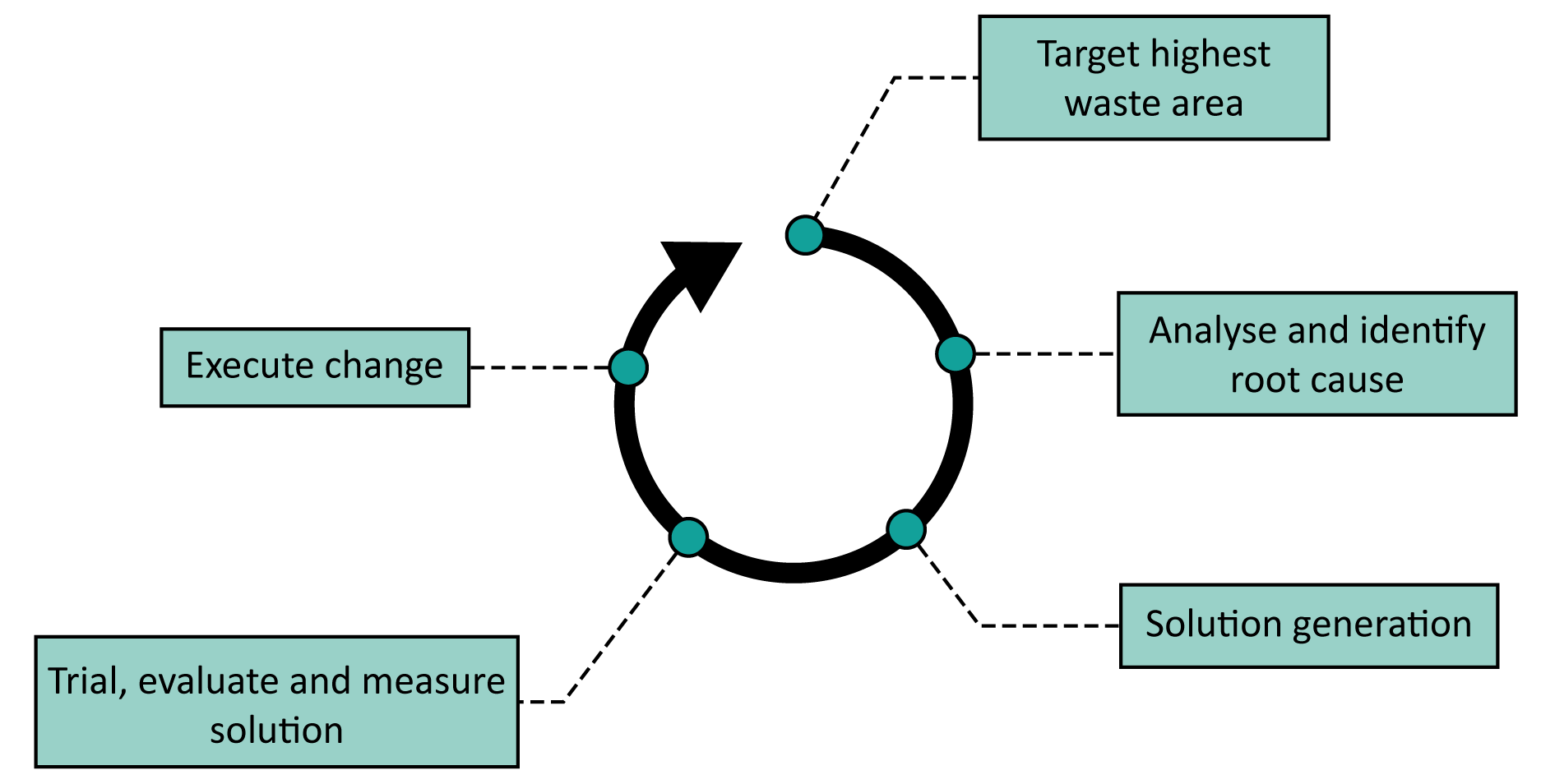
Figure: Waste reduction is often an iterative process that follows these steps
The best way to manage waste is to not create it in the first place!