
Lesson 2 - Environmental Sustainability
In this lesson we will discuss key ways to understand and improve the sustainability of brewery operations. This will include understanding the global context for sustainability, the key environmental sustainability impacts of producing beer and opportunities for improving the sustainability of beer and brewing operations.
Understanding our Watershed Context
A watershed can be defined as the region draining into a river, river system, or other body of water.
Breweries are often amongst the largest single water users in a watershed. We can have a large impact, and we have the responsibility to look outside of the brewery walls to understand the watershed we are operating in, to understand the effect of the water we are using or if there are risks to the long-term availability of water.
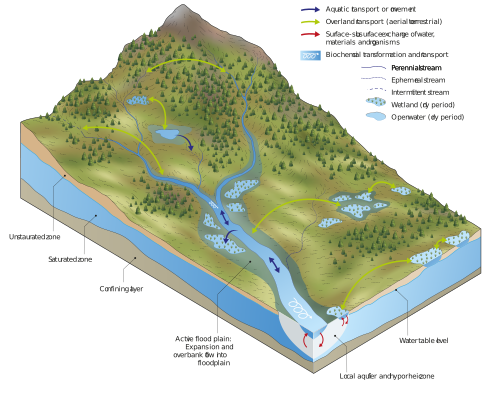
Figure: Looking outside the brewery walls at the wider watershed can be important
When we understand the state of the watershed we are in, it provides a much better position to choose the right actions to reduce our site’s impact. We may want to choose to take action inside our facilities, such as reducing total water use, being more efficient or improving waste water treatment. It may be necessary to take action outside of the brewery through watershed or community actions that support the security and sustainability of the local watershed and the surrounding community.
One litre of water consumed in a watershed that is under high water stress will have greater impact on the environment than a litre consumed where water is abundant.
We can find out more information about the health of the environment and availability of water in our watersheds through municipal water companies and local environment authorities.
The kind of questions that are useful to ask include:
-
How much water is available?
-
How big is our brewery compared to other users?
-
Is the watershed healthy or very polluted?
-
Is the watershed going to be affected by climate change in the future?
-
Is local water demand going to increase or decrease in the future?
The WWF’s (World Wide Fund for Nature) Water Risk Filter is a useful resource to find out more about water risks and how to respond to them: