
Lesson 2 - Environmental Sustainability
In this lesson we will discuss key ways to understand and improve the sustainability of brewery operations. This will include understanding the global context for sustainability, the key environmental sustainability impacts of producing beer and opportunities for improving the sustainability of beer and brewing operations.
Waste Management Principals
Where waste disposal is controlled by taxation, levy or cost, systems to monitor waste are required. Information recorded would normally include:
-
Quantity
-
Nature
-
Origin (where relevant)
-
Destination
-
Mode of transport
-
Treatment method
Waste storage and segregation
It is best practice, where possible:
-
Wastes are stored as close as possible to the point of generation
-
Waste storage areas are clearly marked
-
Waste bins are appropriate for duty and stored on hard standing areas
-
Wastes are segregated wherever possible to maximise the opportunity to reuse or recycle
From time to time ‘special’ wastes, such as surplus chemicals, or flammable wastes, may arise which have particular storage requirements. In such cases, some or all the techniques listed below may be applied to minimise potential environmental impacts:
-
The storage area is covered
-
The storage area is fully enclosed (to contain spillage)
-
There is protection against flood or fire-fighting water ingress
-
There is an air extraction system
-
Drainage liquids are contained, treated and tested before release
-
There is fire protection
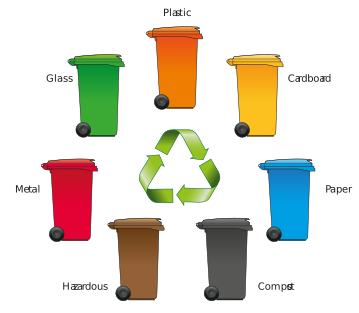
Figure: Typical waste segregation