
Lesson 6 - Sensory Analysis
This lesson deals with the sensory analysis of beer. It details how to set up the elements of a sensory panel, such as panel selection, training, and the design of the sensory facilities, and then covers how to run the panel and collect the results. It discusses the various types of sensory test and their benefits before going on to cover the use of statistics to convert sensory data into information about the sensory quality of beer. Finally, it looks at the presentation of results from sensory tests and lists key flavour compounds in beer.
Duo-Trio test
The Duo-Trio is similar to the Triangle test in that there are three samples to compare. It helps to establish if changes to the production process or ingredients has led to changes in the finished beer.
In the Duo-Trio test a reference sample is presented first and followed by two other samples, one of which is the same as the reference. The assessors are then asked to identify which of the samples is most similar (not identical) to the reference beer.
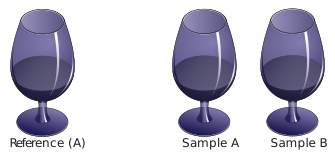
Figure: Glasses for Duo-Trio test
The Duo-Trio test is statistically less efficient than the Triangle test because the probability of getting the right answer by chance is 1 in 2.
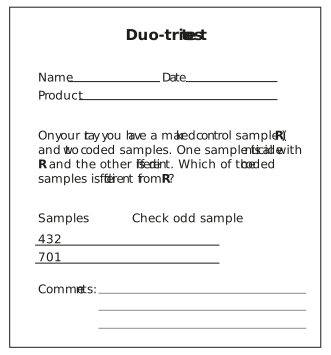
Figure: Duo-Trio test form
The test is particularly useful if the reference beer is the brewery’s main brand and the panel members are very familiar with it.