
Lesson 6 - Sensory Analysis
This lesson deals with the sensory analysis of beer. It details how to set up the elements of a sensory panel, such as panel selection, training, and the design of the sensory facilities, and then covers how to run the panel and collect the results. It discusses the various types of sensory test and their benefits before going on to cover the use of statistics to convert sensory data into information about the sensory quality of beer. Finally, it looks at the presentation of results from sensory tests and lists key flavour compounds in beer.
Paired comparison test
The paired comparison test, or hall test (because it is often used in large halls for consumer research), is a simple comparison of two samples that we use to determine the following:
-
If there is a difference between the two, in terms of the presence of a specified attribute
-
If one sample is preferred over the other
We undertake the test by presenting the assessor with two glasses, each containing a different beer. We then ask them to assess if the beers are different and, if so, which has a higher level of a specific attribute, say bitterness. Alternatively, the assessor can be left to suggest what the attribute responsible for the difference is. We also use the test in consumer trials to establish which sample is preferred. As with the Triangle test, we need to present the samples to the assessors randomly to avoid bias.
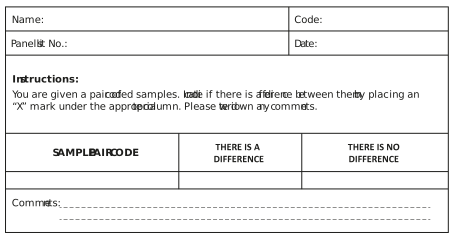
Figure: Paired comparison test form
In the consumer-trial version, groups of assessors in two geographically different locations are required to undertake the test. A minimum number of 300 assessors is typical. We select assessors who fit the demographic of the target market to avoid canvassing the opinion of people who do not consume/like the product in question. When used in the brewery, the number of assessors required is lower with only 20 trained assessors required.
In sensory analysis where preference is evaluated, the tests are often termed as hedonic tests. The word hedonic means relating to pleasure, so hedonic tests gauge the amount of pleasure the assessors derive from tasting the beer.