
Lesson 6 - Sensory Analysis
This lesson deals with the sensory analysis of beer. It details how to set up the elements of a sensory panel, such as panel selection, training, and the design of the sensory facilities, and then covers how to run the panel and collect the results. It discusses the various types of sensory test and their benefits before going on to cover the use of statistics to convert sensory data into information about the sensory quality of beer. Finally, it looks at the presentation of results from sensory tests and lists key flavour compounds in beer.
The Tasting Process
Our senses of taste and smell are influenced by our environment. For example, we may love a particular drink on holiday but find the taste disappointing when back home. The purpose of our management of the tasting process is to control the environment and minimise its influence over the testers’ senses.
Design of the tasting room
A typical tasting suite comprises the following elements:
-
Testing area, in which work may be carried out individually in testing booths and in groups
-
Sample preparation area
-
Office
-
Cloakroom/Restroom/Toilets
The figure below depicts the business end of a standard sensory suite
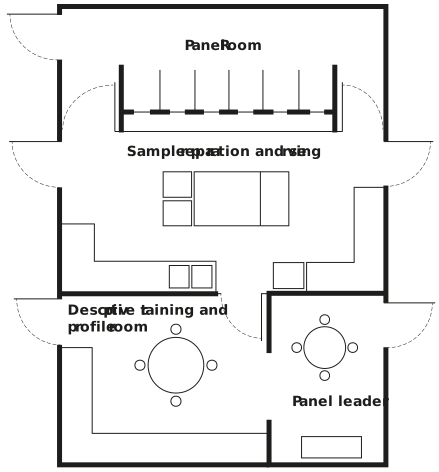
Figure: The tasting room
The environment of the tasting room is controlled to ensure the assessors are able to concentrate and bias is not introduced. The facilities are designed to:
-
Separate the assessor from the samples as they are prepared.
-
Ensure constant temperature and humidity.
-
Control odours by passing air through a carbon filter.
-
Prevent odours by using odour free construction and decoration materials.
-
Control noise levels by segregation and soundproofing.
-
Control visual influences by using neutral (light grey) decoration and lighting of standard intensity.
The assessors’ immediate environment when tasting is the sensory booth.
Testing booths should be mounted along a wall. Each booth should have an opening covered by a sliding door through which the samples are passed. A sink with temperature-controlled water should also be supplied. The figure below depicts the detail of an individual booth.
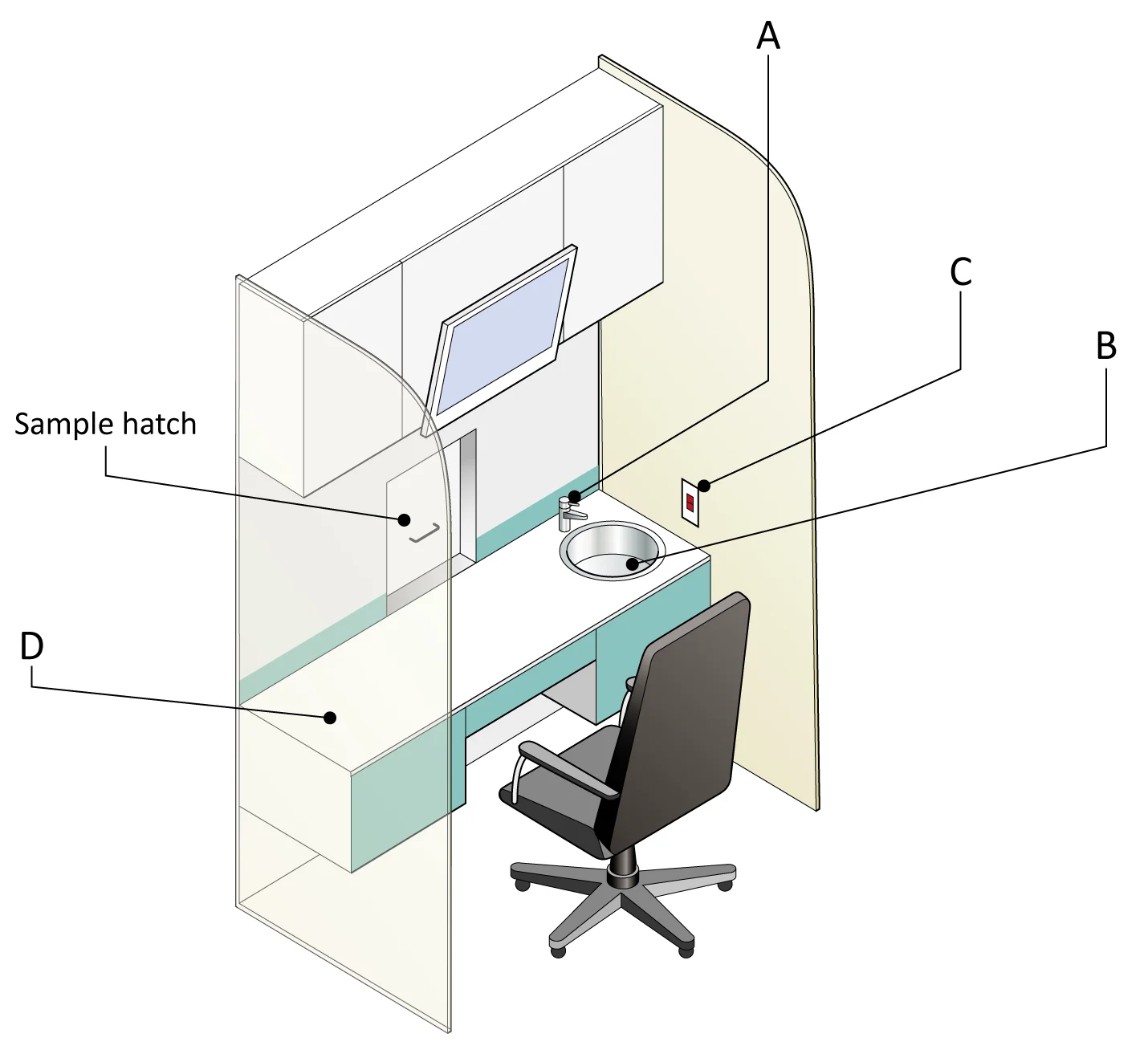
Figure: The tasting booth
a) Filtered water tap
b) Sink
c) Electrical socket and signal switch for panel leader
d) Work surface (odourless and easy to clean)
A lot of breweries do not have space for a permanent, purpose-built tasting facility. Where this is the case portable or collapsible booths can be used. The most important criterion in a sensory facility, whatever the size and sophistication, is the minimisation of the introduction of bias into the analysis undertaken within.
Next, we move on to how the beer is prepared to enter our controlled tasting environment.
Sample preparation and presentation
Samples are prepared and presented in a way that ensures all assessors have identical samples and their results are not influenced by their appearance or order of presentation. We achieve this by:
-
Standardising temperature, carbonation, level of foam, level of suspended material
-
Using dark sample glasses
-
Covering glasses with a lid to prevent escape of volatiles into the environment
-
Presenting samples randomly across all assessors
-
Presenting beers in order of increasing flavour intensity
-
Providing crackers and water as palate cleansers
-
Identifying samples by a random numerical code
Recording results
For every test given to the panel we need to produce a taste sheet, in paper form or computer display (examples are given for different tests later in this lesson). The purpose of these is threefold:
-
To provide instructions on how to complete the test.
-
To lead the assessor through the test in a logical order.
-
To act as a permanent record of individual results.
In addition to the instructions on the tasting form, the panel leader will provide oral instructions and be on hand to answer any queries from panellists.
The role of the coordinator
The coordinator of the panel will be a sensory expert. They facilitate and coordinate tasting panels. They train the panel and guide them through the tastings undertaken. In smaller breweries they will often be the technical brewer or head brewer/brewmaster or someone from the quality department. The overall role of the coordinator is summarised in the figure below:
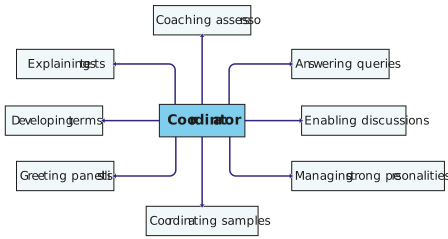
Figure: Role of the coordinator
We now have a well-run, fit-for-purpose tasting facility with a highly motivated and effective flavour panel. Next we learn about the tests they will perform.