
Lesson 2 - Wort Separation Principles
This lesson deals with the principles of wort separation. Before wort separation, we have completed mash conversion. We will now need to separate the liquid wort from insoluble material. This is mainly the husks from the malt, known as spent grain. We will review the reasons why filtered wort must be clear, and how this affects wort quality. We will examine how the all-important grain filter bed is formed differently, by each of the three most common mash separation devices. These devices are: the lauter tun, the mash filter and the mash tun. We will investigate a typical wort collection profile, which ends with the removal of the spent grain.
Darcy’s Law describes filtration flow rate. We will assess both the variables involved, and what influences them. We will finally use Darcy’s Law to predict the relative flow rates of the three mash separation devices.
Removal of the Spent Grain Bed
When the last runnings flow to drain has ceased, we are ready to remove the spent grain. This very much depends on the size and type of mash separation device, as well as the destiny of the spent grain.
If you are a small brewer using a 500 kg grist charge, the mash tun will have a manway door in the sidewall, providing an opening at the false floor level. This facilitates the manual removal into a mobile receptacle for disposal, as shown below:
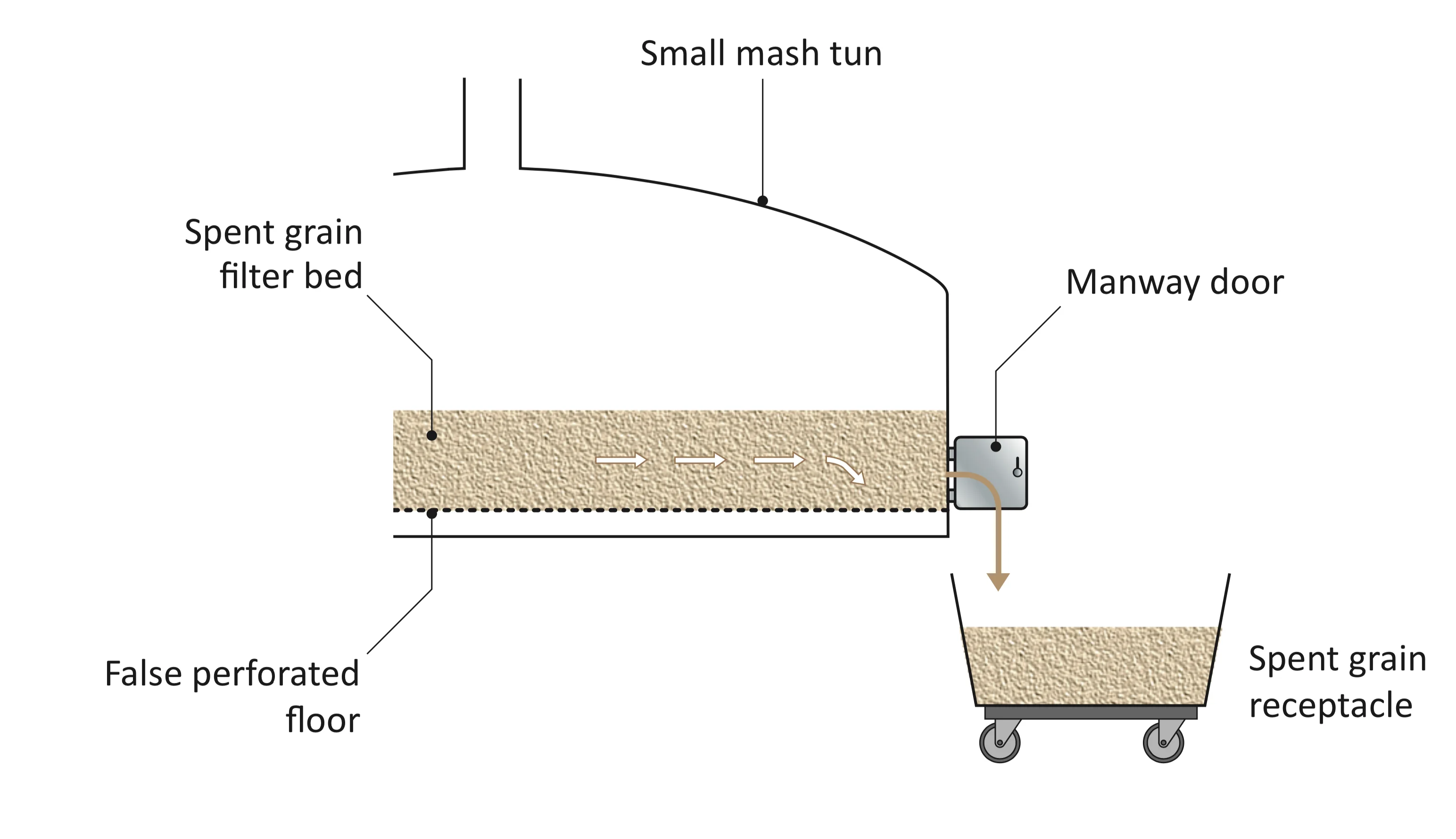
Figure: Spent grain removal – small mash tun
A larger brewer, using a 10,000 kg charge of grist, will use a mash tun fitted with a rotating arm just above the false slotted floor level. The arm is shaped so that as it rotates, it pushes the grain to the outer circumference of the false floor. Here, there is an opening connecting the false floor and the true floor to a grain discharge chute. The grain will then be transferred to a holding silo awaiting transportation.
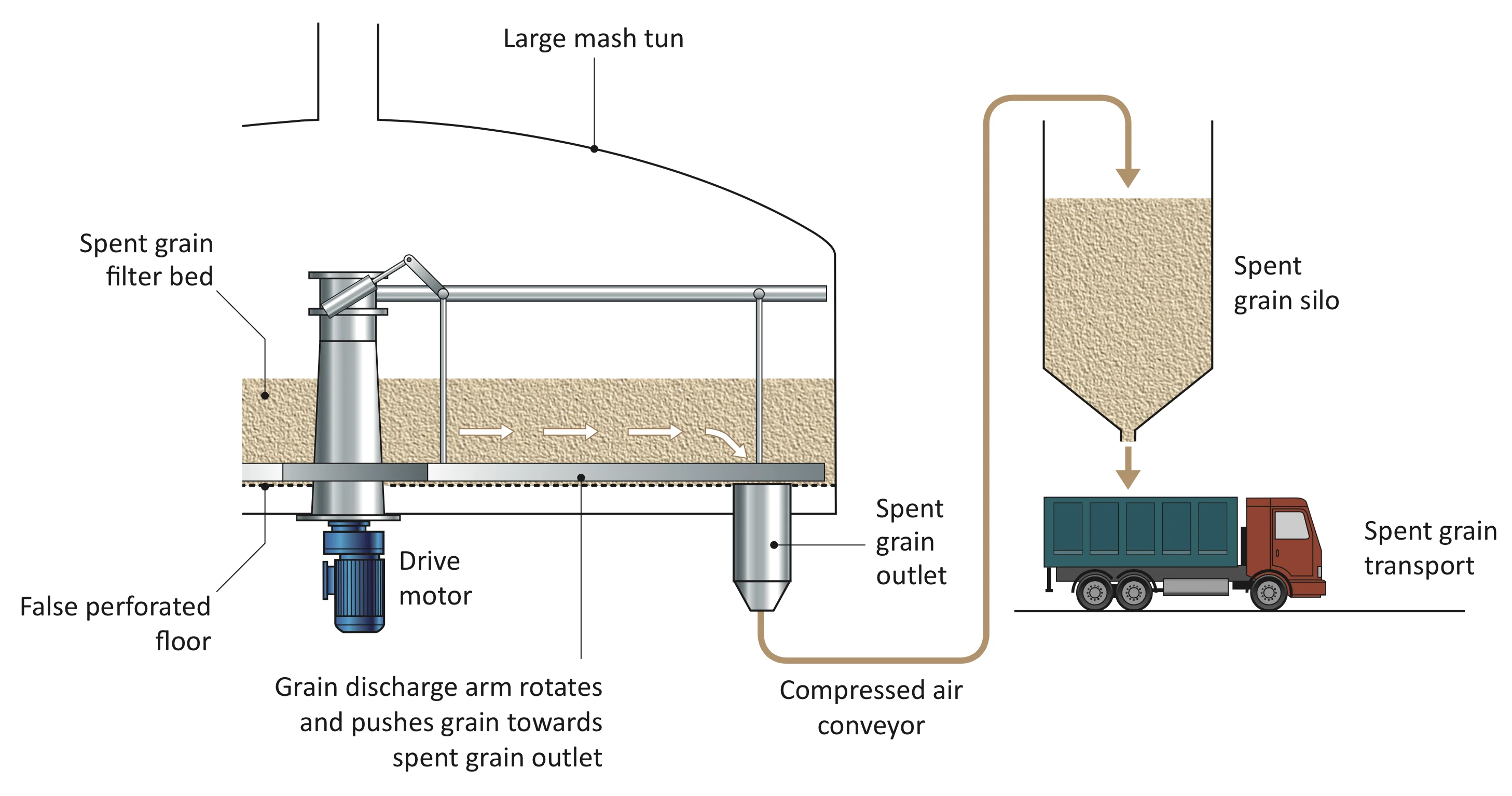
Figure: Spent grain removal – large mash tun
Spent grain removal from each of the three wort separation devices will be covered in detail in a later lesson (Wort Separation Technology). We must remove as much of the spent grain as is possible (< 0.4 kg/m² residual), to avoid negatively affecting the next brew. In a brewhouse producing more than one brew per day, this also needs to be done as quickly as possible, so that it does not extend the vessel turnaround time.
Spent grain is a valuable by-product. If we have dissolved away the starch and removed the sugars, why is spent grain still valuable?
Firstly, animals that can chew the cud, such as cattle and sheep, can digest the cellulose in the spent grain, which we humans cannot.
Secondly, it is relatively protein rich. Malted barley contains approximately 10% protein. The Kolbach index of the malt tells us that approximately 50% of this will dissolve in the wort, and therefore 50% will remain with the spent grain. Some of the solubilised protein will precipitate during mashing, and this will also be retained by the spent grain filter bed.
At wort boiling, we will also coagulate more of this soluble protein to form trub. This trub contains extract and is very high in effluent loading. It is frequently recycled back into the wort separation process. This recovers the extract, avoids effluent costs, and adds extra nutritional value to the spent grain. Some brewers have concerns about the levels of tannins, fatty acids and metals in trub. There thus does not appear to be an accepted ‘best practice’ for trub recycling.
The typical protein level in spent grains is 25-30% and it has four main uses:
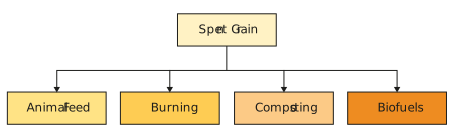
Figure: The four main uses of spent grain
- In some situations, we can sell the spent grain as animal feed (cattle, pigs, sheep, and chickens). It thus becomes part of the food chain, and in turn becomes subject to the relevant food safety regulations.
- We can dry it and burn it to fire a steam boiler. This reduces our consumption of fossil fuels.
- It can be composted for recycling back to the land.
- It can be used as a carbohydrate source for the bio-ethanol industry
There are a number of other uses for spent grains. One global brewer has a side business converting spent grains into protein food supplements.