
Lesson 4 - Beer Haze
In this lesson we will discuss beer haze. This will include defining the biological and non-biological (protein-polyphenol) haze types and their formation. We will also identify other hazes that can occur in beer. We will consider the influence of raw materials and discuss processing. To end the lesson, we look at how haze is measured and how we can use accelerated shelf-life testing to predict colloidal stability.
Biological Haze
At the end of wort boiling, we can say that the wort is commercially sterile. Microorganisms can, however, be introduced into wort or beer up to the point of packaging and during storage if the packaging container is not sealed correctly. The type of organisms and their areas of risk are covered in the Hygiene unit.
Commercially sterile wort means that the wort should be free of all viable vegetative cells.
It is sufficient to say that in brewing cleanliness is of paramount importance and the utmost focus must be on cleaning and keeping the plant clean. Personal cleanliness, along with staff coming into contact with any material added to beer, needs to be maintained.
Environmental cleaning schedules and checks should be incorporated into work practice. Plant cleaning equipment should be correctly scoped and designed, including vessel sampling points, which are a high-risk area for contamination by microorganisms.
Fortunately, beer is an inhospitable environment for most microorganisms due to its low pH, high alcohol, low oxygen level, presence of isomerised hop acids, and general lack of nutrients.
Nevertheless, there are organisms that can grow in this environment and spoil beer. The principle culprits involved with beer spoilage are the Gram-positive lactic acid bacteria (LAB), Lactobacillus and Pediococcus. These bacteria are capable of growing in sufficient numbers to cause not only cloudiness but in extreme cases, a rope-like silkiness. It is inevitable that, at this stage, the beer will be rejected not only on its lack of clarity but also on its taste.
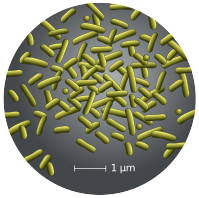
Figure: Lactobacillus
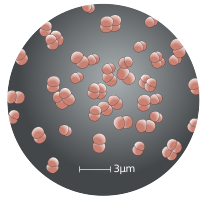
Figure: Pediococcus
It is important to remember that brewing yeast can also cause haze in the packaged product, and its removal must be ensured by the filtration systems. Certain styles of beer, e.g. Hefeweizen, deliberately introduce yeast into the bottle, and these beers are expected to have a biological haze.