
Lesson 2 - Wort Clarification Technology and Process Control
This lesson compares the design and operation of different wort clarification systems. It provides you with the information to help you justify why you would choose one method over another.
Trub Processing and Disposal
In some wort clarification processes, a significant amount of extract remains in the trub after separation. In some cases, trub contains 80-90% wort. This means that some brewers take steps to recover the extract from the trub.
This is done in one of two ways:
- Add the trub back, as it is, to the mash vessel or lauter tun before wort separation.
- Process the trub further to recover the extract.
To add trub to a subsequent brew it is typically stored in an insulated tank before pumping on top of the grain bed before lautering. This is not common practice as trub contains lipids and polyphenols that can damage beer quality.
To process the trub further we can use decanter centrifuges, as shown below. They process the trub settling to the bottom of the wort clarification vessel, with the wort recovered combined with the wort being cast out to the fermentation vessel.
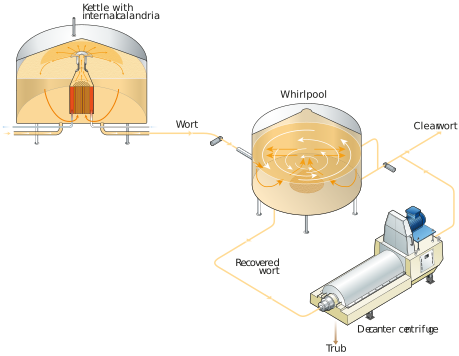
Figure: A decanter centrifuge
And this video explains their operation:
The following video clip shows how the decanter centrifuge operates. Note, this is for illustrative purposes only and is not a recommendation or endorsement of the supplier’s product:
Another option is a vibrating screen filter/separator. These were almost extinct but have recently been reintroduced by one supplier. The trub is fed onto a vibrating screen (sieve) that shakes it vigorously. The wort falls through the screen and trub moves across the screen to the outlet for disposal. The wort recovered is usually very turbid but the volume returned to the brew is small. The figure below shows a vibrating screen filter/separator and the links below take you to the suppliers’ sites.
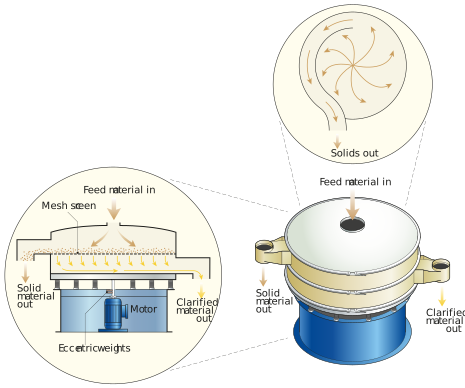
Figure: A vibrating screen filter
Note, this is for illustrative purposes only and is not a recommendation or endorsement of the supplier’s product:
https://www.russellfinex.com/en/separation-equipment/sieving-machines/vibratory-separators/
https://braukon.de/en/produkt/braukon-hopsep-en/
Another option is to use a hot trub tank which allows the trub more time to sediment while the clarified wort is drawn off and combined with a subsequent brew. As we have seen, there is some nasty stuff in trub, so recovering wort from it must be done with care and its effect on beer quality monitored continually.
To dispose of trub we usually add it to the spent grains inside a lauter tun before discharge or add it to the spent grains hopper below the lauter tun or mash filter for discharge. The combined trub and spent grains, can be sent to an anaerobic digester, sold for cattle feed or otherwise sold as a co-product. With spent whole hops, we can combine them with spent grains for sale as feed, compost them or spread them on land.