
Lesson 6 - Mashing Technology
Steam Injection
One mash heating system differs from the rest. In the Meura Aflosjet (anti-fouling low-shear jet) system, low pressure (0.7-1 bar) steam is injected directly into the mash to raise its temperature.
Steam injectors are positioned around the base of the MCV and direct steam up into the mash. A specially designed low-shear agitator moves the mash around the vessel, helping distribute the heat.
The advantages of this system are:
-
Heat is transferred into the mash very effectively and rapidly.
-
As there is no heating surface, there is no fouling, meaning the MCV can be used many more times between cleans than a jacketed vessel.
-
Steam is oxygen free, so oxygen pick-up is virtually zero (steam purges the mash of oxygen).
-
There is no condensate to return to the steam generator, so no associated equipment and heat loss.
-
It is the most energy-efficient system of mash heating.
-
Agitation can be gentler because the steam disperses rapidly and extensively.
And its disadvantage is:
-
The steam used must be culinary steam (contains no debris or other impurities and is generated from softened and deionised water in high-cost equipment).
-
The as the steam condenses it increases the proportion of water in the mash so mashes need to be slightly thicker at mashing in.
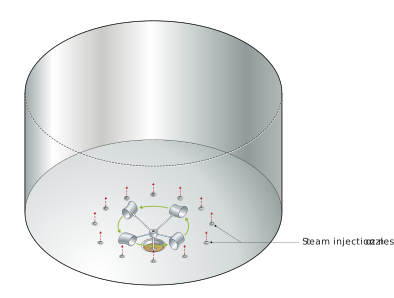
Figure: Meura Aflosjet system
Hot water injection
Some mashing systems are also able to inject hot water directly into the mash under agitation to raise its temperature. The hot water can be directed at the base of the agitator to ensure it is rapidly and evenly dispersed. Like steam, this causes a rapid rise in temperature so that it can reduce cycle times. Proteolysis is better accomplished in thick mashes and saccharification and conversion in thinner mashes, so the addition of the water also favours better mashing performance. There is, of course, a limit to how thick a mash can be at the start and how thin it can be at the end, so water injection must be used in combination with heating jackets for most temperature programmes.
Heating rates
We need to minimise the time the mash spends in the MCV to that completely necessary to complete the objectives of mashing. Other than the programmed ramps in temperature, we don’t, therefore, want to be waiting for the mash to heat up. Heating rates of around 1.5℃/min should be achievable from heating jackets with up to 2.5℃/min possible with direct hot water injection. Due to the very high-temperature difference between the mash and the heating medium, much higher rates are possible with an agitated direct-fired vessel.