
Lesson 6 - Malt Quality
This lesson deals with malt quality. We explore each parameter on a malt specification sheet and identify why they are specified. We then examine how they affect beer and the brewing process.
Food Safety
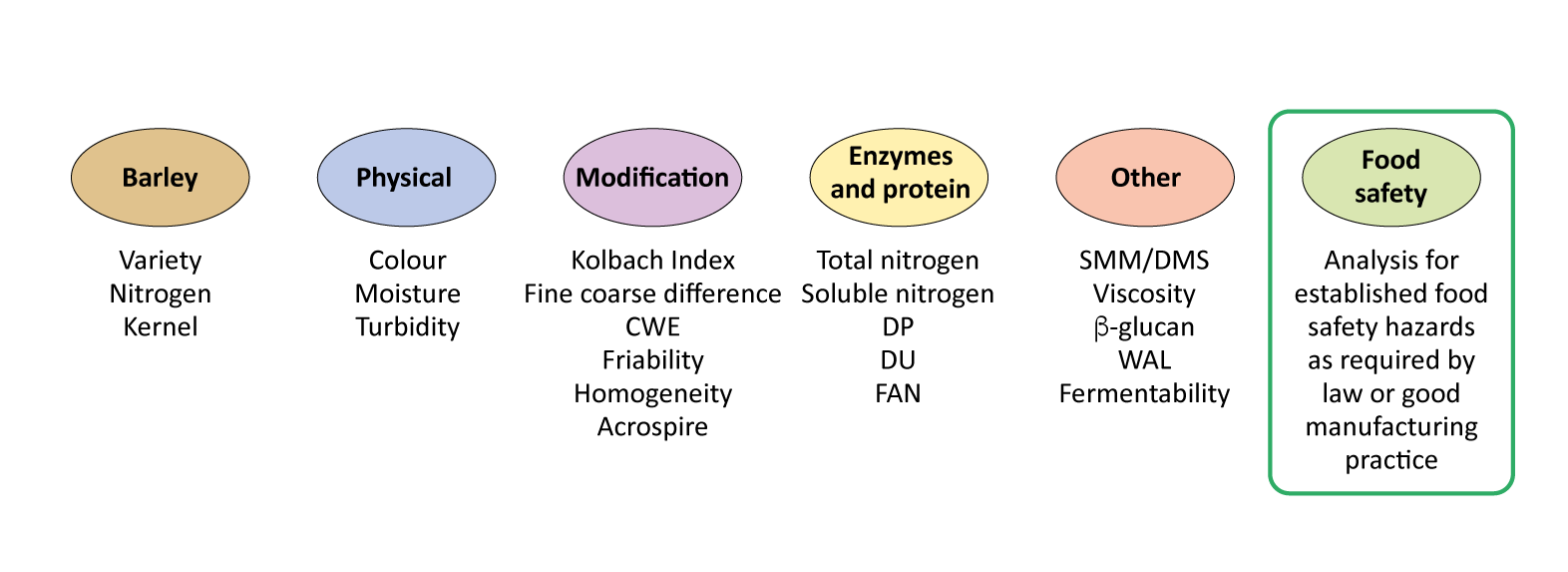
Malt is a foodstuff and therefore must be safe to consume. In most countries food safety must be managed using hazard analysis and critical control points (HACCP). The malt producer and brewery must operate such a system. HACCP is covered in detail in Module 2 of this course.
The food safety hazards associated with malt and barley are as follows (as per the Maltsters' Association of Great Britain -MAGB):
- Biological
- Pathogens from human contact with product
- Fungi and moulds (Aspergillus, Penicillium, Ergot)
- Pathogens from insects, birds and rodents.
- Chemical and biochemical
- Mycotoxins,
- Aflatoxins – mycotoxin
- Zealarone – mycotoxin
- Ochratoxin A – mycotoxin
- Deoxynivalenol (DON) - mycotoxin
- Fumonisins – mycotoxin
- Nitrosamines (NDMA)
- Pest control residues (e.g. insecticides, rodenticides)
- Agricultural control residues (e.g. herbicides, fungicides, growth regulators)
- Heavy metals, nitrates/nitrites, PCBs (Polychlorinated biphenyls)
- Thermal transfer fluid, hydraulic oil, lubrication and fuel oil
- 3-Monochloropropanediol and/or acrylamide (only in high colour malts and roasted barley)
- Cleaning chemicals or water treatment chemicals
- Taint or odours from other sources
- Allergens
- Mycotoxins,
- Physical
- Contamination by metal objects
- Contamination by non-metal objects (e.g. other seeds and cereals)
- Contamination by radioactivity
Visual assessment/sensory evaluation
Although a certificate of analysis is helpful, we also need to inspect our malt when it arrives. Ask yourself:
- Is the colour consistent?
- Are there any signs of mould?
- Is kernel size consistent?
- Is there any foreign material present? (There should be little to none.)
- Are there holes in the grain? (This could indicate past or present weevil infestation.)
- Is there evidence of insects? (Look out for both dead and alive intruders.)
Upon completing your visual inspection, smell your malt sample. There should not be any strange, chemical or musty (wine cellar) aromas.
Some say you should be able to crush the malt easily between your thumb and forefinger, but this is easier said than done. This is only true for green malt. The best way to test for modification (do not follow this method if you do not have strong teeth), is to take a kernel and bite into it. It should have a clean, cereal taste; the endosperm should be white and chalky.
We have identified the main parameters key to selecting malt. Let's see what good malt looks like using examples from commercial maltsters.