
Lesson 6 - Maintenance
This lesson discusses the necessary components of a successful brewery maintenance programme and provides details on approach, implementation, execution, and business-level relationships.
Maintenance Regulations and Guidance
Maintaining a brewery requires frequent interaction with high-pressure gasses, chemicals, steam, electricity, and rotating equipment. Yet, in this seemingly harsh environment, we produce a product intended for human consumption and enjoyment. We will briefly explain the statutory (legal, legislative) requirements and obligations involved in brewery maintenance.
As laws and guidelines vary widely across the globe, this discussion will be introductory. Please consult your local officials for precise details and requirements on each of these topics should you wish.
Pressure vessels (tanks, boilers, etc.)
In most countries, vessels over a certain size and pressure are designed and fabricated to a specific standard (code). In the United States, that code is provided by the American Society of Mechanical Engineers (ASME). In Europe, standards are maintained by the Pressure Equipment Directive (PED). Each vessel, as part of fabrication, is inspected and includes a nameplate with pertinent information including its manufacturer, maximum allowable working pressure, various pressure/temperature limitations, the year of its construction, and the manufacturer ID. This nameplate provides traceability for the life of the vessel.
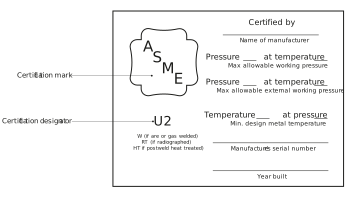
Figure: An example of an ASME vessel stamp
Maintenance related to pressure vessels comes with several important responsibilities. One is the need to retain records of all the pressure vessels in your facility. In Europe, for example, each vessel has to be registered as a pressure vessel through your insurer and undergo an inspection. The insurance inspector, or other certified inspector, will then issue a written scheme of examination, outlining the condition of the vessel and stating the frequency of future inspections. Periodically (to a timeline set by law), a certified inspector will visit site, to check the manufacturer’s paperwork and carry out an examination of these vessels, in order to certify them as safe to operate.
Another important obligation is to be aware of any modifications or damage that occur to pressure vessels. Cutting, drilling, welding on, or any physical modification (including dents) will require the vessel to be re-inspected.
Electrical equipment
Can you imagine your brewery running without the use of electricity? We are fortunate to live in an era where pumps, compressors, mixers, and instrumentation are usually available at the flip of a switch (depending on where you live!). This degree of convenience and automation requires careful design, installation, and ongoing maintenance. Fortunately, there are several organisations providing clear guidance on the electrical components within our brewery.
In the US, the National Fire Protection Association (NFPA) sets standards: https://www.nfpa.org/NEC/electrical-codes-and-standards
In the UK, the Electricity at Work Regulations 1989 are frequently cited as a model to follow: https://www.hse.gov.uk/pUbns/priced/hsr25.pdf
You should fully research and follow the local codes and standards for your region prior to performing work.
Lock Out, Tag Out (Try Out) – LOTO(TO)
Virtually all equipment in a brewery contains some form of hazardous energy, including chemical, electrical, hydraulic, mechanical, pneumatic, and thermal. The purpose of a LOTO programme is to clearly identify all sources of potential energy on a piece of equipment, document how to safely deenergise each, and, prior to working on the system, test to verify it is completely safe to proceed with a repair. Maintenance will develop and train to these three key elements. It is equally important to keep LOTO instructions updated as equipment and processes change over time.
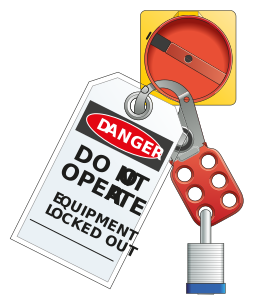
Figure: An example of a piece of equipment prepared for service
Confined space
Breweries have countless examples of confined spaces – anything with a limited entry/egress that is not specifically designed for human occupancy. You may recall that this was discussed in the Health and Safety lesson. Malt silos, brewhouse vessels, fermenters, and bright beer tanks are all examples of confined spaces. These spaces need to have placards posted at each point of entry. Procedures need to be developed and strictly followed on how to safely LOTO the vessel, continuously test its internal atmosphere, provide entry/egress, and perform an emergency extraction if necessary.
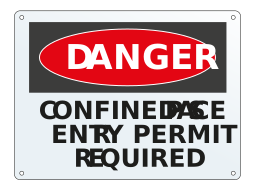
Figure: An example of a confined space placard
Food safety
Maintenance plays a key role in the brewery’s food safety programme. Any individuals who work daily directly at the interface of equipment and product need to be aware of the regulations and responsibilities at your facility. A food safety programme should be based on Good Manufacturing Practices (GMPs), and a HACCP system.
HACCP is a management system that addresses food safety by analysing and controlling physical, chemical, and biological hazards from raw materials through consumption of the final product.
The primary expectations of maintenance regarding food safety are to:
-
Understand the potential food safety risks to the product that could result from work performed on equipment.
-
Properly and thoroughly document equipment service and process changes. If downstream changes are detected or if product quality changes, it is imperative to know what process changes were made and when.
-
Prevent product contamination by using food-safe cleaners and lubricants. Keep track of all tools and loose hardware and wear appropriate clothing (e.g. hat, hair net, beard net) as required by your company.
Protecting the environment
The activities involved in maintenance will generate waste products such as oil, glycol, and scrap material. Maintenance also oversees equipment that contains regulated substances such as refrigerants. It is our responsibility as a brewery to properly handle and safely dispose of these items in accordance with local rules and regulations.