
Lesson 4 - Hop Chemistry
Essential Oils
The essential oils (also known as hop oils) are found in the lupulin glands and are the volatile part of the hop material.
Although these hop oils make up only 0.5-3% (depending on variety) of the hop cone, they are a complex mixture of over 1000 components!
Don’t worry, we are not describing all 1000 components!
All the components in hop oil can be split into three categories. This is shown in the updated figure below.
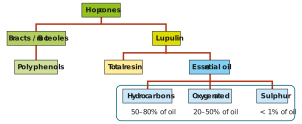
Odour/flavour activity is how aromatic a compound is. Highly odour/flavour active compounds tend to be recognisable at very low concentrations. Each essential oil component has different levels of odour/flavour activity.
Generally, sulphur containing oil components have the highest odour/flavour activities.
Now, let’s discuss each of the three hop oil fractions, and explore what their compounds contribute to beer.
Hydrocarbons
The hydrocarbons are called hydrocarbons because they are made of just hydrogen and carbon. Hydrocarbons are very volatile and are easily oxidised and polymerised. Due to these properties, they are only significant in dry hopped beers. The hydrocarbons thought to be important for hop aroma are terpenes which are also terpenoids.
Terpenoids are also called isoprenoids and contain or are derived from the molecule isoprene which is shown below.
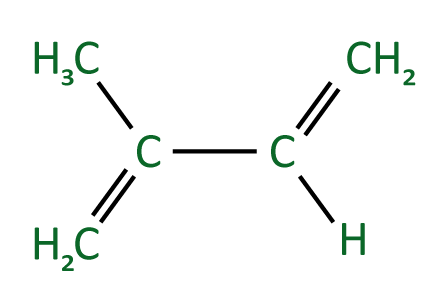
Figure: Isoprene
The monoterpenes contain two isoprene units and the sesquiterpenes contain three.
Some use the term terpene interchangeably with terpenoid but strictly speaking, terpenes are hydrocarbons while terpenoids include compounds containing oxygen like aldehydes, ketones and alcohols and are therefore no longer classifiable as a hydrocarbon.
So, a terpene is a terpenoid as is a terpene alcohol, but a terpene alcohol shouldn’t really be called a terpene. Terpenes and terpenoids are found everywhere in nature. They provide plants with fragrance and act as hormones. The solvent turpentine is made up of terpenes distilled from pine sap.
Hydrocarbons are usually very volatile and very difficult to dissolve in water and hence beer. Therefore, they are only significant contributors to dry or late hopped beer flavour.
The most abundant hydrocarbon component of essential oil in all hops is the monoterpene β-myrcene which makes up 30-70% of the total oil content. β-myrcene is a monoterpene and thought by many to be the main contributor to the aroma of fresh hops. Although there’s plenty of it in hops, β-myrcene is not very polar so difficult to dissolve in beer. It also oxidises readily and can migrate into the material lining the bottle crown. As a result, levels are usually quite low and decline quite rapidly as the beer ages. Levels of as high as 1 mg/L have been reported in some dry hopped beers but a limit of 0.3 mg/L was proposed due to the factors above. The theory is that in New England IPAs haze particles allow more myrcene to stay in solution. Although the aroma of myrcene might be appealing at lower levels, having higher levels in your beer may not be a good thing.
Other monoterpenes that might be important to dry hop aroma include α and β-pinene which (you guessed it) have a piney aroma, ocimene isomers that have a sweet herbal aroma and ρ-cymene with a light citrus aroma.
The main sesquiterpenes in most hops’ essential oils are α-humulene, β-caryophyllene and β-farnesene.
Although hop oil might contain more than 1000 components, the combination of β-myrcene, α-humulene and β-caryophyllene make up 80-90% of the total essential oil.
Table: Hydrocarbons
|
Compound |
Aroma description |
|
β-myrcene |
Green resinous |
|
α-humulene |
Woody, piney |
|
β-caryophyllene |
Woody |
A high α-humulene:β-caryophyllene ratio (3:1 or above) is typically associated with noble hops. This ratio is characteristic of the hop variety and independent of ripeness or storage.
β-Farnesene, is only found in certain varieties and constitutes up to 20% of the Saaz essential oils. Like a high α-humulene:β-caryophyllene ratio it is associated with noble hop aroma.
β-Farnesene, α-humulene and β-caryophyllene are unlikely to contribute to hop aroma in beer because they are highly volatile and hydrophobic meaning that they are unlikely to dissolve and even less likely to remain dissolved if the chance to escape the beer arises.
In Hops Lesson 2 we discussed how hop oil content rises steadily during the final hop ripening period before harvesting. It has been found that β-myrcene rises rapidly during this period, from nearly zero up to 36%. Whereas β-caryophyllene and β-farnesene remains relatively constant and α-humulene levels drop significantly from around 80% down to about 40%. It has also been shown that levels of β-myrcene are directly proportional to the amount of cohumulone in the hops and that the level of α-humulene is directly proportional to the amount of humulone in the hops.
So, what does this all mean to the brewer?
If you are looking for a β-myrcene aroma in your beer, you could select a hop variety with a high level of cohumulone, and dry hop rather than adding hops in the kettle.
Oxygenated fraction
These compounds are more varied in terms of flavour and structure than the hydrocarbons. You can think of them as hydrocarbons with oxygen(s) added to the molecule. The addition of the oxygen means that they are also more polar, so more likely to dissolve in beer and less likely to evaporate. Some are produced during the biosynthesis of hydrocarbons in the hop cone. For example, linalool and geraniol can be produced as a result of the biosynthesis of β-myrcene. Some are produced by the oxidation of the hydrocarbons. For example, farnesene can become farnesol and a range of other oxygenated compounds. This means that, as the hop ages, their level in the hop can rise at the expense of hydrocarbons. The oxygenated fraction includes the groups of compounds shown in the figure below.
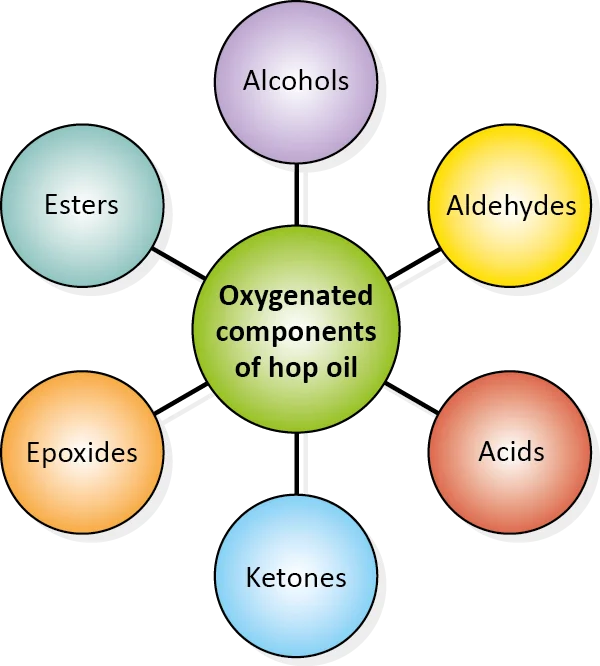
Figure: Oxygenated fraction of hop oil
Linalool is a floral and spicy terpene alcohol with descriptors including bergamot and lavender. It is found in over 200 plants such as citrus fruits and lavender. Concentrations of linalool above 20 µg/L have been shown to give a fruity, hoppy aroma to beer and in dry hopped beer it is often at more than four times this level. Other alcohols include geraniol which has a floral aroma and citronellol which as you expect from the name smells like citrus fruit. These can affect the nature and intensity of citrus and fruity hop aroma when linalool is in excess due to synergistic effects between aroma compounds.
Carbonyl compounds thought to be important in hop flavour include the aldehyde hexanal which is thought to give a green and grassy note to beer and the ketone undecan-2-one which imparts a floral aroma.
Some of the oxygenated products of α-humulene and β-caryophyllene are thought to contribute to noble hop aroma.
Esters are relatively soluble and as a result some are important in dry and late hopped beer flavour. Methyl genarate has a green, fruity or floral aroma and is found in hops and also in some beers. Isobutyric esters such as isobutyl isobutyrate, isoamyl isobutyrate, 2-methylbutyl isobutyrate (2-MBIB) and 3-methylbutyl isobutyrate (3-MBIB) are found in relatively high concentration in late and dry hopped beers. The last two providing tropical and fruity notes. Yeast activity is thought to encourage their formation from precursors. Some yeast have esterase enzymes that can convert terpene alcohols into terpene esters. For example, geraniol and citronellol are converted into geranyl acetate and citronellyl acetate respectively.
Oxygenated terpenoid compounds are also interconverted by yeast. Some geraniol is converted mainly into β-citronellol as well as linalool and nerol. The linalool and nerol are further converted into α-terpineol. The diagram below shows the process.
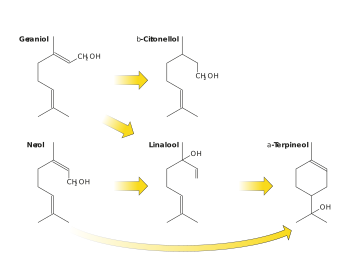
Figure: Biotransformation of hop compounds by yeast during fermentation
Geraniol concentration decreases dramatically during the yeast growth phase of fermentation as it is converted into β-citronellol. The β-citronellol is almost absent in wort and gradually increases during fermentation. Geraniol, linalool, β-citronellol, nerol, and α-terpineol combine to produce citrus notes in beer. Enriching the initial geraniol content in the wort (by adding hops high in geraniol) could increase the concentration of geraniol and β-citronellol in finished beer. The figure below summarises some of the biotransformations of oxygenated terpenoids that can occur in fermentation.
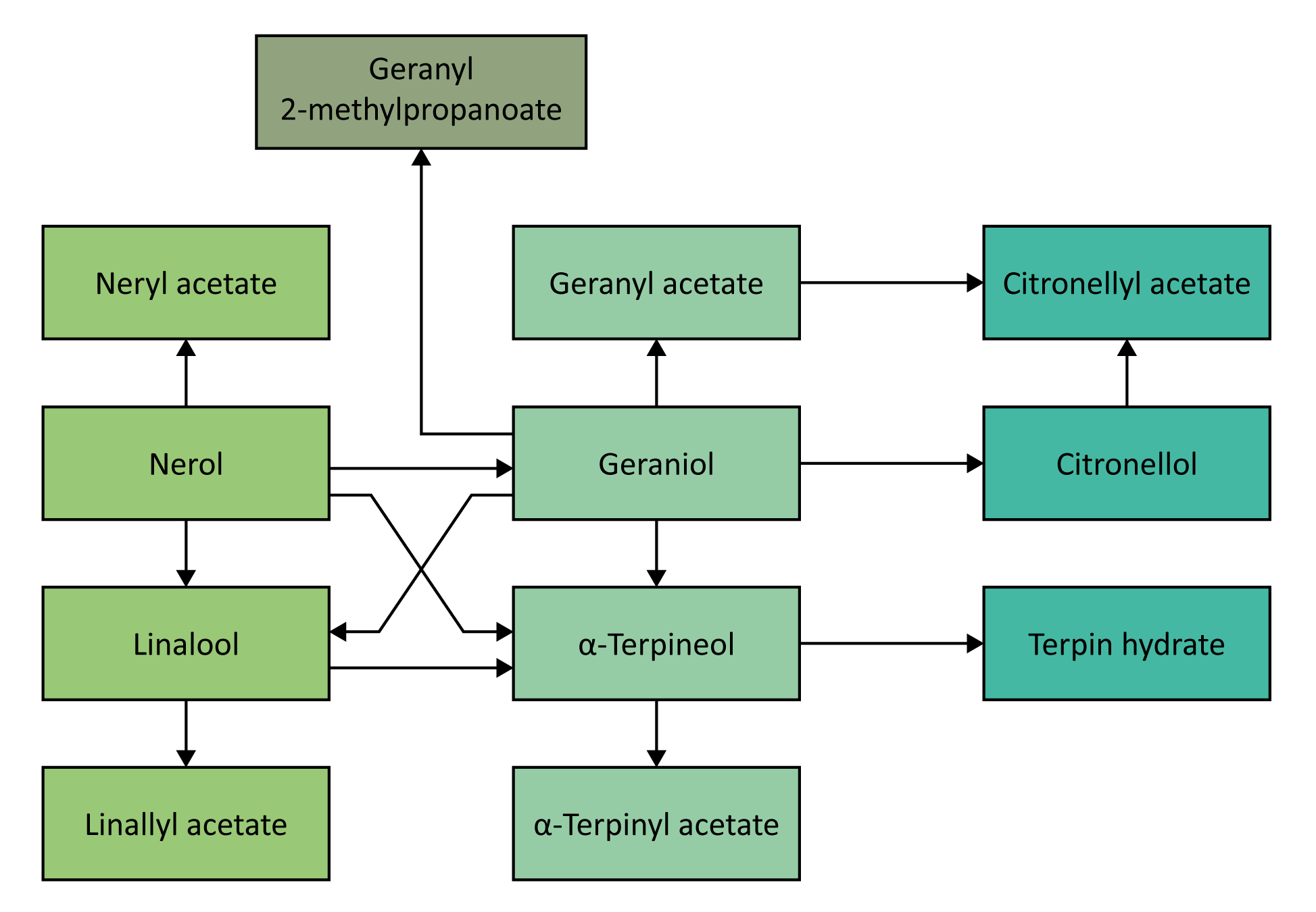
Figure: Biotransformation of oxygenated terpenoids in fermentation
Not all the β-citronellol found in beer comes from geraniol. Some comes from the hydrolysis of glycosides by yeast enzymes. A glycoside is the compound of interest bound to a sugar molecule. The compound in the glycoside bound to the sugar is also said to be glycated. Some lager yeast strains and some Brettanomyces have the β-glucosidase enzymes necessary to hydrolyse the bond in the glycoside while ale yeast seem to lack it. Another route to increase geraniol concentration is the hydrolysis of the ester geranyl acetate.
The table below summarises some of the compounds found in the oxygenated fraction of hop oil
Table: Oxygenated fraction components of hop oil and their descriptors
|
Compound |
Category |
Descriptor |
|
Linalool |
Alcohol |
Floral, orange |
|
Citral |
Aldehyde |
Sweet citrus, lemon |
|
Geraniol |
Alcohol |
Floral, sweet, rose |
|
Nerol |
Alcohol |
Rose, citrus |
|
Terpineol |
Alcohol |
Woody |
|
Ethyl-2-methylbutyrate |
Ester |
Fruity |
|
3-methylbutyric acid |
Acid |
Cheesy |
|
1-hexanal |
Aldehyde |
Green, grassy |
|
Humulene epoxide II |
Epoxide |
Spicy, herbal |
|
2-Heptanone |
Ketone |
Fruity |
Sulphur compounds
For something that comprises less than 1% of hop oil, sulphur containing compounds pack a big punch. This is because they are extremely flavour active with very low flavour thresholds. Some as low as parts per trillion!
The flavour threshold is the minimum concentration at which the taste or aroma of a particular substance can be perceived.
Sulphur compounds tend to be more volatile and less soluble than oxygenated compounds but less volatile and more soluble than hydrocarbons. Until modern varieties were developed, sulphur containing compounds were usually undesirable and resulted from hops that were not at their best or had been treated with copper sulphate to control mildew. Sulphur aromas that we want to avoid include cooked vegetable, musty, onion-like and cheesy. Examples include the polysulphides dimethyl trisulphide, dimethyl tetrasulphide, and methyl methylthiomethyl disulphide. Some of these result from the addition of sulphur to crops to control infestation. Thioesters are also unpleasant and unwanted sulphur compounds with hexanethiolate the most common.
Today, sulphur containing compounds that impart desirable fruity and tropical aromas are the focus of much interest, especially in brewers who dry hop. The highest profile examples are the polyfunctional thiols. Polyfunctional doesn’t mean that the compound has many functions (although they may have) just that it has two or more functional groups. By functional groups we mean they have thiol S-H, carbonyl C=O, hydroxyl OH, ester O-C=O etc. groups. The polyfunctional thiols are known by most people as just thiols and individually by their initialisms.
The table below gives the full name, the initialism and descriptors for the important polyfunctional thiols. The terms mercapto and sulphanyl mean the same thing and we have included the alternative names and initialisms for each.
Table: The polyfunctional thiols
|
Polyfunctional thiol |
Initialism |
Descriptors |
|
3-mercapto-4-methylpentan-1-ol (3-sulphanyl-4-methylpentan-1-ol) |
3M4MPol (3S4MPol) |
White wine, tropical fruit, grapefruit |
|
3-mercapto-4-methylpentyl acetate (3-sulphanyl-4-methylpentyl acetate) |
3M4MPA (3S4MPA) |
Tropical, citrus |
|
3-mercapto-1-hexanol (3-sulphanyl-1-hexanol) |
3MH (3SH) |
Rhubarb, citrus |
|
3-mercaptohexyl acetate (3-sulphanylhexyl acetate) |
3MHA (3SHA) |
Passionfruit, guava |
|
4-mercapto-4-methylpentane-2-one (4-sulphanyl-4-methylpentane-2-one) |
4-MMP (4MSP) |
Ribes, blackcurrant, muscat-like, fruity |
Some of these compounds are found in modern hop varieties in the free form but many are also present as a precursor. The precursors are the compound of interest bound to glutathione or cysteine and are known as cysteinylated and glutathionylated precursors or sometimes glutathione or cysteine S-conjugates. As with glycated terpenoid compounds, enzymes are required to convert the cysteinylated and glutathionylated polyfunctional thiol precursors into free thiols. Cysteine S-conjugate β-lyase (just called β-lyase by yeast suppliers), catalyses the lysis of the carbon-sulphur bond between the thiol and cysteine. Some yeast strains have higher β-lyase activity than others, some are bred or engineered to have high levels and exogenous β-lyase enzymes are also available. The figure below shows proposed reaction pathways for polyfunctional thiols from precursors to esters.
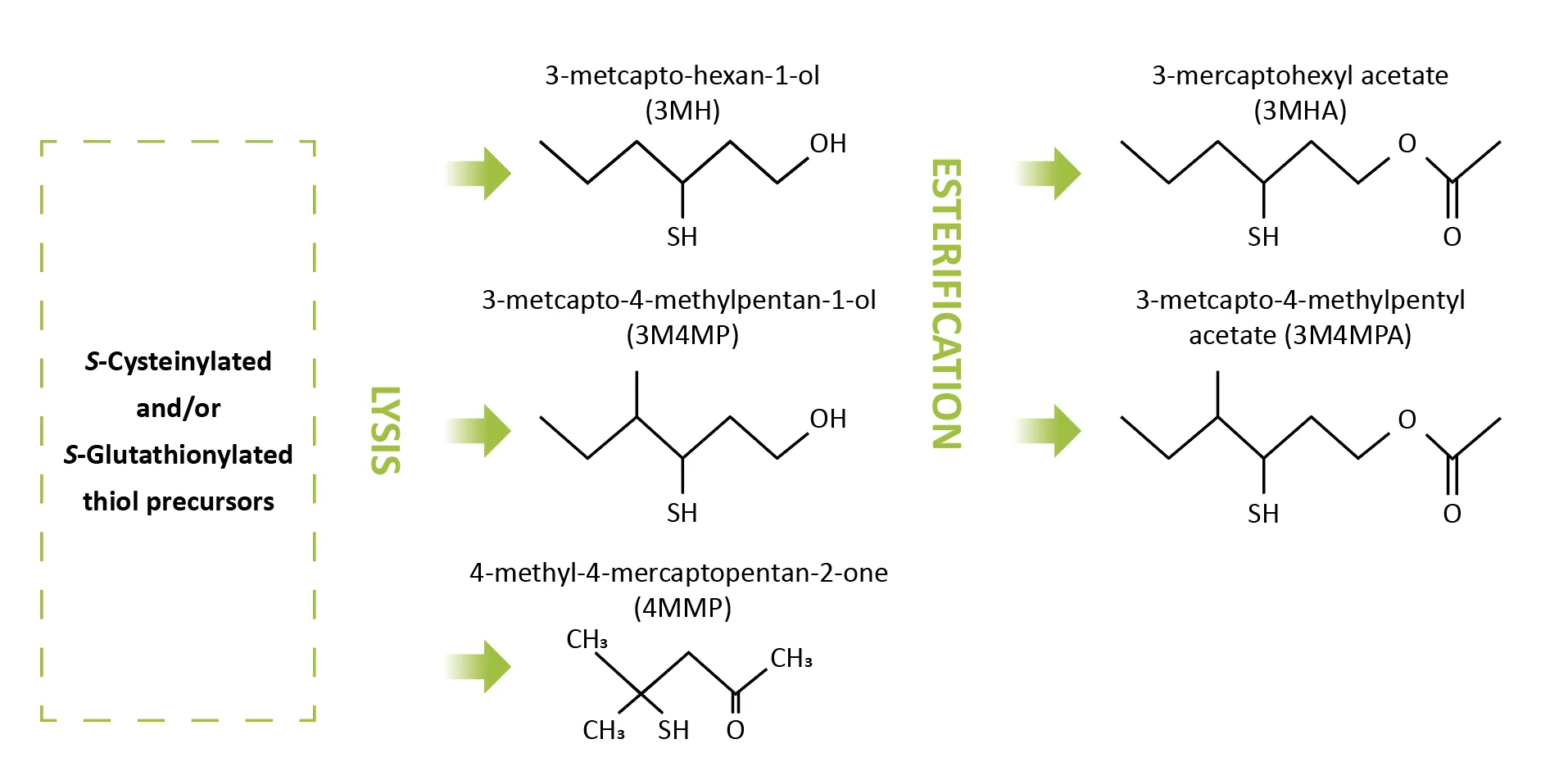
Figure: Polyfunctional thiol biotransformation pathways
Another sulphur compound with a fruity aroma is S-methyl thiohexanoate (which imparts a pineapple aroma).
The volatility of sulphur compounds means that they are only really significant in dry hopped beers unless they have been produced by biotransformation of their less volatile precursors.
That covers the main components of the hop essential oils. We can now update our repeating figure for the last time.
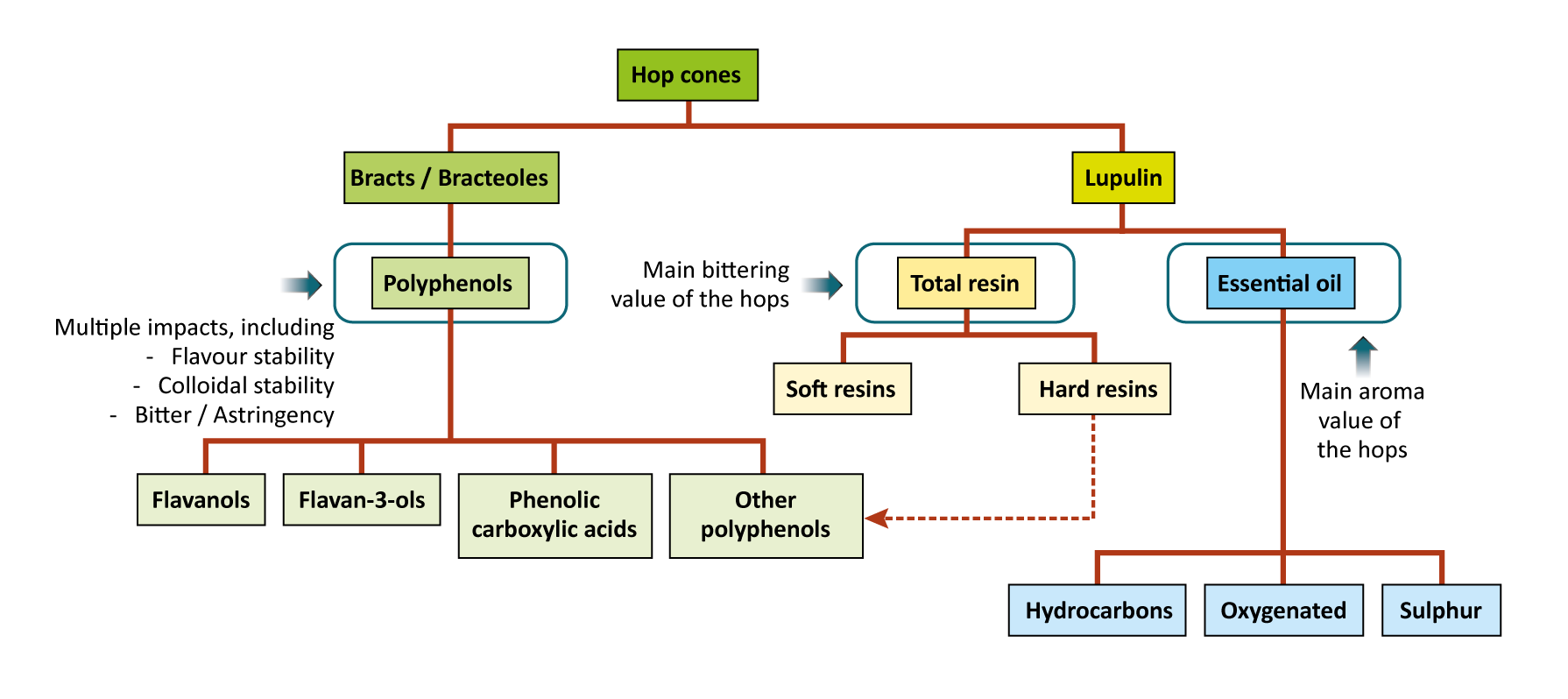
Figure: Hop components
Let’s summarise the key points of hop essential oils:
- Most are lost during normal brewing processes.
- What you might smell in raw hops is unlikely to be what you smell in beer, due to losses and the effects of other compounds.
- Small amounts of certain compounds can have a large effect on flavour and aroma – so be careful!