
Lesson 4 - Hop Chemistry
Polyphenols
Polyphenols are also referred to as tannins. However, tannins are in fact a type of polyphenol. Polyphenols are compounds that consist of many phenol or phenol-like units. There are several thousand of these in nature, and over 100 have been found in hops!
A phenol group is shown in the figure below.
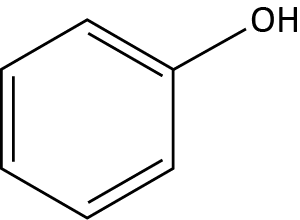
Figure: Chemical structure of a phenol group
As we saw earlier, in the chemical composition table, hops contain roughly 4% polyphenols (although this may fluctuate between 3-8% depending on the hop variety). These polyphenols are found mainly in the bracts and bracteoles.
Most of the polyphenols found in standard beer come from the malt, but around 20-30% of the polyphenols come from hops. In heavily late and dry hopped beers a greater proportion of polyphenol can be derived from hops, in some cases as much as from the malt. Hop polyphenols are grouped as shown in the figure below.
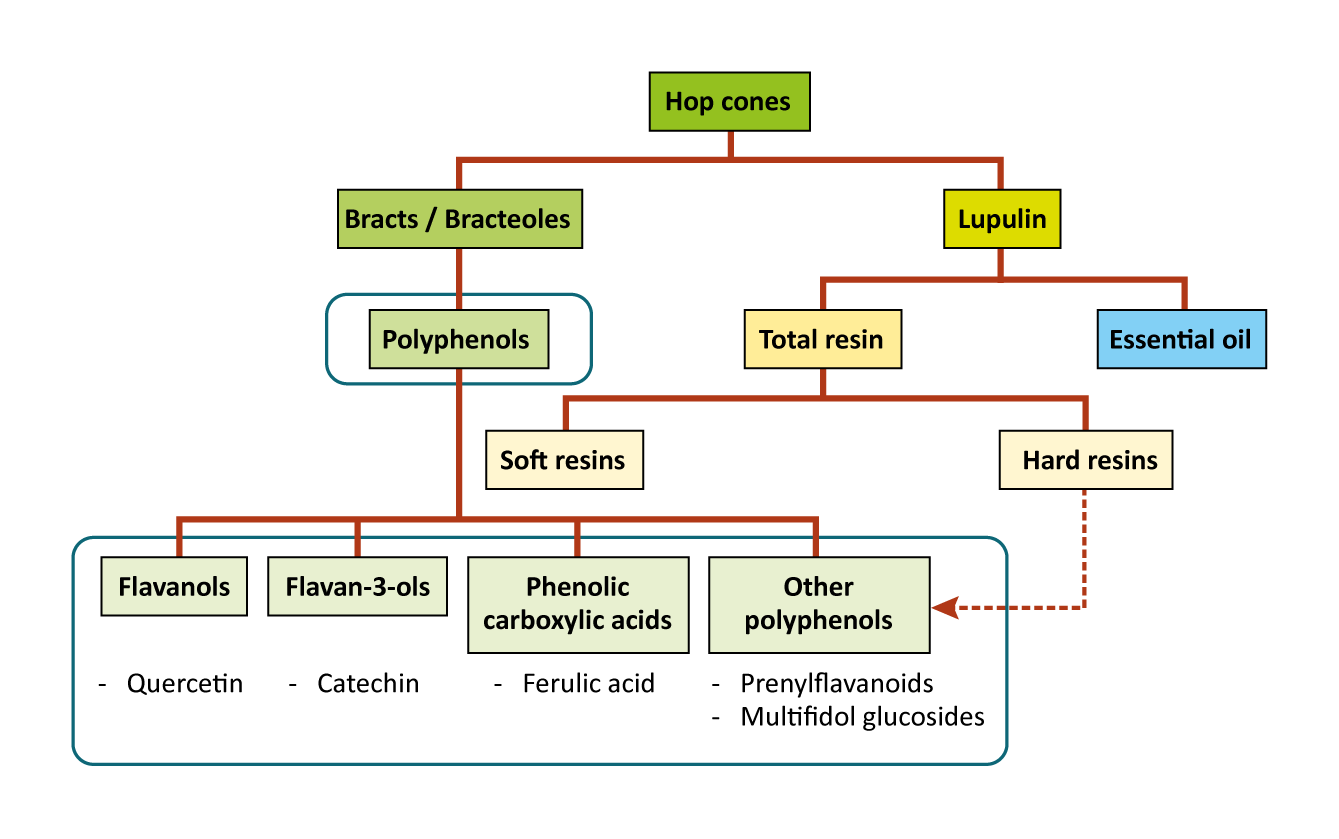
In the above figure there is a dotted line from the hard resins to other polyphenols – this is because some of these substances are polyphenols, but can also be classified as hard resins.
Here are some key points to remember about polyphenols in hops:
- The composition of the polyphenols depends on hop variety, cultivation area, harvesting technique and degree of ageing (aged hops have more polyphenols).
- Some polyphenols have only been found in hops, and nowhere else in nature – such as xanthohumol and 6-prenylnaringenin.
- Aroma hops tend to contain a higher amount of polyphenol than bittering varieties.
- They complex with proteins and polypeptides to form trub and may also contribute to beer haze.
- They are antioxidants, acting as free radical scavengers, and chelating metal ions.
- High molecular weight polyphenols tend to affect haze and colour, and low molecular weight polyphenols provide antioxidant capacity.
- They affect beer mouthfeel and astringency.
Please refer to the following journal paper for more details about the various polyphenols found in hops.
Let’s update our figure with what we have covered so far.
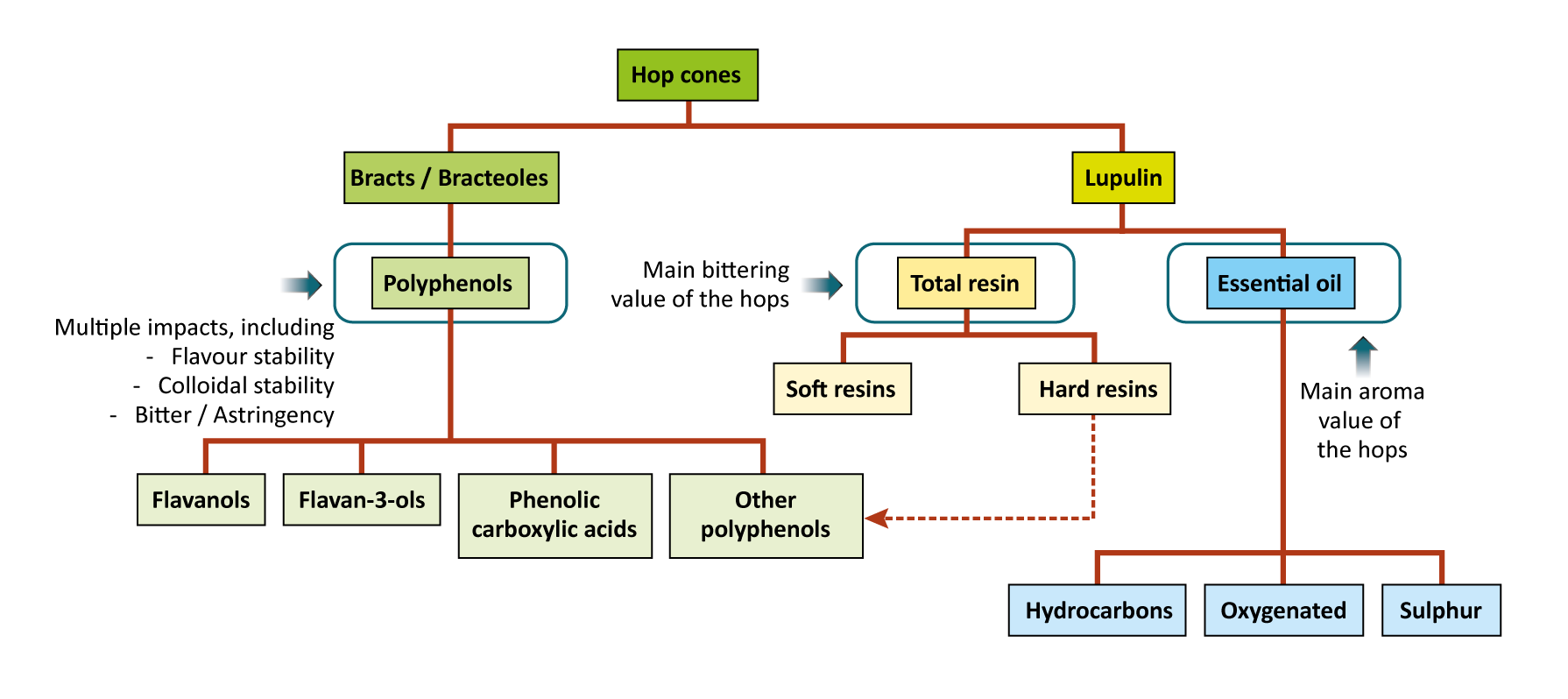
Figure: Hop components
This leaves one last aspect of hop chemistry to explore – the essential oils. Essential oils contribute to hop aroma and flavour.