
Lesson 4 - Adjunct Composition and Application
This lesson explores adjuncts, which are sources of fermentable extract other than malted barley. It investigates the different cereals that we can use as a starch source within the brewhouse and examines how these same cereals can produce liquid adjuncts. It also considers other sources of fermentable sugars that we can add either directly into the kettle or later in the brewing process.
Dextrose and Maltose Syrup
Before we move on, it is important to understand that when we say dextrose and maltose syrups, we don’t mean syrups of 100% dextrose and maltose. Dextrose and maltose syrups are commercial products that are rich in the sugar in question, but they also contain other sugars and dextrins. Specifications for each syrup vary from supplier to supplier. These syrups are typically produced from maize.
Most starch-derived syrups are produced using α-amylase, β-amylase, amyloglucosidase and pullulanase enzymes. There are more details on amyloglucosidase and pullulanase in the Mashing Process lesson. Starch-derived syrups typically contain glucose, maltose, maltotriose, maltotetraose, and larger dextrins but they are usually named after the sugar they are most plentiful in. The figure below shows the action of a range of starch degrading enzymes.
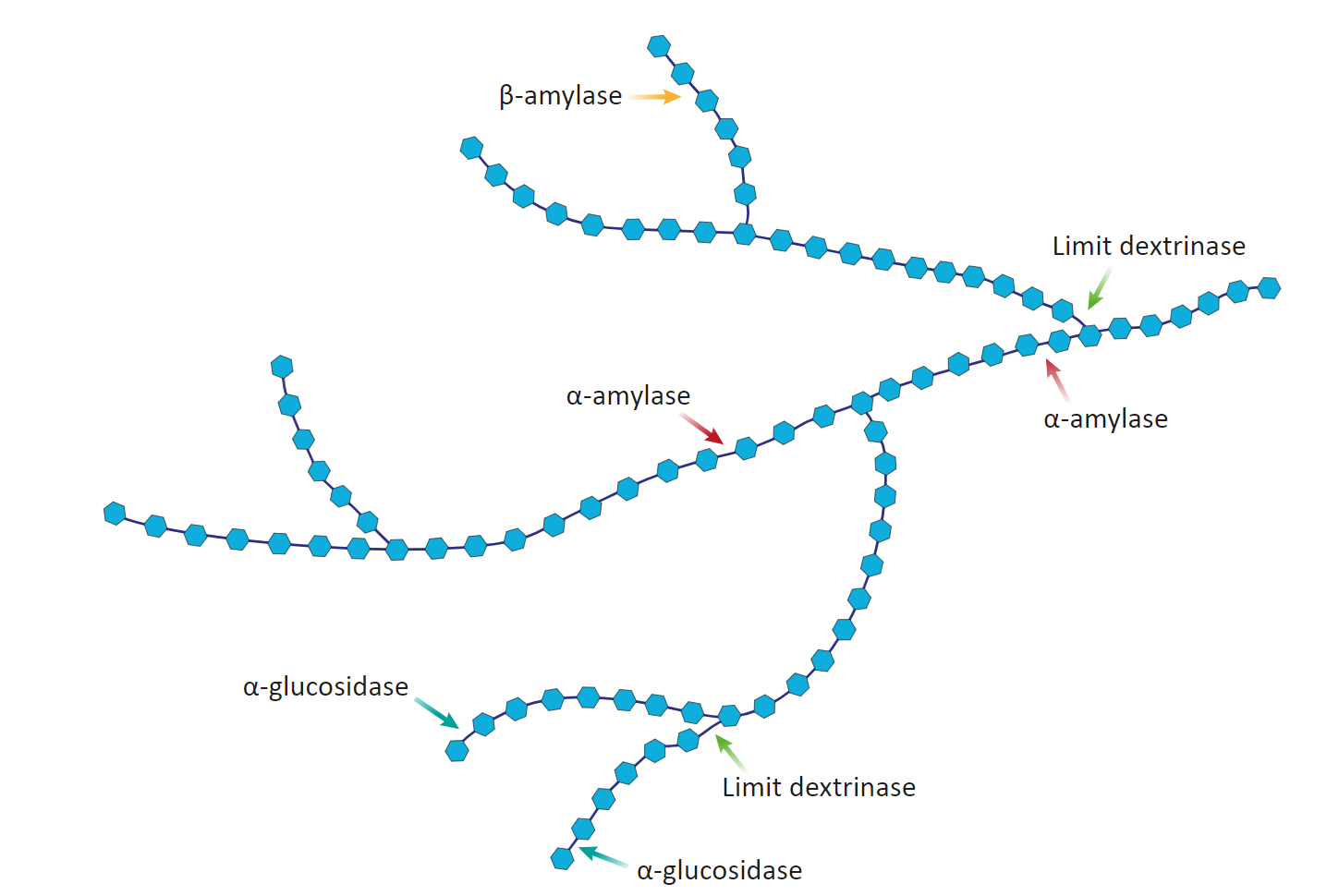
Figure: Starch degrading enzymes
The terms glucose and dextrose are used in brewing interchangeably. Dextrose is the naturally occurring form of glucose. There are two chiral forms (mirror-image molecules) of glucose known as laevo-glucose (L-glucose) and dextro-glucose (D-glucose). You should now be able to see where dextrose gets its name from! As we only use glucose from natural sources, to brewers who are not biochemists, glucose is dextrose.
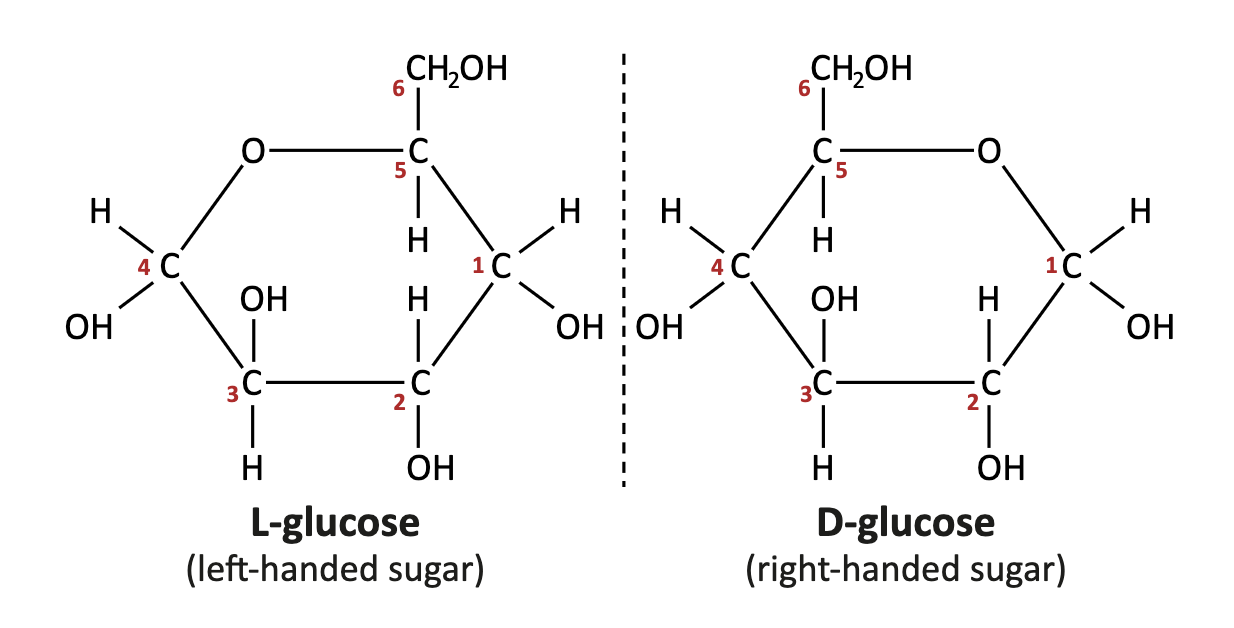
Figure: Laevo-glucose and dextro-glucose
Care must be taken when using syrups high in glucose. Glucose is the first sugar the yeast will ferment and it tends to ferment glucose before starting on the other sugars. When fermenting worts with high concentrations of glucose, yeast can use up the glucose, then be unable to adapt to continue fermenting the other wort sugars. This leads to stuck fermentations. This is, however, not the case for worts high in maltose and sucrose.
The table below shows the sugar spectra of some commercially available sugar syrups. Please note there is variation in the levels in each of the sugars depending on supplier. We will explain what dextrose equivalent (DE) means later in the lesson.
Table: Sugar levels in some commercial sugar syrups compared to worts
|
Sugar |
Infusion Mash Wort |
Decoction Mash Wort |
Low Fermentability Syrup |
63 DE Syrup |
High Maltose Syrup |
Very High Maltose Syrup |
High Dextrose Syrup |
|
Glucose + Fructose |
10 |
11 |
4 |
38 |
2 |
3 |
94 |
|
Sucrose |
5 |
2 |
0 |
0 |
0 |
0 |
0 |
|
Maltose |
45 |
52 |
10 |
33 |
55 |
68 |
3.5 |
|
Maltotriose |
15 |
12 |
12 |
6 |
16 |
18.5 |
0 |
|
Dextrins |
25 |
23 |
74 |
23 |
27 |
10.5 |
2.5 |
|
Fermentability (%) |
72 |
75 |
24 |
76 |
70 |
86 |
97 |
Maltose syrup
The majority of sugars in maltose syrup are the disaccharide maltose (two glucose units). Pullulanase, also known as limit dextrinase (but usually from bacterial origin), is used to produce maltose syrups in combination with β-amylase. Limit dextrinase debranches the starch chains; β-amylase then attacks the starch chains to produce maltose. High and very high maltose syrups can be produced with additional enzyme treatment. High maltose syrups typically contain around 50% maltose and very high maltose syrups contain 70% maltose.
Suppliers can call their syrups whatever they like, so one supplier's high maltose syrup may have a lower proportion of maltose than another's. Some can even have less maltose than syrups sold as just "maltose syrup". You should always buy your syrup based on what it contains, not what it is called!