
Lesson 2 - Speciality Malt
This lesson deals with speciality malt. Speciality malt is any malted product other than standard pale barley malt. We explore how these malts are made. We discover how using speciality malts or malt extracts, provides different beer flavour, aroma and can also affect colour.
Kilned and Roasted Speciality Malt
These malts get their properties from the high temperatures at which they are finished. Almost all are kilned to some extent before they are processed in a drum roaster. In the drum roaster the temperature is gradually raised until it reaches the target roasting temperature.
Amber malt is heated according to a defined temperature profile from 48°C, up to 170°C. Lower finishing temperatures can be used. With amber malt, drum heating may be indirect or direct. If indirect heating is used, hot air is blown through the drum to prevent stewing. Despite the high finishing temperatures used, amber malt retains a small amount of diastatic power. A great deal less than pale malts. Some suppliers call their amber malt biscuit malt but others use the name biscuit malt for a more highly coloured malt with no diastatic power.
Brown malt is typically roasted at a higher temperature than amber malt. Temperatures range up to 176°C. With brown, black and chocolate malt production the drum is always heated directly. Although the drum is heated directly using the products of combustion (which contains nitrogen oxides), the formation of N-dimethylamine (NDMA) is not thought to be a problem. This is because the temperature in the kiln breaks down or drives off NDMA.
Chocolate and black malt are produced by gradual heating to 205°C over two hours, followed by intense roasting up to 225°C for chocolate malt and 235°C in the case of black malt. At this temperature the malt is very close to combusting.
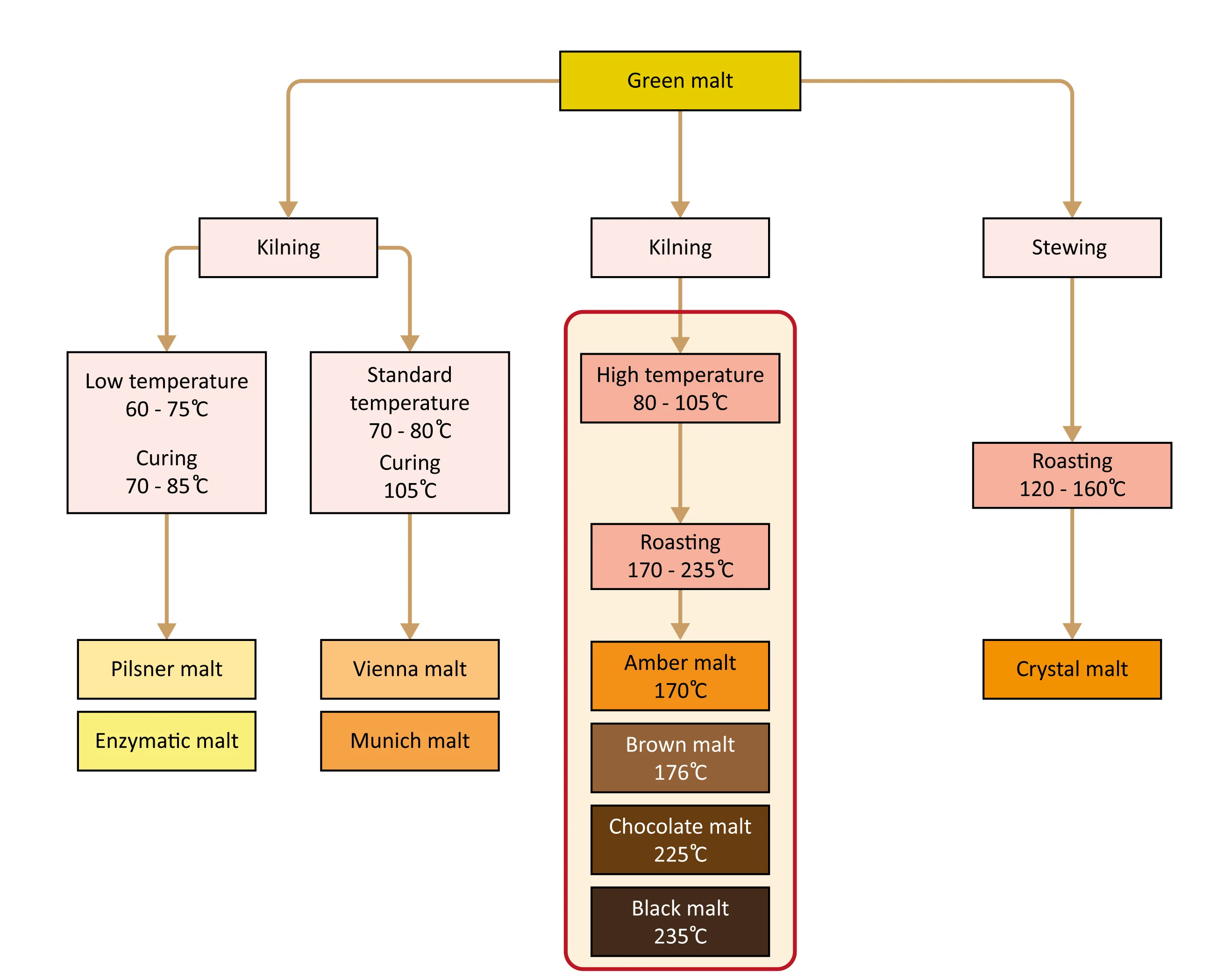
Figure: Production of roasted malts through kilning and roasting
At the end of the cycle, when the operator has confirmed the colour of a ground sample meets the specification, the grain is quenched with water. This stops the roasting process, causes the grain to swell and prevents it from catching fire on discharge. In total, around 15% of the grain’s dry weight may be lost during the process as dust and fumes.
This video shows how the grain sample is evaluated for colour. (Note, this is for illustrative purposes only and is not a recommendation or endorsement of a particular supplier’s product.)
Depending on the speciality malt type, it appears chocolate brown to black in colour, as shown in the figure below. The husk should appear shiny and polished, and when the endosperm is cut open, it should be floury, mealy, and friable, not steely or charred.
Below are some of the reported marketing descriptions of the effects of kilned and roasted speciality malts on beer:
Amber - imparts a dry, biscuit-like flavour, with light toffee notes.
Brown – imparts mild biscuit/coffee notes.
Chocolate – imparts strong coffee, along with burnt toast notes.
Black – imparts smoky, harsh burnt coffee/toast notes. Less acrid than roast barley. Some speciality maltsters remove the husk before roasting black malt, and claim that this reduces acridity.
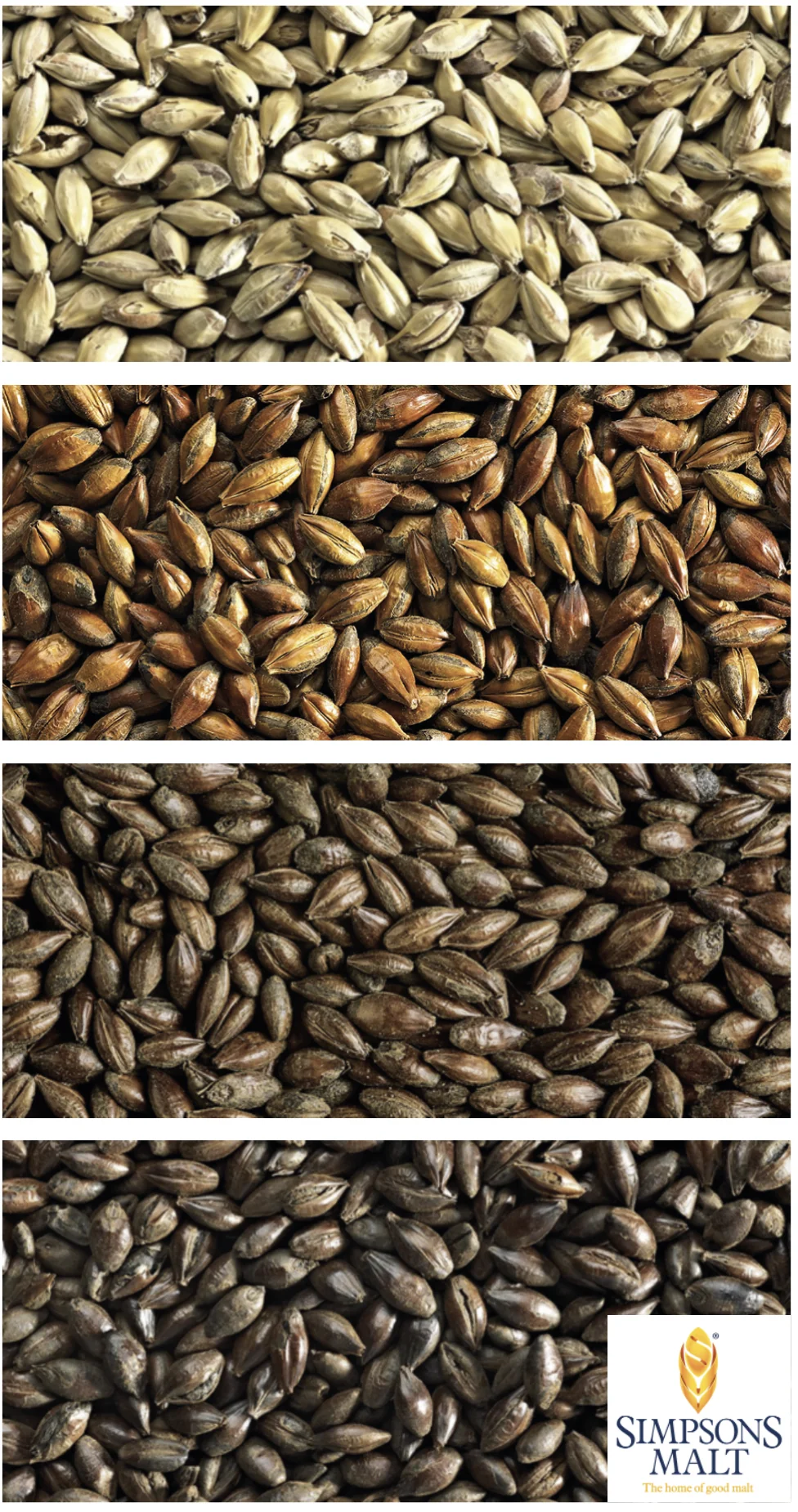
Figure: From top to bottom, amber, brown, chocolate and black malt
Stouts, porters and other dark beers are often made using chocolate and black malts. There is evidence that roasted malt products promote foam stability.