
Lesson 2 - Speciality Malt
This lesson deals with speciality malt. Speciality malt is any malted product other than standard pale barley malt. We explore how these malts are made. We discover how using speciality malts or malt extracts, provides different beer flavour, aroma and can also affect colour.
Barley Malting Process – Production Regimes
Speciality malts have higher colour than your typical pale malt. This is because they have spent more time at high temperatures, either in the kiln or in a roasting drum. In addition to colour, these malts also provide more flavour. All speciality malts are made from green malt. However, one group is made using high temperature kilning followed by roasting, while the other is produced by stewing then roasting (typically in a roasting drum).
Many speciality malts are made using higher nitrogen barley. The greater availability of nitrogen can increase colour and flavour formation through the Maillard reaction.
The malt’s diastatic power decreases as the colour increases because while heat increases colour, it also denatures the amylases.
Malt production methods
The figure below shows the processes used to make the main types of speciality malt and pale malts.
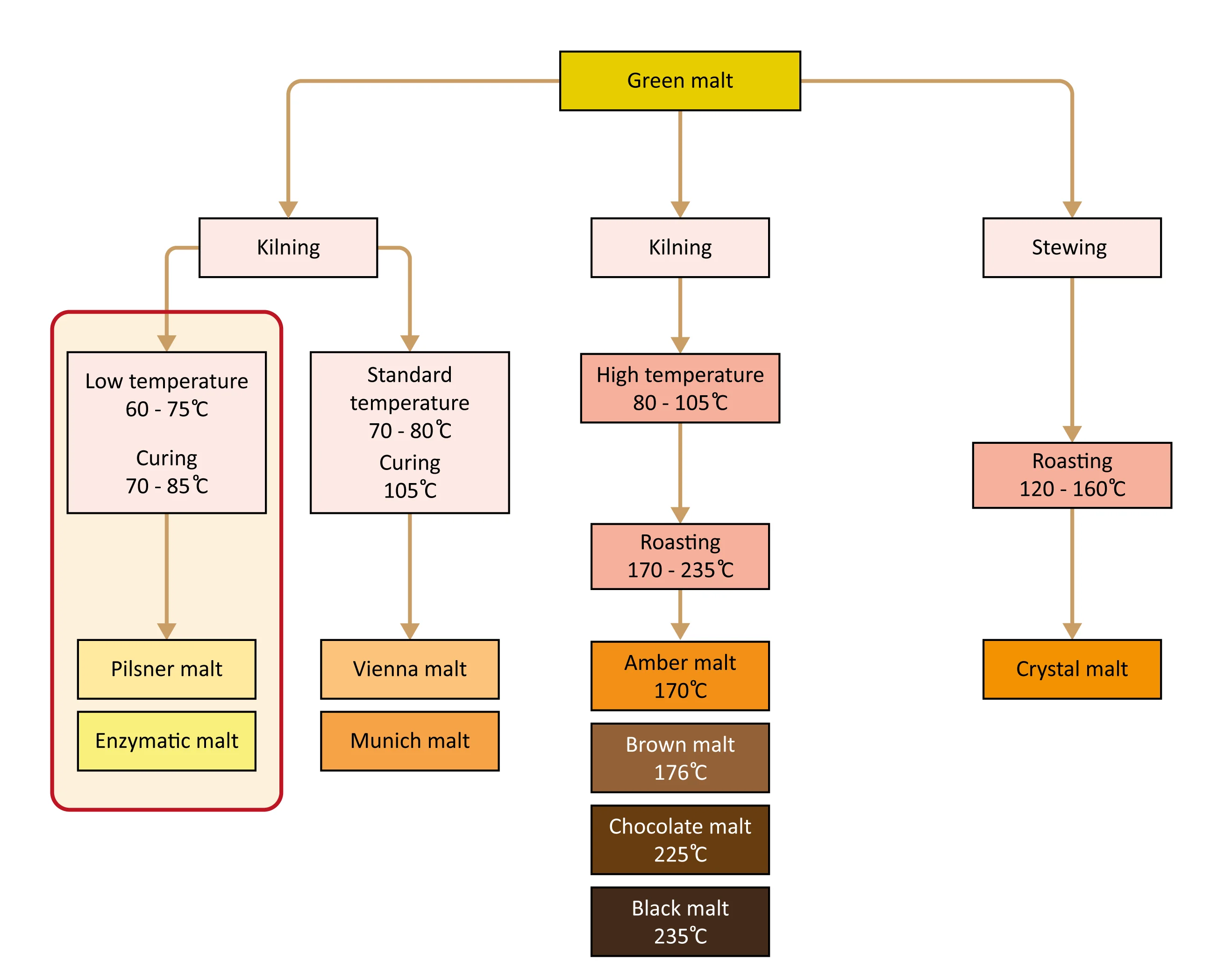
Figure: Classification of speciality malts by production process
Before we move on to describe speciality malt production methods in detail, let’s remind ourselves how pale (base) malt is kilned. When producing pale malt, air-on temperatures during drying do not typically exceed 70˚C. In curing, the temperature is increased to 70-85˚C. Higher curing temperatures convert more SMM to DMS and evaporate the DMS that is formed. The aim is to remove DMS, achieve the target colour and prevent damage to the malt’s enzymes. Some brewers specify malt with more SMM because they need DMS to contribute to their beer’s flavour.
Enzymatic/diastatic malt
Enzymatic malt is produced using high nitrogen barley. Germination is undertaken at lower temperatures than used for pale malt to conserve enzymes. Kilning is also completed a low temperatures and with increased air flow and kilning duration. The kiln temperature does not typically exceed 50°C. Using diastatic malt allows us to complete conversion during mashing in the same timeframe and to the same extent while using a higher proportion of adjuncts.
Although they are not on our diagram, now is a good opportunity to discuss some types of speciality malt that tend to have a lower colour than the rest.
Under modified malt
Chit malt is barely modified. It is made in the same way as pale malts but germination is restricted. Depending on the supplier, it is either kilned directly after it has chitted on the second day of steeping, or is germinated for up to two days. Where the grain is germinated, it is only steeped to 40% moisture and germination is done at a relatively low temperature (below 18°C). Being barely modified the malt is high in β-glucan (above 1000 mg/kg in some cases) and undegraded proteins. As a result, it can cause wort separation problems if used above a few per cent. It is used by some brewers to improve foam stability and to provide a fuller palate. Historically it was thought to give a dry flavour or reduction in palate fullness but today many brewers seem to believe the opposite! Some suppliers also sell short grown malt which has been germinated for three to four days. These are somewhere between chit malt and standard pale malt and perform accordingly.
Dextrin malt
Dextrin malt is malt sold as a source of dextrins. However, at least one is higher in protein and called dextrin malt because it contributes to body, rather than because it actually provides dextrins! To confuse matters further, one American malt supplier calls their carapils® malt a dextrin (or dextrine) malt because they feel it provides dextrins. There doesn’t appear to be a common approach used for producing malts in this category, so it is impossible to provide specific process details. Many are malts, that like some caramel malts, are stewed in the kiln to make their starch or its breakdown products less easy for enzymes to hydrolyse. It is not known how heating the grain achieves this, or what compounds are formed, but after saccharification in the mash, more unfermentable extract remains when these types of dextrin malts are used instead of base malt.