
Lesson 2 - Barley
Barley Kernel Endosperm Development Stages
The endosperm develops during grain filling as the barley plant produces seed grains to become its next generation.
The crop yield can be influenced by the water available from the soil and the temperature before stem elongation. Severe cold or high temperatures can reduce the amount of grain formed. Environmental conditions are also important during the period where the grain is filling, just before harvest – called the grain fill period.
The grain fill period is when the endosperm is being filled up with the nutritional storage materials, including starch and protein.
Under normal growth conditions, the grain fill period progresses with starch and protein being synthesised (made) in the endosperm cells. However, again under extreme temperature or drought conditions, the rate of synthesis of starch and protein can be affected. Drought conditions suppress the synthesis of starch while increasing the synthesis of protein. This results in a small grain size. The figure below shows the progression of grain filling: from the milk stage, through the dough stage, and to final grain maturity. The figure shows the development of protein, starch, and sucrose. The reason for the rapid decrease in sucrose in the dough stage is that the plant uses sucrose to make starch.
The final grain size is also linked to the fertiliser applied to the soil before planting the seed. As nitrogen in the soil is used to make proteins in the grain, using high rates of nitrogen fertiliser can cause a high protein level in the grain and hence smaller grains with a lower starch content.
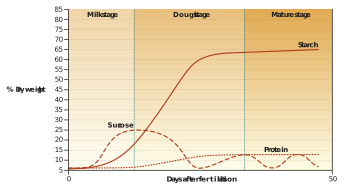
Figure: Stages of kernel development after fertilisation