
Lesson 6 - Hygienic Design
In this lesson we will discuss the principles of hygienic design and how it is applicable in the brewing industry. Hygienic design covers equipment that is in contact with the product, as well as equipment and the environment that is not in contact with the product.
In-line Equipment
There is such a range of equipment available that it would be impossible to put every guideline down for all possible equipment options.
The most important consideration for equipment is that it adheres to hygienic design guidelines, or better still, is certified. This is where the organisations we discussed earlier really do add value and can make our lives much easier. Ideally, if a supplier provides certification for their equipment, we would not have nightmares about microbes growing undetected in the crevices of our facilities.
Equipment certification
So, how is equipment certified? Firstly, it is checked against the standards. Secondly, it is tested by running a test procedure on it. The test is run with a solution inoculated with contaminants. The test equipment is then cleaned in place and checked for any residual contaminants.
Here is a EHEDG video to see how it is done:
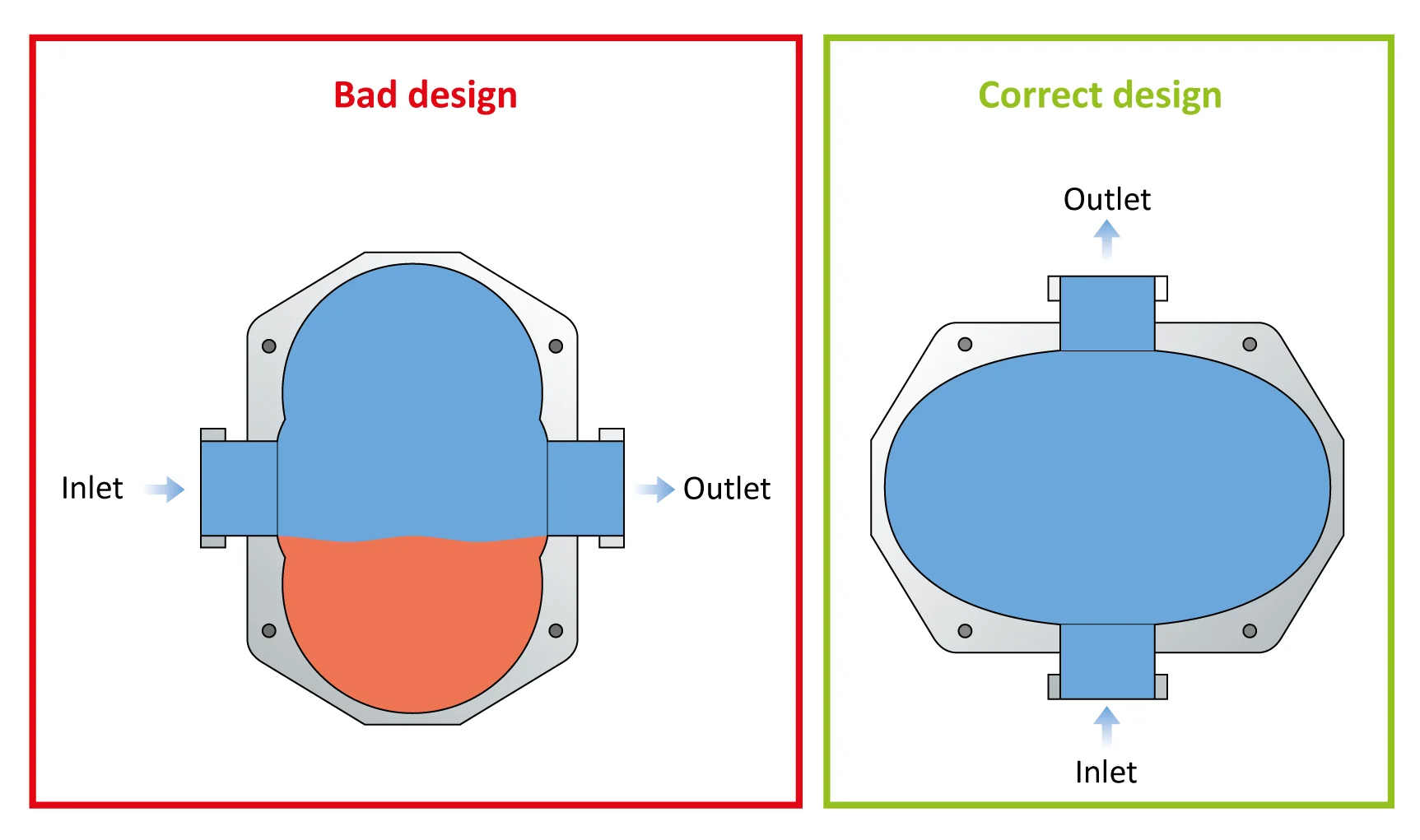
Figure: Drainability of equipment
It is important to install equipment in such a way that it can be drained. This is especially important if the equipment contains a significant volume of liquid. Orientation can play an important role, as you can see in the figure above. Centrifugal pumps should be orientated such that they have minimal residual liquid remaining in the cavity. If it is not possible to prevent residual liquid remaining, the system should be operated so that any liquid that does remain is sanitising solution and not product.
Pump bypasses are standard for positive displacement pumps as these pumps can over pressurise the line if the routing is not open. They also restrict flow during CIP. Thus the bypass allows for pressure relief and also for the full CIP flow to move through the system without the restriction of the positive displacement pump capacity. The figure below shows a pump bypass.
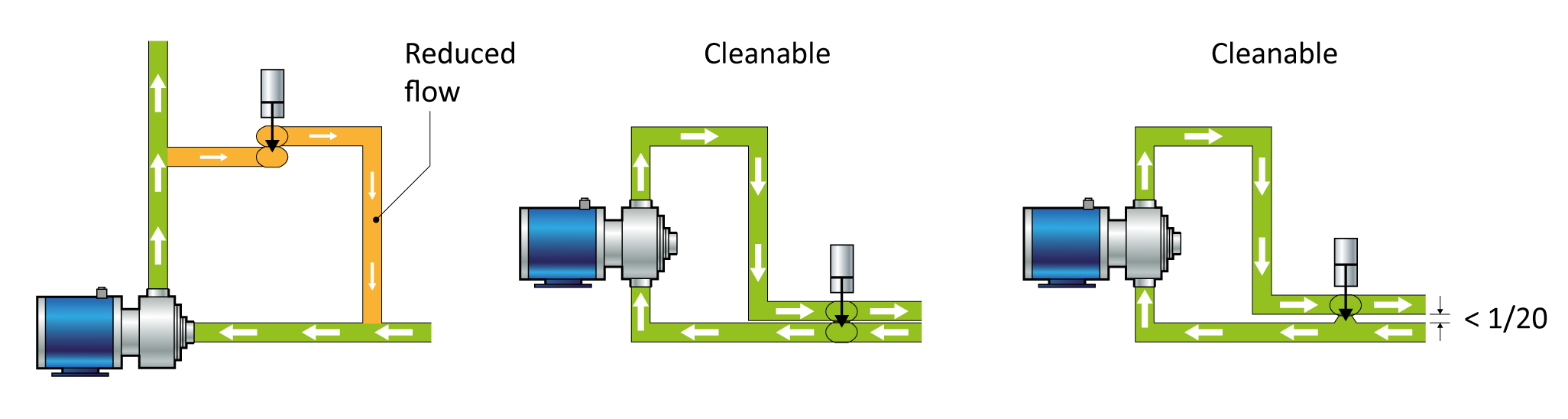
Figure: Hygienic design of a pump bypass