
Lesson 6 - Microorganism Detection and Control
This lesson covers the procedures available for detecting microorganisms in wort and beer. It compares traditional detection methods, which use solid and liquid media, with more modern, rapid methods. It then looks at microorganism entry points within the brewing process and discusses factors that inhibit or encourage their existence and proliferation.
Rapid Biochemical Methods
These rapid tests detect biochemical reactions within or on the microorganism cells , or metabolic products from cell growth. Some are organism specific while others will not identify the contaminating microorganism.
API
The API, or analytical performance index, tests were developed in the 1970s. API test strips consist of plastic cupules containing up to 20 dehydrated substrates to detect biochemical reactions by colour change or turbidity. We enter test results into an online database to determine the bacterial identity.
The 20E system was adopted by the brewing industry in the 1980s for detection of Gram-negative brewery microorganisms. Zymomonas, Acetobacter, and Acetomonas were not identifiable directly; however, those of genus Citrobacter, Enterobacter, Obesumbacterium, and Klebsiella could be identified rapidly and without the microbiological skills previously needed.

Figure: API 20E test kit
Direct Epifluorescence filter technique (DEFT)
DEFT is a faster and more specific membrane filter microscopic method. Unlike the microcolony method, it requires no incubation and results can be obtained in under 30 minutes. The method uses acridine orange, which binds to nucleic acids in the cell. Actively dividing cells contain large amounts of single-stranded ribonucleic acids (RNA) which stain orange. Dead cells contain double-stranded DNA which stains green, allowing for differentiation between live and dead cells. The method can be automated using computer-assisted image analysis, giving a result in under 30 minutes, and it is extremely sensitive, allowing visualisation of a single cell on the membrane.
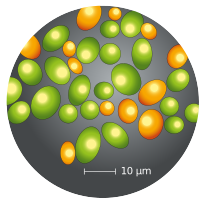
Figure: DEFT photograph of S. cerevisiae
ATP bioluminescence
This is a widely adopted, relatively inexpensive method that uses the firefly enzyme luciferase to catalyse the reaction between ATP (a high energy storage molecule found in every cell), oxygen, and the substrate luciferin (which produces light). The intensity of the light is measured in a small luminometer and is proportional to the microbial load.
There are, however, some drawbacks to this test. Firstly, there is no standardised measurement unit for bioluminescence so relative light units (RLU) are used. Sensitivities of different instruments differ so calibration is also needed. Different microbes contain differing amounts of ATP, so a brewing yeast cell may have 100 times the ATP than a bacterial cell. In addition, beer itself contains ATP, so soil will give a false positive reading for microorganisms.
Nevertheless, ATP kits nowadays are compact and easy to use, making them available at plant-operator level for validation of surface cleanliness (surface swabs) and CIP rinse water checks.
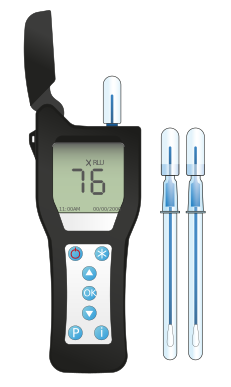
Figure: ATP bioluminescence kit
Immunoanalysis (ELISA)
ELISA (enzyme linked immunosorbent assay) uses antibodies (proteins) to detect contaminants through interaction with their specific antigens, which can be proteins, polypeptides, or peptides. We add a second antibody, linked to enzyme, which binds to the antigen antibody complex. Next, we add a chemiluminescent substrate which reacts with the enzyme. We then measure the resultant light emission to confirm the specific microorganism.
High sensitivity antibody kits are available for Lactobacillus and Pediococcus beer spoilers.
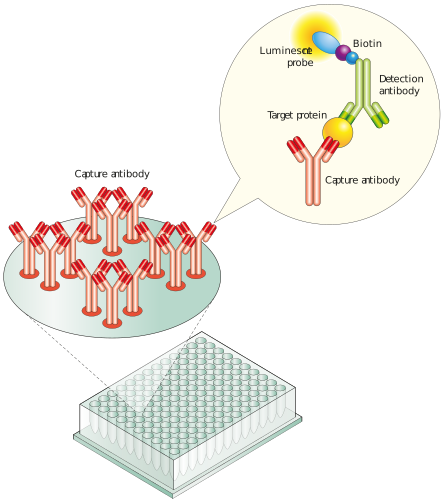
Figure: Principle of ELISA
Gas chromatography (GC)
GC can be used to detect the metabolic products of the contaminating microorganisms, such as volatile and non-volatile organic acids, in the same way that the diacetyl level in fermenting wort may be measured. Each beer would first need a baseline measurement of the compound being investigated in order to prevent a false interpretation.