
Lesson 6 - Microorganism Detection and Control
This lesson covers the procedures available for detecting microorganisms in wort and beer. It compares traditional detection methods, which use solid and liquid media, with more modern, rapid methods. It then looks at microorganism entry points within the brewing process and discusses factors that inhibit or encourage their existence and proliferation.
Point of Reflection - Reconvene
Welcome back. So what were your thoughts?
The organism that we often want to inhibit is our brewing yeast. We do not want the yeast growing if we are looking for bacteria, as the yeast will smother the agar plate or create turbidity in the liquid media. In this case, cycloheximide (formerly known as actidione) can be used to suppress yeast. This is a naturally occurring fungicide produced by the bacterium Streptomyces griseus. Cycloheximide exerts its effects by interfering with protein synthesis. In higher concentrations, wild yeast growth is suppressed together with culture yeast.
We mentioned the use of dyes as selective agents but we can also use them as indicators for specific organisms in a mixed population. Lee’s multi differential agar (LMDA) is a good example where the dye indicator bromocresol green turns yellow when exposed to acid-producing bacteria.
The following table summarises the techniques used in traditional formulations of solid and liquid media to identify brewery bacteria:
Table: Traditional brewery bacteria identification tests
|
Test |
Basis of Test |
|
Carbon source |
Growth on specific carbon medium |
|
Nitrogen source |
Growth on simple medium with specific nitrogen source |
|
Acid and gas production |
Specific carbon medium with methyl red indicator for acid. Inverted Durham tube collects gas |
|
Catalase test |
Hydrogen peroxide solution poured on plate. Catalase positive bacteria cause foaming due to oxygen release |
|
Voges-Proskauer test |
Acetoin and diacetyl produce colour after addition of creatine and 1-naphthol |
|
H2S production |
Lead acetate paper develops a black or grey colour when exposed to H2S |
|
Nitrate reduction |
Potassium nitrate reduction to nitrite detected by pink colour from acidic a-naphthylamine |
In the final part of this section we look at the beer spoilers and discover the specific media and tests that we can use to detect them.
Media for specific microorganisms
The lactic acid bacteria (LAB) are typically fastidious (having complex nutritional requirements) organisms and their importance as beer spoilage organisms has led to the formulation of various media for their recovery and growth.
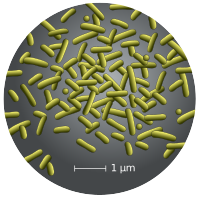
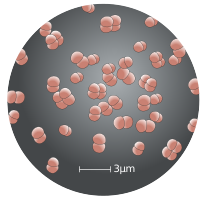
Figure. The lactic acid bacteria Lactobacillus and Pediococcus
Sucrose agar – which contains yeast extract, peptone, salts, and a high concentration of sucrose (5%) – can be used, but the single carbohydrate source may be insufficient for the detection of all LAB that is able to spoil beer.
We can instead use two carbohydrates, maltose and glucose, in a nutrient base – preferably de Man, Rogosa, and Sharpe (MRS) agar or Raka-Ray LAB medium (RRLM), incubated anaerobically at 25-30°C.
Some major brewing companies use NBB (Nachweismedium für Bierschädliche Bakterien). The media is buffered glucose, maltose, peptone, yeast extract, and meat extract supplemented with beer, plus an indicator, chlorophenol red. Growth of LAB causes a colour change from red to yellow following anaerobic incubation at 27°C for 5 days.
Further detail on the LAB media and their use is found on the following web pages. (Note, this is for illustrative purposes only and is not a recommendation or endorsement of the suppliers’ products.)
MRS: http://www.oxoid.com/UK/blue/prod_detail/prod_detail.asp?pr=CM0361&c=UK&lang=EN
Raka-Ray: http://www.oxoid.com/UK/blue/prod_detail/prod_detail.asp?pr=CM0777&c=UK&lang=EN
Acetic acid bacteria are aerobic and can be grown on wort, beer, or malt extract agar supplemented with yeast extract (1%) and incubated at 25-30°C; the pH should be around 4.0 and additional agar may be added to assist solidification.
The anaerobic Gram-negative spoilers Megasphaera and Pectinatus may be detected using SMMP (selective medium for Megasphaera and Pectinatus). The base is lactate as a carbon source with reducing agents promoting anaerobic growth. Crystal violet and sodium fusidate inhibit the Gram-positive LAB and cycloheximide-inhibited yeast. We inoculate samples and incubate them anaerobically (at 28-30°C for 14 days), then follow up turbidity by identification under the microscope.
Enterobacteria, including O. proteus and some miscellaneous non-fermentative bacteria, grow readily on the bile salts contained in MacConkey agar, incubated at 35°C. Enterobacteria generally form colonies after 24 hours, but O. proteus strains take longer, 36 to 48 hours, and are typically lactose-negative, i.e. form pink/colourless colonies as opposed to the red, lactose-fermenting colonies of most Citrobacter, Klebsiella, and Enterobacter strains.
We detect Zymomonas spp with Dadds and Martin media – containing glucose, yeast extract, peptone supplemented with ethanol (3%v/v), and cycloheximide (50 mg/L) – adjusted to pH 4. Its metabolic products acetaldehyde and hydrogen sulphide can be detected by colour formation with Schiff’s reagent (purple) and lead acetate (grey/black).
We can facilitate Wild Yeast detection by including cycloheximide, which prevents the growth of brewing yeast but allows Pichia, Torulopsis, Brettanomyces, and other wild yeasts to grow. The optimal concentration should be determined experimentally but 10 to 20 μg/mL is in common usage.
MYGP (malt extract, yeast extract, peptone, and glucose) with 200 mg/L copper sulphate added is another media we can use to detect wild Saccharomyces and non-Saccharomyces strains. Copper sulphate agar allows for the selection of copper resistance, coded by the CUP1 gene, in industrial yeast strains amongst strains not resistant to copper. The copper concentration required must be determined for new production strains when introduced into a brewery.
Lysine medium contains L-lysine as the sole major nitrogen source. A wide range of wild yeasts are able to utilise this lysine and grow normally, but Saccharomyces cannot and their growth is prevented.
Wild Saccharomyces strains obviously escape detection on this medium, but can be isolated on crystal violet (20 μg/mL) medium which inhibits brewing yeast but not strains of S. pastorianus, S. cerevisiae var. diastaticus, and other Saccharomyces species.
Lager and ale brewing yeasts may be differentiated by using a medium with melibiose as a sole carbon source. Whilst lager strains can use this disaccharide, ale strains cannot and will not grow.
This table summarises the common media used in brewing laboratories for bacterial and yeast detection.
Table: Common media for microorganism detection
|
Media |
Full Name |
Composition |
Used for |
Conditions |
Test Result |
|
WLN |
Wallerstein laboratories nutrient |
Yeast extract, peptone, glucose, bromocresol green, cycloheximide* |
Bacteria in yeast, brewing yeasts |
Aerobic/anaerobic 25°C/2-14 days |
Growth on plates |
|
MRS |
De Man-Rogosa-Sharpe |
Glucose, peptone, competitor inhibitors |
Lactic acid bacteria |
Anaerobic, 25-42°C/2-3 days |
Straw-colour colonies |
|
MYGP |
Malt extract, yeast extract, glucose peptone |
Malt extract, yeast extract, glucose peptone, lactic acid |
Selective growth of wild yeast |
Aerobic 25°C/5 days |
Selective growth of wild yeast |
|
MacConkey |
MacConkey |
Lactose, bile salts |
Coliforms |
35°C/24hr |
pink/red colonies, gas and acid production in broth |
|
Lysine |
Lysine |
Glucose, lysine |
Non-Saccharomyces wild yeast |
2°C/variable |
Wild yeast growth |
|
UBA |
Universal beer agar |
Peptonised milk, yeast extract, glucose, tomato extract, beer sample, cycloheximide* |
LAB, Acetobacter, Zymomonas, wild yeast |
Aerobic/anaerobic, 29°C/3 days |
Growth of beer spoilage microorganisms on plates |
*added to suppress culture yeast
Now let us imagine another scenario. You open a small brewery with basic bottling and kegging facilities. Aside from using your microscope, what other inexpensive simple tests could you undertake to ensure your product will be microbiologically stable in the marketplace?
Give yourself 5-10 minutes to think about this, and then click ‘Next’ to continue with this lesson.