
Lesson 2 - Beer Foam
In this lesson we will discuss the physics and mechanics of foam formation and collapse, along with the chemistry of the compounds involved with beer foam.
Foam is affected by the brewing of raw materials and by wort and beer processing within and outside the brewery. The measuring of foam will be discussed and we will end the lesson by looking at gushing.
Dispense
After filtration, the brewer adds gas in the form of CO2 or Nitrogen (N2) to the brand specification. The choice of gas and its application for draught beers will have a profound effect on beer foam, as will glassware and tap management.
Gas type plays a huge role in foam physics. We have already discussed the role of CO2 during beer processing as well as in foam formation and collapse.
Nitrogen (N2) gas, however, is used in some ales and stouts in both the packaged product as well as the draught dispense. With its lower solubility, N2 resists disproportionation; it creates a finer beading and a more stable creamy foam and mouthfeel because of the smaller stable bubbles, which hinder drainage. It is less likely to produce unevenly sized bubbles so helps to stabilise foam.
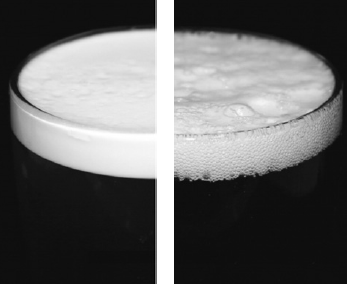
Figure: Bubble size and resulting foam from N2 and CO2
Beer dispense
This is the point of contact between the beer and the consumer. It may often be where the excellent work of the brewer can be quickly undone. These are just a few things than can affect beer foam:
-
Dirty glasses and beer lines
-
Incorrect gas pressure
-
Inexperience in pouring
-
Incorrect gas use
-
Beer storage temperature
-
Container pressure
Foam collapse can happen through lipid-induced collapse, insufficient or excess foam generation from gas pressure, or even the incorrect pouring technique.
Dispense temperature also plays a role. If beer is poured too cold, the CO2 in the beer will no longer be encouraged to come out of the liquid, and will not bead or form a foam head.