
Lesson 2 - Wort Boiling Theory
This lesson explores changes that occur during wort boiling. It details how these changes occur and their effects on quality. We also describe how wort boiling can be monitored.
Inactivation of Malt Enzymes
During wort boiling, the few malt enzymes that are still present in the sweet wort are destroyed (or denatured).
As we discovered in the mashing lessons, malt enzymes rely on their three-dimensional structure to work. Heating wort up to boiling point causes the bonds that maintain this structure to break, and as a result the malt enzymes lose their ability to catalyse reactions. The process is called denaturation. Once denatured, the enzymes cannot catalyse the hydrolysis of their substrates so the sugar spectrum of the wort will not change substantially.
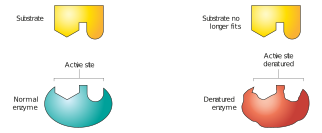
Figure: Denaturation of enzymes
This prevents the breakdown of the dextrins that might provide body to the beer. It also limits fermentability and hence the beer’s abv.
The temperatures encountered during wort boiling not only denature enzymes but can also kill all vegetative microbial cells in the wort.