
Lesson 8 - Brewing with Hops
This lesson deals with brewing with hops. Topics covered include: the effect of when hops are added, the equipment required, selecting hops and hop addition calculations.
Hop Addition Points
Hops can be added at various points during the brewing process. Where you add them, affects beer flavour and yield of essential oils and bitter substances.
The figure below (not exhaustive) shows some examples of the points at which hops can be added during the brewing process, alongside the primary purpose of those additions.
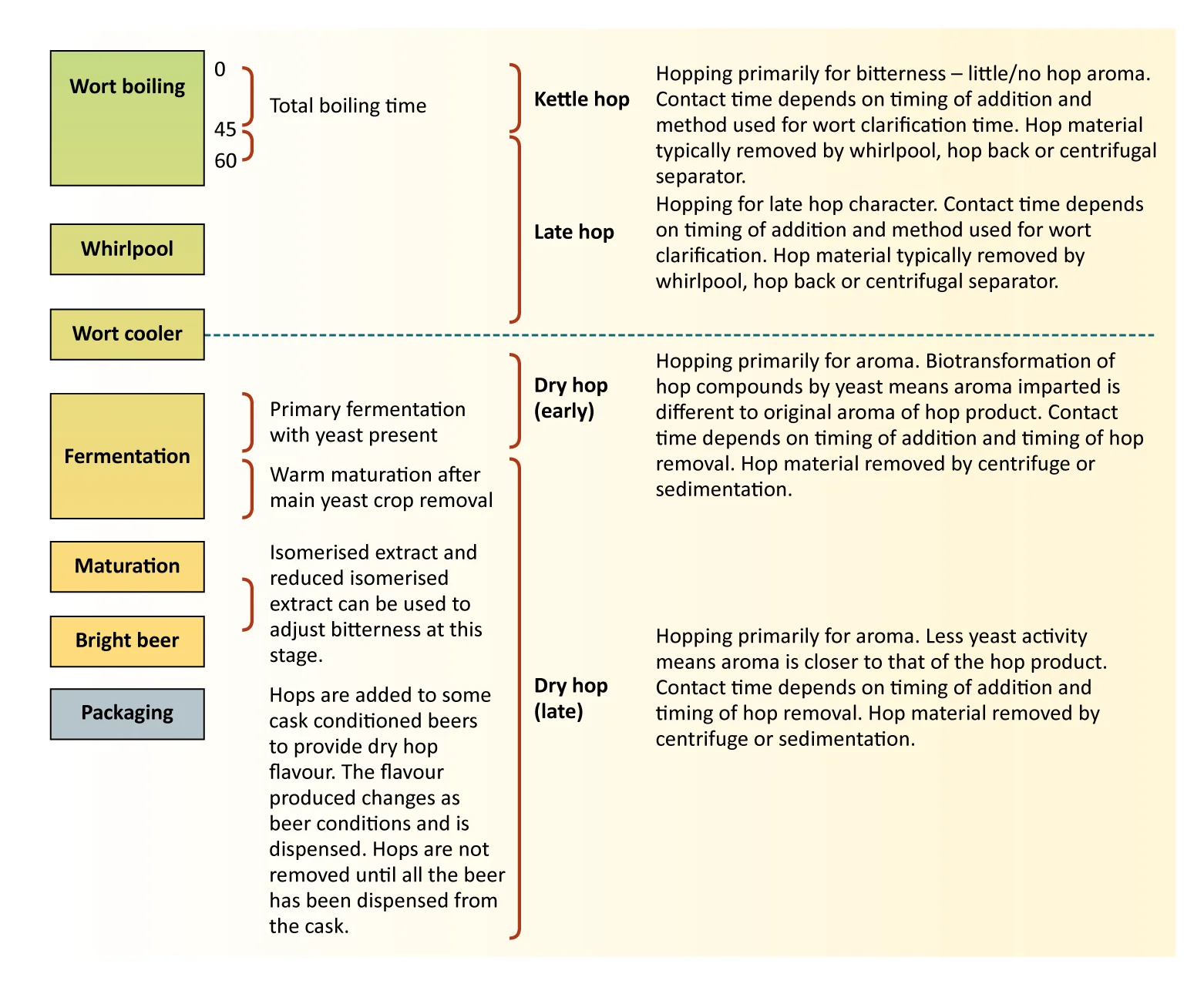
Figure: Hop addition points in the brewing process
Some brewers add hops to the mash tun or lauter tun, or even at the point of dispense, in order to achieve different results. However, this is not common practice.
Point of Reflection: There is such a choice of hops available to the brewer these days, that it can get confusing as to what to add and when. Fill in the table below, showing the hop addition points, and which hop products are most suited to being added at that point. Indicate if the type of hop should be used for bittering or aromatic purposes (primarily).
|
|
Whole Hops |
Pellets |
Extract |
Iso-Pellets |
Iso Kettle Extract |
Iso-Extract |
Reduced Extract |
Hop Oils |
Aroma / Bitterness |
|
Kettle Hop |
|
|
|
|
|
|
|
|
|
|
Late Hop |
|
|
|
|
|
|
|
|
|
|
Early Dry Hop |
|
|
|
|
|
|
|
|
|
|
Late Dry Hop |
|
|
|
|
|
|
|
|
|
Give yourself 5 – 10 mins to think about this and then click ‘Next’ to continue with this lesson.