
Lesson 11 - Jacketed Vessels SAQ
This lesson allows you to test yourself on the material covered in the Jacketed Vessel lesson and determine the level to which you have met the learning outcomes.
Suggested Response - Q2
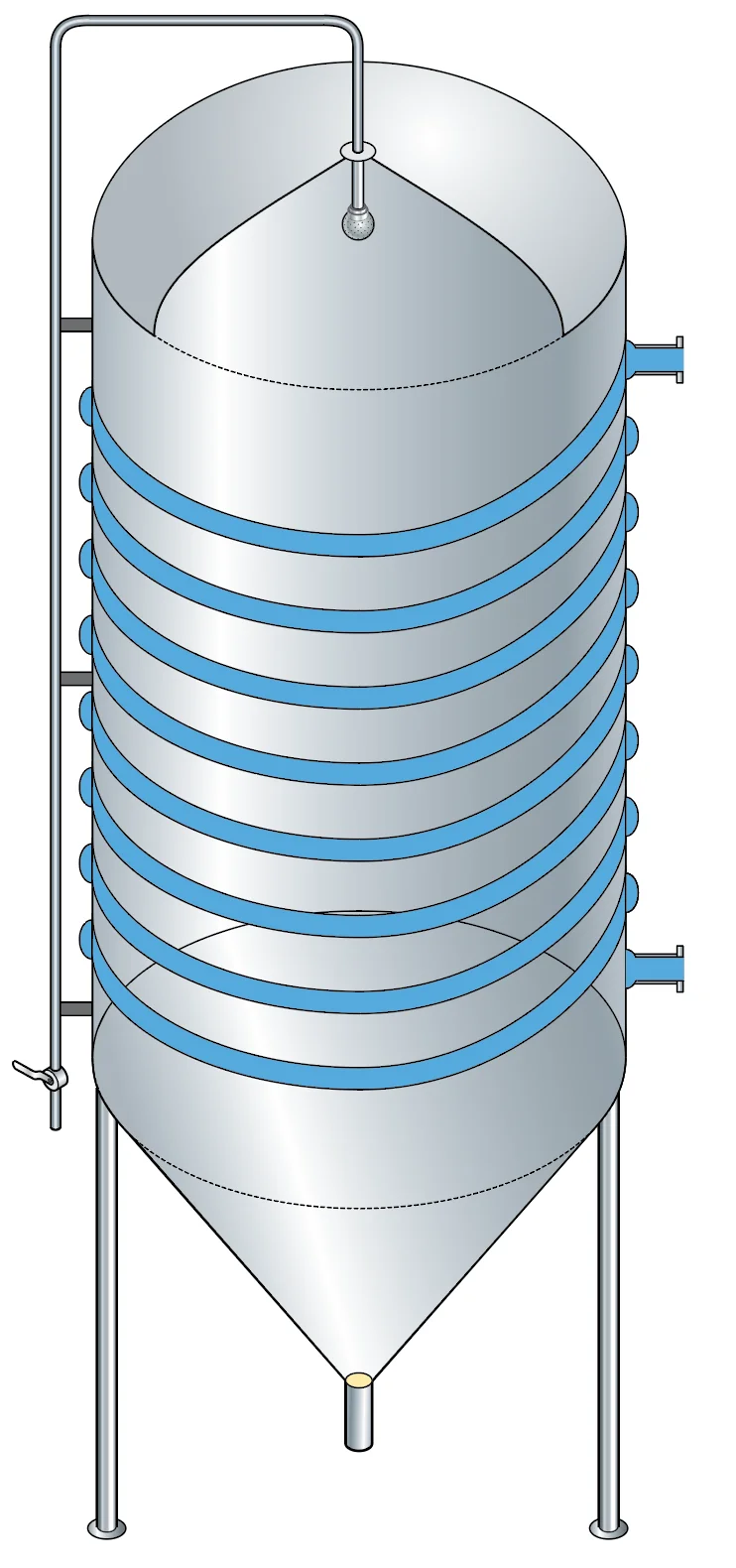
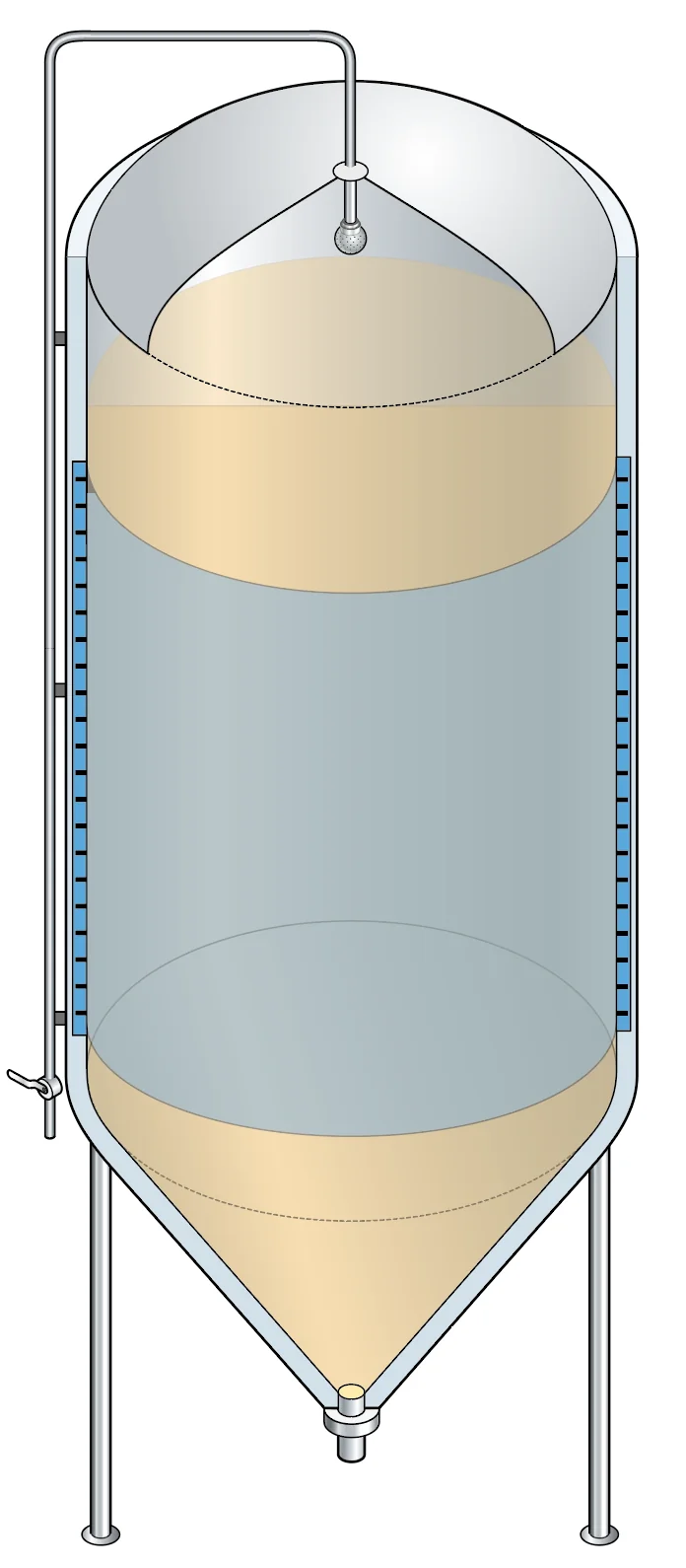
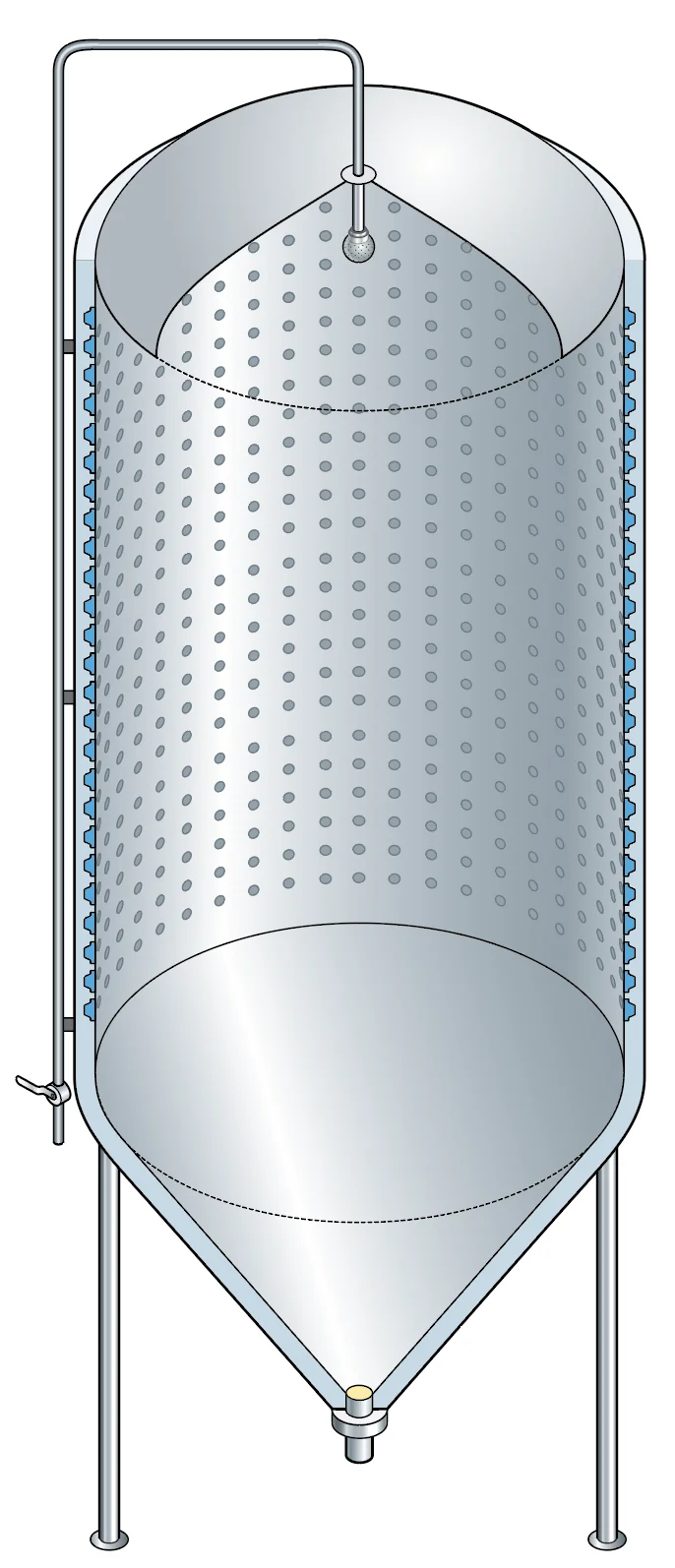
** Identify the type of jacket in each of the figures below. Explain which jacket type would be best suited to the following applications and state why.
-
A 375 L mashing vessel for a micro-brewery requiring an affordable solution.
-
A 1,500 hL fermentation vessel in a large scale brewery requiring high rates of heat transfer.
-
A multi-purpose vessel in which product is first heated with saturated steam and then immediately cooled with glycol.
(a)
(b)
(c)
Response:
a) This figure shows a half-pipe jacket.
-
This jacket type is robust and is well-suited to scenarios where the vessel and jacket are undergoing large changes in temperature.
-
The tubes increase the velocity of the utility fluid, meaning that half-tube jackets have higher overall heat transfer coefficients than other jacket types. High heat transfer coefficients are useful in an application where the utility fluid is only changing temperature and not phase.
These features make it most suitable for application 3: a multi-purpose vessel in which product is first heated with steam and then immediately cooled with glycol.
b) This figure shows a conventional jacket.
-
Conventional jackets are simple to fabricate and very affordable for smaller vessels (usually < 400 L).
These features make it most suitable for application 1: a 375 L mashing vessel for a micro-brewery requiring an affordable solution.
c) This figure shows a dimpled jacket.
-
The dimples impart turbulence, giving dimple jacketed vessels high rates of heat transfer.
-
The dimpled jacket is affordable, particularly for larger vessels.
-
Dimpled jackets are versatile and can be fitted to the cone shaped bottom of brewing vessels.
These features make it most suitable for application 2: a 1,500 hL fermentation vessel in a large scale brewery requiring high rates of heat transfer.