
Lesson 11 - Jacketed Vessels SAQ
This lesson allows you to test yourself on the material covered in the Jacketed Vessel lesson and determine the level to which you have met the learning outcomes.
Self-Assessment Questions
1. ** Why is the heat transfer surface area of a jacketed vessel limited? How can jacketed vessels be designed in a way that overcomes this limitation?
2. ** Identify the type of jacket in each of the figures below. Explain which jacket type would be best suited to the following applications and state why.
-
A 375 L mashing vessel for a micro-brewery requiring an affordable solution.
-
A 1,500 hL fermentation vessel in a large scale brewery requiring high rates of heat transfer.
-
A multi-purpose vessel in which product is first heated with saturated steam and then immediately cooled with glycol.
-
a)
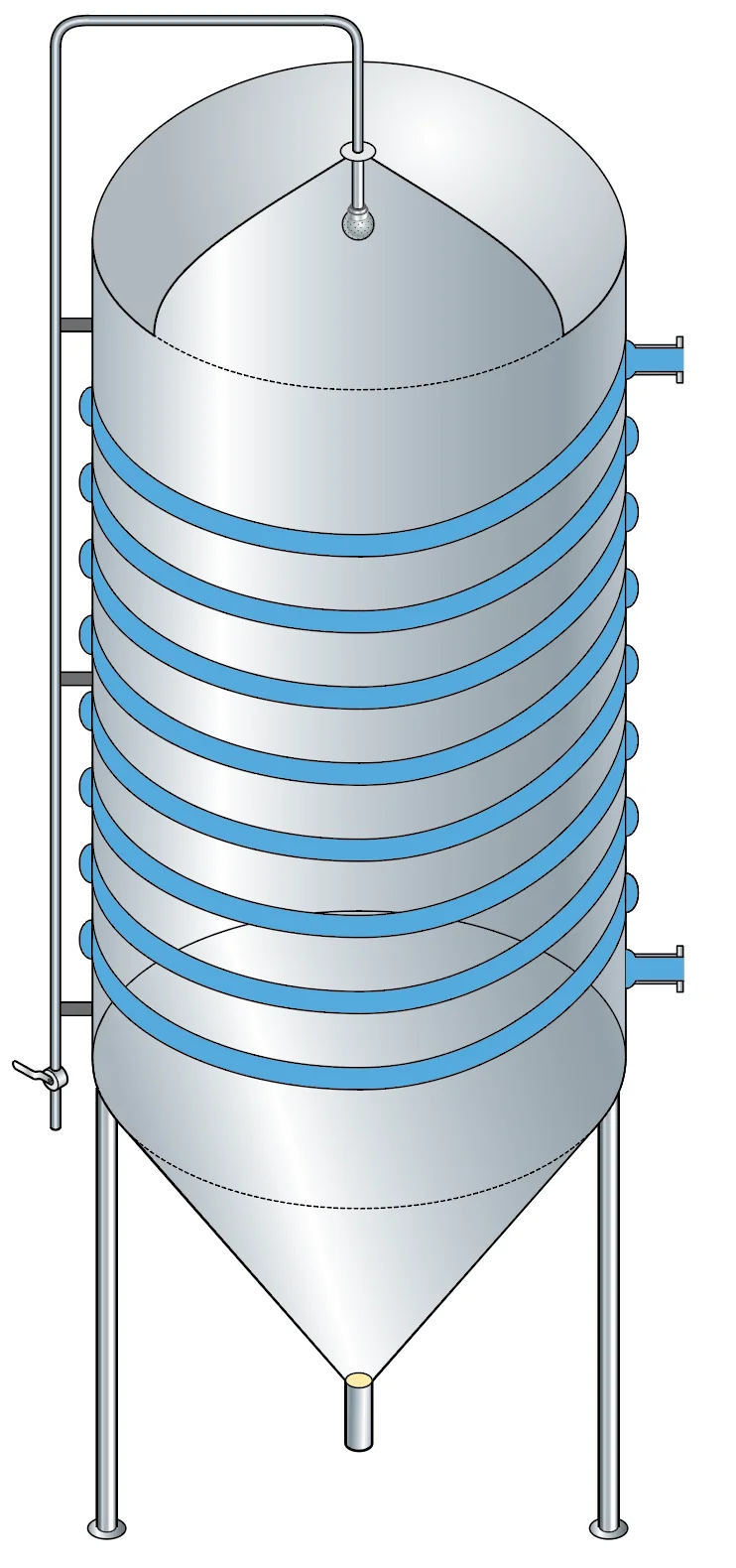
b)
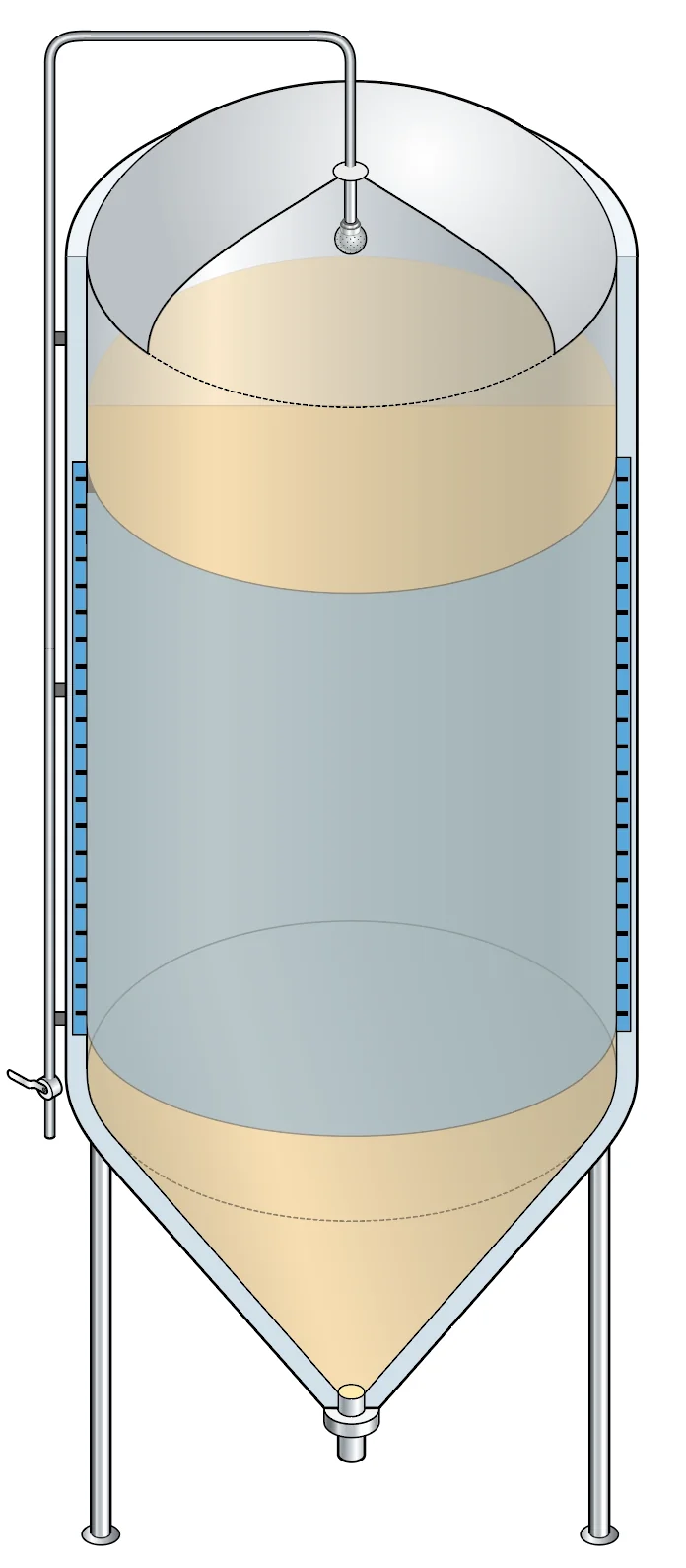
c)
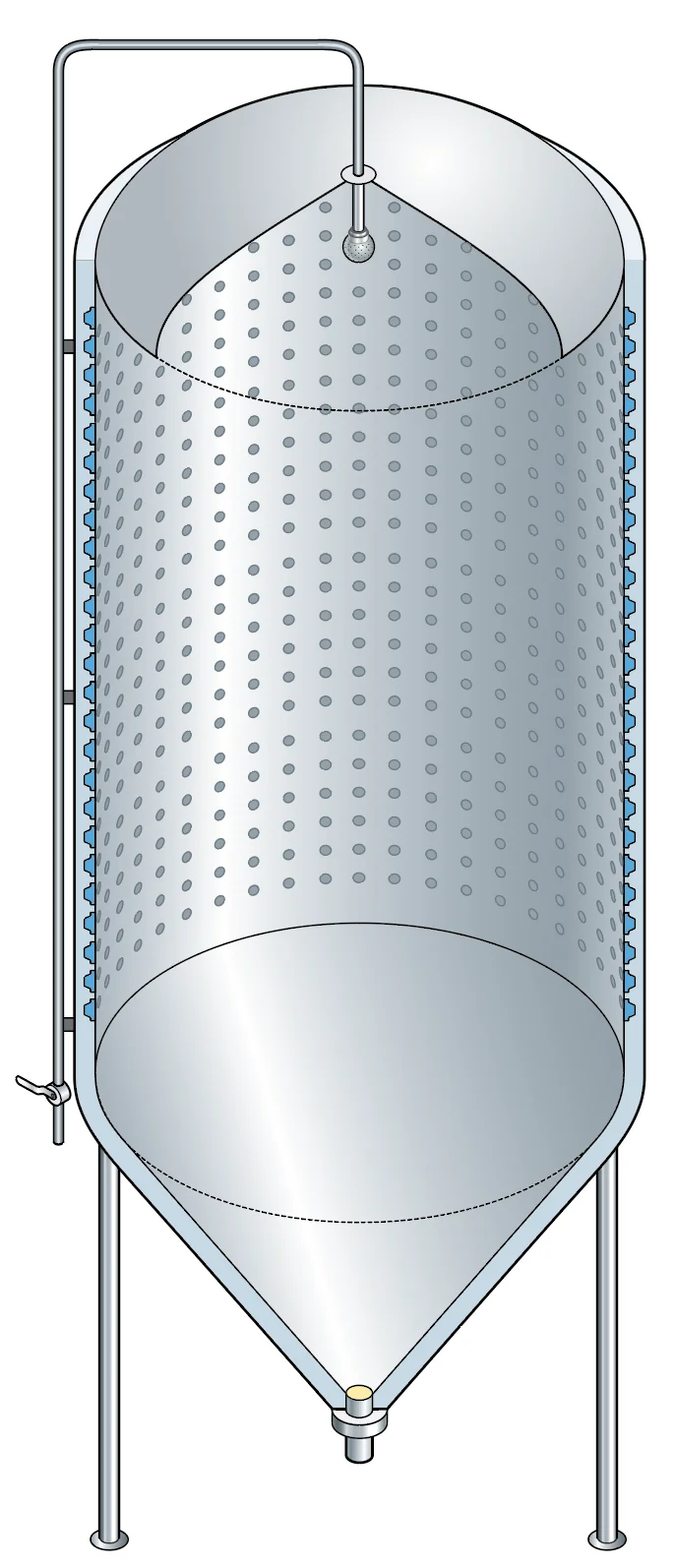
3. */** The vessel in the figure below contains three key features of a jacketed vessel. What are these features, and how does each one improve the effectiveness of heat transfer in a jacketed vessel?
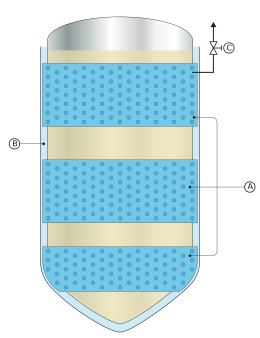
4. ** List two reasons why the heat transfer rate of a jacketed vessel would exceed its design performance.
5. * You inspect the inside of a mashing vessel at your brewery and it looks dirty. What could be the reasons for this?
6. ** Using this example, answer the questions below.
The mashing process has three temperature stands, namely 62°C, 65°C, and 72°C. Furthermore, at the end of the mash profile, the mash is heated up to 76°C before transfer to the lauter tun. A minimum heat up rate of 1 °C min-1 is required.
-
Maximum mash vessel volume is 500 hL. Mash vessel diameter is 4 m.
-
Heat is provided by steam at 130°C. The heat of evaporation of steam at 130°C is 2,200 kJ kg-1.
-
Typical overall heat transfer coefficient for an agitated jacketed vessel using steam in the way this one does is 1,100 W m-2 K-1.
-
Specific heat capacity and density of mash are 3,600 J kg-1 °C-1 and 1,060 kg m-3 respectively.
(a) What is the required heat transfer area of the mash vessel?
(b) What would be the approximate height of the jackets, assuming they were positioned only on the side walls?
(c) What is the maximum required steam mass flow rate?