
Lesson 5 - Types of microorganisms SAQ
This lesson enables you to test yourself on the material covered in the Types of Microorganisms lesson, and determine to what level you have attained the outcomes.
Suggested Response - Q4
**Critically discuss the following statement: ‘Acetic acid bacteria (AAB) are no longer a major spoilage concern to brewers; a new risk is from Pectinatus and Megasphaera’.
Response:
The AAB involved in beer spoilage are Acetobacter and Gluconobacter. They are obligate aerobes, meaning that they require oxygen to survive. They metabolise ethanol, oxidising it to acetic acid (see figure below), which gives beer a sour, vinegary off flavour.
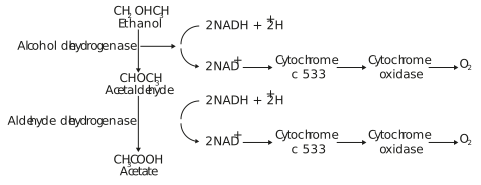
Figure: Oxidation of ethanol to acetic acid by AAB
In order to sour beer, the AAB require a supply of oxygen. Over the past 40 years there have been massive improvements in reducing oxygen levels, and current benchmark oxygen levels in package are <50 μg/L. The risk of AAB spoilage in beer is thus considerably reduced.
In contrast, these very low levels of oxygen have opened niches for the Gram- negative obligate anaerobic bacteria Pectinatus and Megasphaera, first reported in beer in 1978. With the increase in unpasteurised beers in the marketplace, this risk is amplified. Megasphaera are sensitive to ethanol so are usually found in lower ethanol unpasteurised beers.
Both species produce turbidity and unpleasant sulphury notes, caused by production of hydrogen sulphide.
Pectinatus is thought to be more prevalent in beer; however, cultivation and identification in the laboratory is difficult with both these species due to their anaerobic nature and slow growth.
These beer spoilers can survive modern cleaning protocols as they are protected by biofilms and they gain access through the filling process. As such, they should be considered the most dangerous of Gram-negative spoilers.