
Lesson 7 - Hygienic Design SAQ
This lesson enables you to test yourself on the material covered in the lesson on Hygienic Design and to determine the level to which you have met the learning outcomes.
Self-Assessment Questions
1. *Indicate whether the following statements are true or false. Provide a reason if they are false.
a) To be hygienic, a valve must incorporate a hermetic seal.
b) Hygiene organisations enforce legislation.
c) Hygienic design is only concerned with equipment cleanability.
d) To be classed as hygienic, the surface roughness of a material should not exceed 0.8 µm.
e) Larger diameter pipes are more hygienic.
f) Eccentric reducers should be used in piping.
g) All butterfly valves are hygienic.
h) To ensure cleanability, gaps between equipment and walls should be kept as small as possible.
2. *Define hygienic design. What are its main objectives?
3. *Answer the following questions:
a) What is the principle difference between a contact surface and a non-contact surface?
b) What are the main principles to consider when designing buildings and support structures?
c) What are the advantages of having a hygienic drainage system?
4. */**What are the main functions of hygiene organisations and how would you make best use of them within brewery operations?
5. **For each of the following pairs choose the most hygienic option and give a reason for your answer.
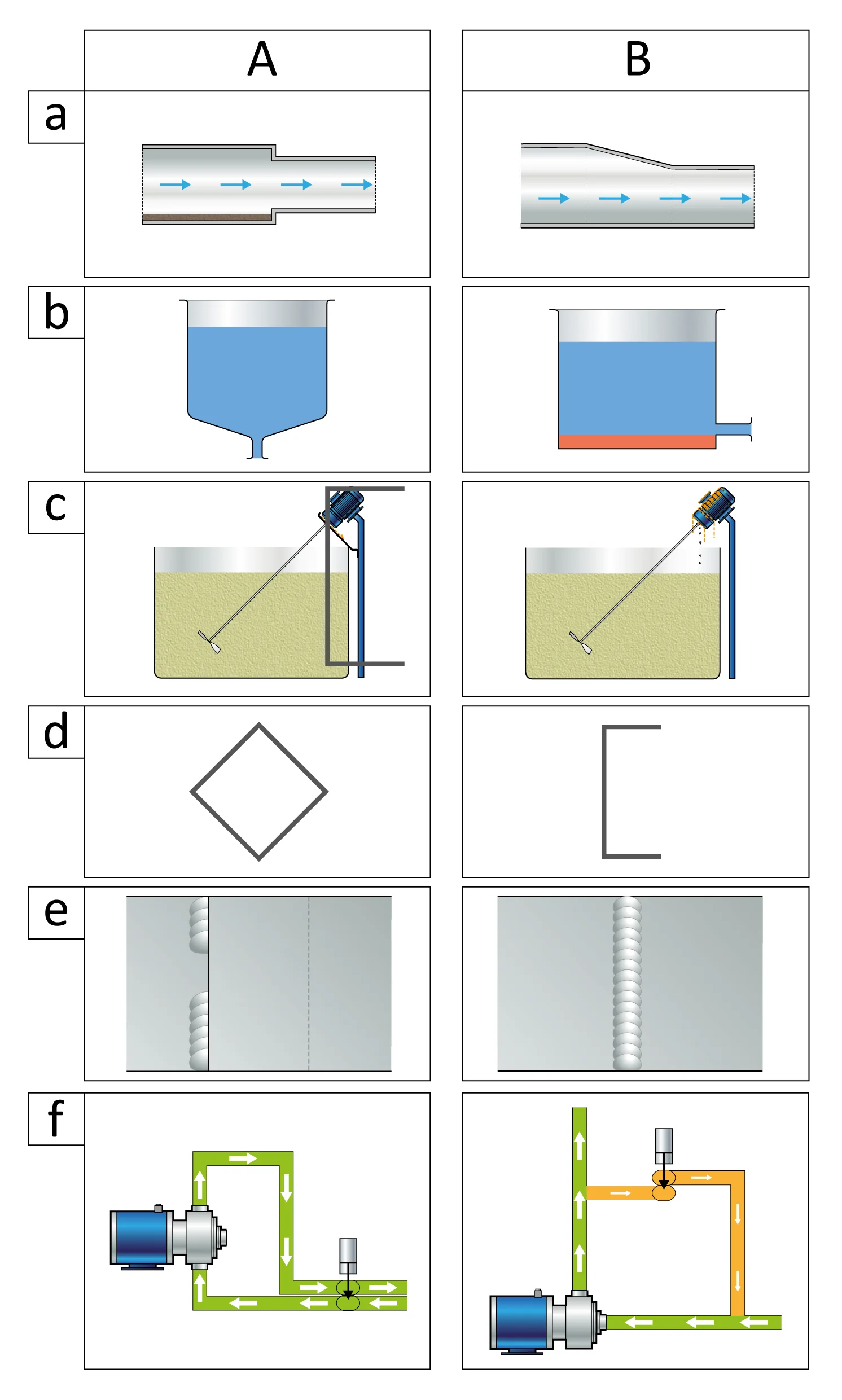
Figure: Question options
6. **What is the importance of welding for hygienic design and what welding recommendations would you put in place?