
Lesson 1 - Introduction to Utilities Part 2
This lesson introduces the Utilities Part 2 unit. It also contains a brief overview of the topics that you will study in the forthcoming unit.
Topics Covered in This Unit
This unit covers water, effluent treatment, electricity, gases, and CO2 recovery, as these are all utilities which are provided to the brewery (or, in the case of CO2 recovery, the brewery provides for itself or others). Steam and refrigeration are covered in the Utilities Part 1 unit. Without these utilities no brewing is possible. You could describe them as the heart and lungs of the brewery. The focus of this unit is to provide you with an understanding of these utilities and how they are supplied, manufactured, treated, and distributed.
We will now provide a brief overview of some of the topics covered in this unit.
Water
These topics will:
-
Differentiate between the various classes of water used in the brewery
-
Explain the different phases of water treatment and what is involved in each step
-
Explore different water treatment options and how they fit together
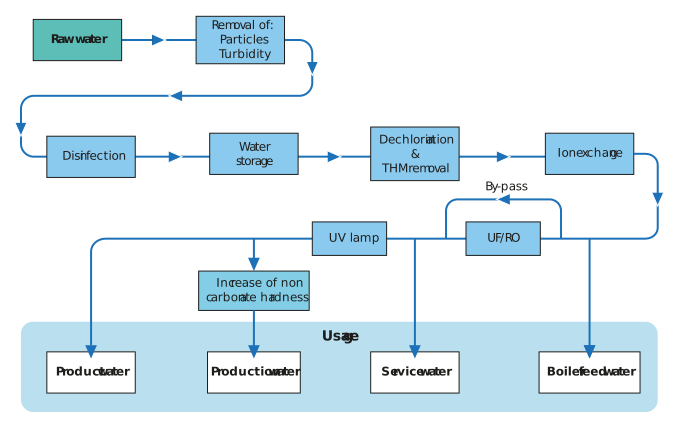
Figure: Typical brewery water scheme
-
Give you a more in-depth understanding of various water treatment technologies. Some technologies that will be reviewed are:
-
Sand filters and multimedia filters
-
Ion exchange
-
Membrane filtration options
-
Sterilisation options
-
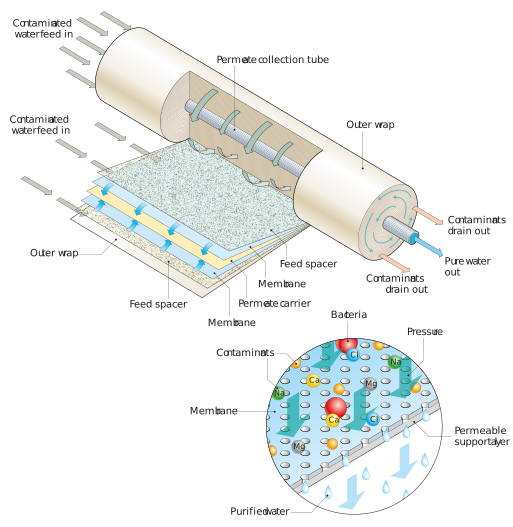
Figure: Typical membrane filter
Effluent treatment
These topics will:
-
Refamiliarise you with common effluent parameters such as COD, BOD, and TSS
-
Explain the three phases of effluent treatment and how they relate to the effluent parameters obtainable from each stage
-
Describe the options for effluent pre-treatment and what is required for the further effluent processes
-
Compare different options for aerobic and anaerobic effluent treatment
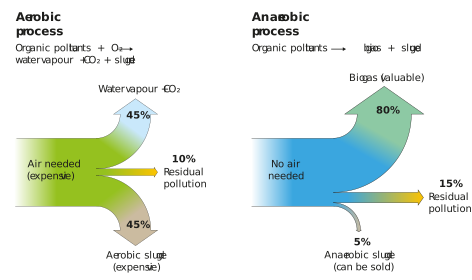
Figure: Comparison of aerobic versus anaerobic effluent treatment
Electricity
These topics will:
-
Review the basic concepts of electricity
-
Compare direct current (DC) and alternating current (AC), as well as different voltages and their respective roles in a brewery
-
Differentiate between single- and three-phase power
-
Explain the basics of how a motor works and the function of poles
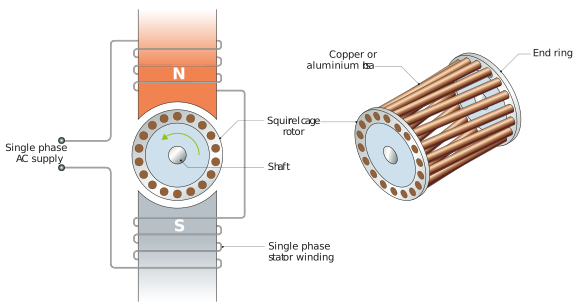
Figure: Typical single-phase motor
-
Explore the basics of power factor and power factor correction
-
Look at maximum demand and the options available to manage it
-
Illustrate the importance of various electrical safety components
Gases
These topics will:
-
Review the different components of compressed air systems
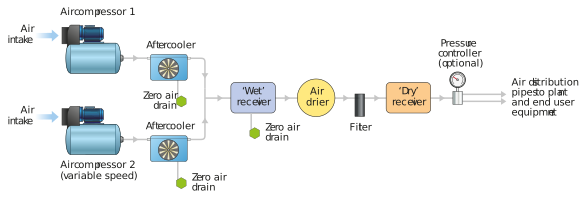
Figure: Typical compressed air system
-
Explain how different air compressors work and their relative merits
-
Look at the uses of oxygen and nitrogen in the brewery and the quality requirements for them
-
Describe the workings of cryogenic systems for the storage and delivery of liquid nitrogen and oxygen
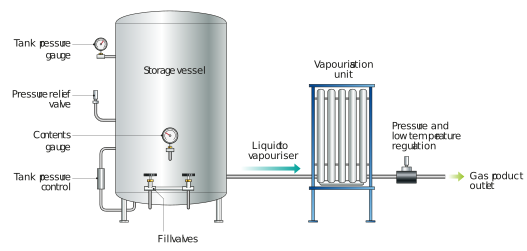
Figure: Typical cryogenic storage and supply system
-
Explore options for nitrogen generation on-site
CO2 recovery
These topics will:
-
Provide an overview of the technologies used to recover and purify CO2
-
Review the sources and uses of CO2
-
Describe calculations for CO2 recovery related to fermentation
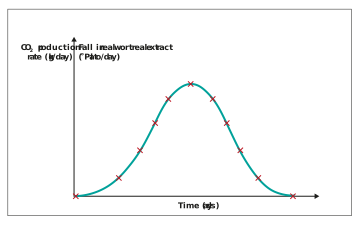
Figure: The daily CO2 production rate over the course of a fermentation
-
Consider venting and collection strategies for CO2
-
Take an in-depth look at the different components of the CO2 recovery process
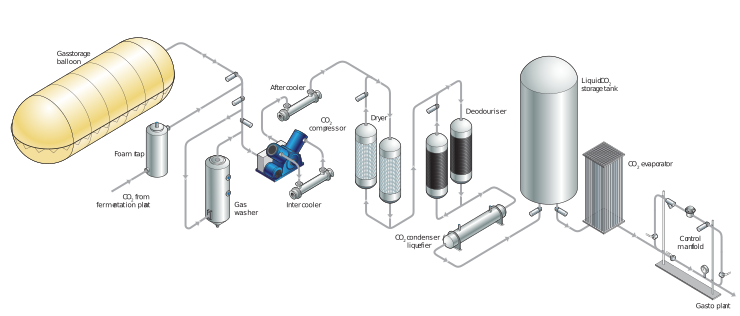
Figure: A CO2 recovery plant