
Lesson 5 - Steam Technology SAQ
This lesson allows you to test yourself on the material covered in the Steam Technology lesson and determine the level to which you have met the learning outcomes.
Suggested Response - Q2
**
a) Draw a typical arrangement for a pressure reducing station; include the components that you would expect to find in it.
b) Why is the steam trap placed before the reducing station?
c) Why do you have a pressure relief valve if you are controlling the pressure anyway?
Response:
a) Below is a figure of a pressure reducing valve station.
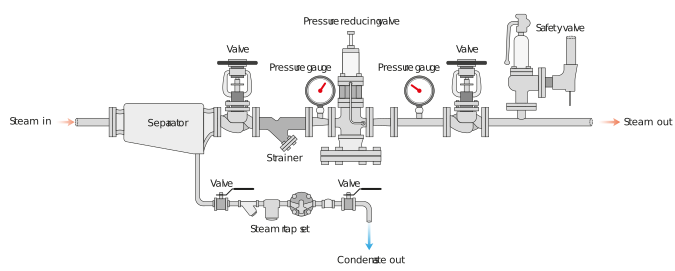
Figure: Pressure reducing valve station
Key components include:
-
Separator – to allow any condensate to drain out.
-
Steam trap set – to remove the condensate and return it via the condensate recovery.
-
Isolation valves – to allow the equipment to be serviced.
-
Strainer – to catch any debris and protect the equipment.
-
Pressure reducing valve – to reduce the equipment’s pressure.
-
Pressure relief valve (safety valve) – to protect downstream equipment from over-pressurisation.
b) The steam trap is placed before the reducing station because when the pressure is reduced, the steam will become superheated. Therefore, there should be no condensate after the pressure reducing valve.
c) A pressure relief valve is required because there is a risk that the pressure reducing valve could fail or be incorrectly adjusted.