
Lesson 7 - Microorganism Detection and Control SAQ
This lesson allows you to test yourself on the material covered in the Microorganism Detection and Control lesson, and determine the level to which you have attained the outcomes.
Suggested Response - Q1
** Explain the differences and connections between obligate and facultative, aerobic and anaerobic, microaerophiles and aerotolerant microbes, and homofermentative and heterofermentative metabolic pathways.
Response:
This question is best answered by referring to the illustration below.
Obligates are organisms that can only grow either in air using respiration (aerobes), or in the absence of air using fermentation (anaerobes). Aerobes generally contain the enzyme catalase, which can break down hydrogen peroxide (a reactive form of oxygen).
A facultative organism can make energy from either oxygen-based aerobic respiration, or anaerobic respiration (fermentation) in the absence of oxygen. We usually refer to facultative organisms as facultative anaerobes. A facultative microorganism will accumulate mostly at the top of the tube. This is because aerobic respiration is much more energy efficient than fermentation.
Microaerophiles cannot respire anaerobically (ferment) but are unable to survive in high oxygen concentrations. As a result, they accumulate near the media’s surface, but not at the very top.
Aerotolerant microbes use the fermentative (anaerobic) pathway to produce energy. As they contain enzymes that protect them from reactive oxygen species, they can survive in an oxygen environment.
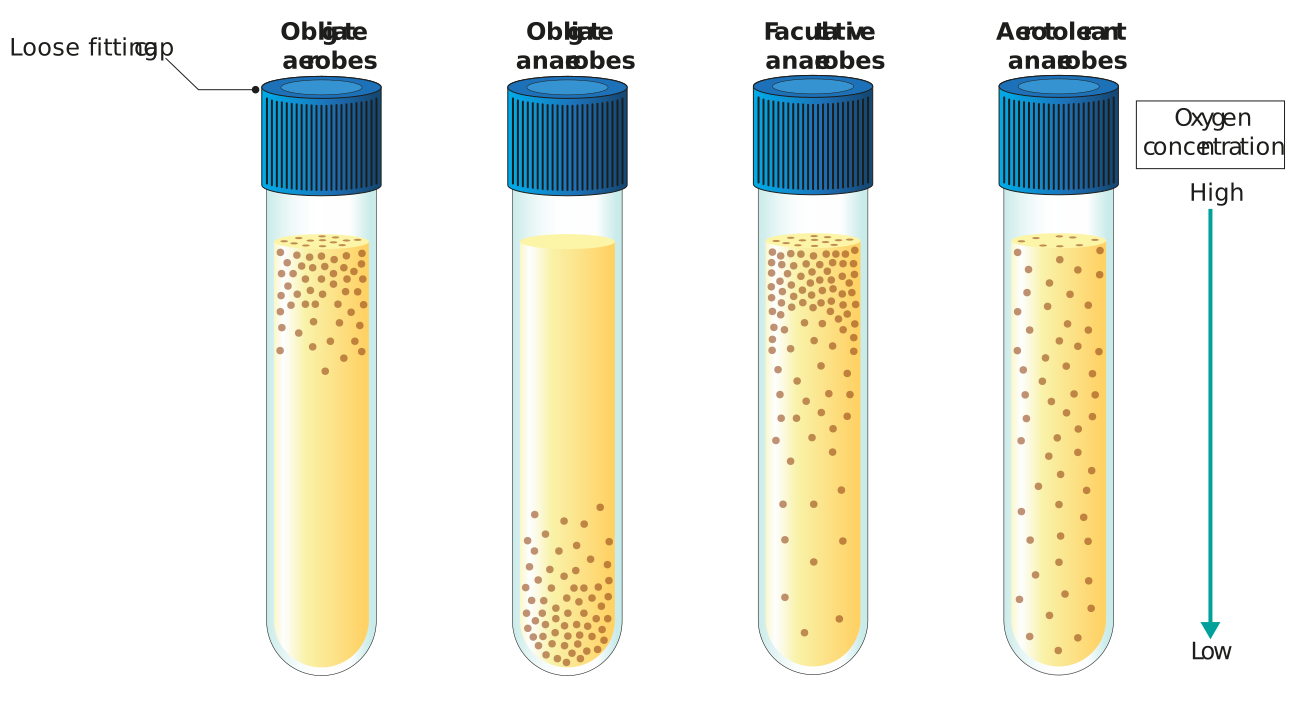
Figure: Growth in thioglycolate (oxygen free) broth
We use the terms homofermentative and heterofermentative when describing whether microorganisms produce either a single product or multiple products from fermentation. We often use these terms when referring to lactic acid bacteria (LAB). Homofermentative lactic acid bacteria produce only lactic acid from glucose, while heterofermentative LAB produce other products as well as lactic acid, typically ethanol/acetic acid, and carbon dioxide (CO2).