
Lesson 1 - Introduction to Hygiene
This lesson is an introduction to the Hygiene unit. Also included is a brief overview of the topics that you will study in the forthcoming unit.
Topics Covered in This Unit
We will now provide a brief overview of some of the topics covered in this unit.
Lesson one
In this lesson, we will focus on topics such as:
- Design concepts of hygienic CIP systems.
- The different types of soils encountered in brewery environments and their nature.
- The four factors of cleaning and their interactions.
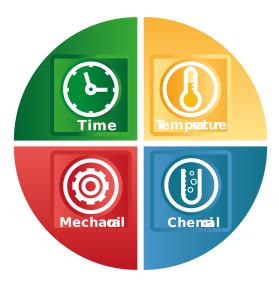
Figure: The four factors of cleaning (Sinner’s Circle)
- The nature and functioning of detergents and disinfectants and how they are enhanced through additions.
- The make-up, action, additives, and use of caustic soda, acids and disinfectants.
- Design and selection of CIP plants and their applicability for different brewery configurations, covering single and multi-use systems.
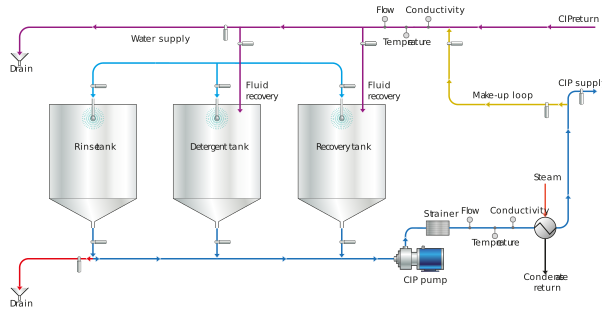
- The detailed operation of the CIP plants: demonstrating an understanding of the design principles.
- The selection of spray head devices for vessel cleaning, linking these to the efficiency of cleaning as well as water and energy use.
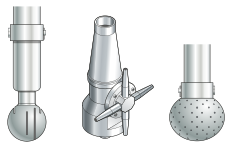
Figure: Types of spray heads
- The validation procedures applied to brewery CIP processes.
Lesson two
In the second lesson, we will focus on microorganisms found in brewing, including topics on:
- Beer spoilage organisms that are deliberately used in niche beer styles.
- How bacteria are broadly classified by Gram stain reaction.
- Gram positive beer spoiling bacteria, Lactobacillus and Pediococcus, their occurrence in brewing and their metabolic effects in beer spoilage.
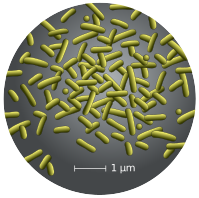
Figure: Lactobacillus
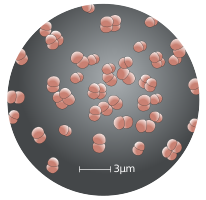
Figure: Pediococcus
- The evolutionary metabolic systems that hop resistant Gram positive bacteria use against iso-α-acids.
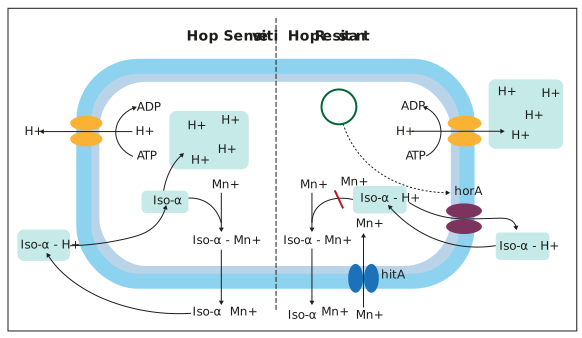
Figure: Model of hop resistance in Gram positive bacteria carrying the hor A gene
- The Gram negative bacteria involved in beer spoilage considering the relative threats of the aerobic and anaerobic groups, and why the anaerobic bacteria pose a new threat to breweries.
- The specific Genera and species involved in brewery contamination focusing on the origins, morphology, metabolism and tolerance within the brewing environment. Genera to be included are:
- Acetobacter
- Acetomonas
- Zymomonas
- Enterobacteriaceae
- Obesumbacterium
- Pectinatus
- Megasphaera
- Wild yeasts including Saccharomyces and non-Saccharomyces species, including their metabolic products as beer off flavours.
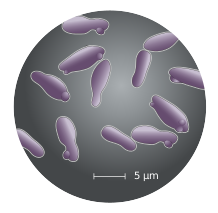
Figure: Brettanomyces yeast
Lesson three
In the third lesson, we will learn about detection and control of contaminating microorganisms, including topics on:
- Aseptic sampling techniques from liquids solids and gases.
- Ways to concentrate samples for easier detection.
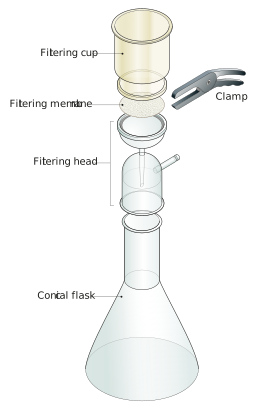
Figure: 250 mL Membrane filtration apparatus
- Optical microscopy and staining to enhance visualisation.
- Liquid and solid media and how they are used in the detection of aerobic and anaerobic microorganisms.
- Selective media and how these are tailored to grow and enrich the microorganisms described:
- Lactic acid bacteria (LAB)
- Acetic acid bacteria
- Megasphaera and Pectinatus
- Enterobacteriaceae
- Zymomonas
- Wild yeast
- Brewing yeast
- Rapid methods of detection falling into the three categories
- Physical tests:
- Conductivity
- Turbidimetry
- Flow cytometry
- Micro colonies
- Physical tests:
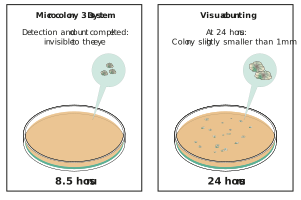
Figure: Micro colony automatic detection
- Biochemical tests:
- API
- DEFT
- ATP
- ELISA
- GC
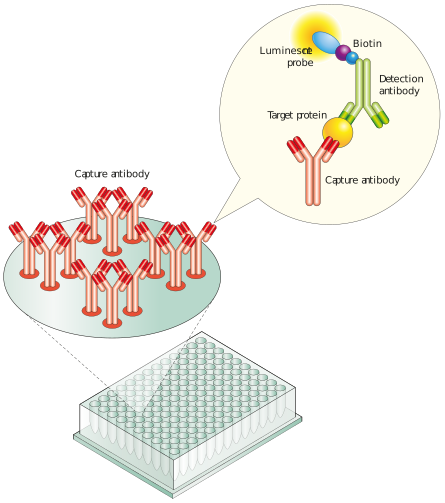
Figure: Principles of ELISA
- Molecular tests:
- Hybridisation
- Karyotyping
- PCR
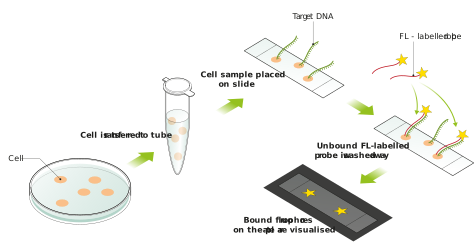
Figure: Principle of FISH