
Lesson 3 - Wort Clarification Technology and Process Control SAQ
This lesson provides the opportunity for you to test yourself on the material covered in Lesson 2 (Wort Clarification Technology and Process Control) and determine the level to which you have attained the expected outcomes.
Suggested Response - Q2
**Discuss the variables that determine the type of wort clarification system to use. How can we influence these variables?
Response:
Three types of method can be used for wort clarification:
- Filtration of the wort through spent hops, using a hop back or hop jack.
- Separation of the whole hops using a hop strainer.
- Sedimentation, using a whirlpool and/or a centrifuge, a coolship, or sedimentation tanks.
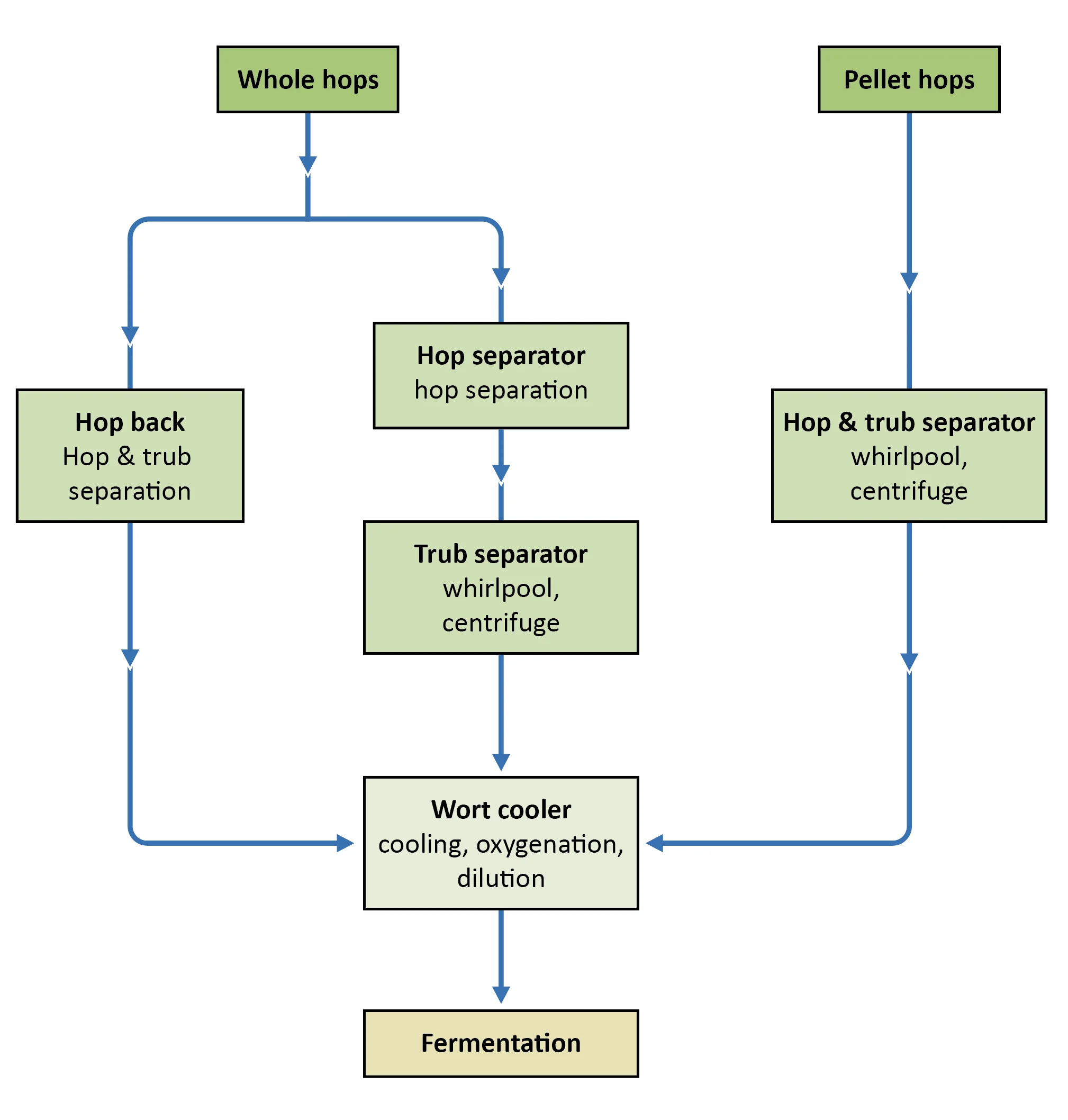
The most important variable is the type of hop product used. The choices are: whole hops, pellets, and/or hop extracts. The hop back removes whole hops and trub, whereas hop strainers only removes whole hops. We need to use additional clarification techniques for the trub, such as a whirlpool or centrifuge is using a hop strainer.
Another variable is time. With hop backs hops can be added directly to the vessel to provide late hop character to beer. Where this is done, wort is usually left to stand to help extract flavour from the hops. Coolships take hours to clarify and cool the wort and have the longest residence time of all options. Aside from these two instances, we usually look to minimise the time spent during wort clarification to ensure the brewhouse cycle time is as short as possible. Centrifuges can provide the shortest cycle time.
The next variable is the degree of clarification required. After depth filters which are no longer used, hop backs produce probably the clearest wort. With centrifuges wort clarity can be controlled using a turbidity meter on the outlet.
The last aspect we can control is the type of ingredients used in the recipe (aside from the hops, of course). The type of malt and adjuncts used affect the level of proteins, polyphenols and lipids. These affect the amount of trub formation and hence the clarification required.