Suggested Response - Q2

**Discuss the variables that determine the type of wort clarification system to use. How can we influence these variables?

Response:

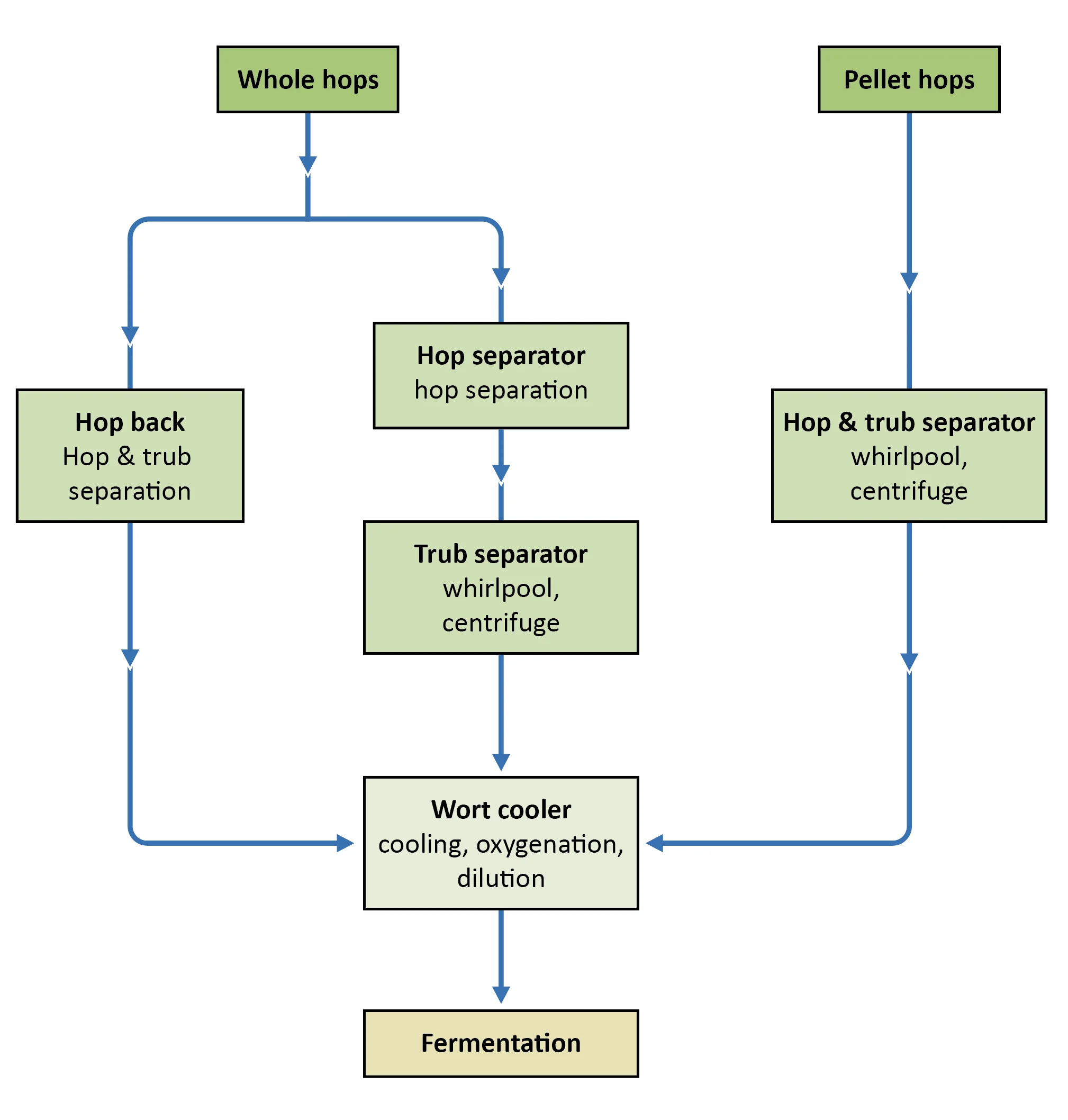
Three types of method can be used for wort clarification:

  1. Filtration of the wort through spent hops, using a hop back or hop jack.
  2. Separation of the whole hops using a hop strainer.
  3. Sedimentation, using a whirlpool and/or a centrifuge, a coolship, or sedimentation tanks.
1.   SAQ:  *You have identified the need to improve your wort clarification in the brewhouse. What design and operational factors would you focus on? Response:  The objectives of wort clarification are:   •	To remove the coagulated protein and the protein-polyphenol flocs. •	To remove hop debris. •	To process and dispose of trub. •	To maintain sterility (hygiene). •	To limit additional flavour active reactions. •	To limit additional colour forming reactions. •	To limit the carry-over of foam negative compounds(e.g. lipids and fatty acids).  We know that part of the boiling process requires us to denature and thus deactivate all the enzymes to ‘fix’ our wort composition to the required specifications. We must therefore maintain these specifications through the wort clarification phase.  The brewer, together with improvements in technology, tries to maximise the size and amount of the trub particles collected, also known as flocs. Typically, we would like the flocs to be, 5-10 mm in diameter, as this will make it easier to remove the trub. The amount of trub formed is checked using the Imhoff cones. These measure the effectiveness and consistency of the whirlpool operation.   The use of processing aids is another way to improve floc sizes and enhance separation efficiency. Imhoff cones can also be used to optimise the rate that will achieve the best clarity results.  The biggest area for immediate focus will be the whirlpool stand time (duration), with regards to colour and flavour formation versus the clarity of the wort being achieved (settling time). These all need to be measured against the wort specifications ex wort kettle. The brewer can vary the time of the clarification stand (the settling or sedimentation time under gravity) to vary the amounts of clarification achieved.  We must also check hop additions; any changes here will affect the efficacy of the wort clarification system, as the system is also specifically designed on the type of hops being used.  In terms of design factors, we can check pump and pipe design to ensure the minimum break-up of the flocs into smaller sizes (typically to 20-80 μm). Further exposure to shearing forces can reduce this size even further, making it more difficult to remove the trub from the wort. This can cause quality and processing problems, and/or wort (extract) loss. Thus, we must confirm all wort flow rates into and out of the whirlpool. This will ensure the gentlest possible handling that will maintain the integrity of the flocs. We can also check design parameters such as the type and amount of pipe bends and pump ratings.     2.    SAQ:  **Discuss the key variables that determine the type of wort clarification system to use. How does the brewer influence these variables?  Response:   Most breweries use a variety of commercially prepared hop products, due to their high utilisation rates. However, there is a greater interest in the use of whole hops, and an increased interest in different hop varieties. Based on the above, there are essentially three methods that can be used to remove trub: 1.	Filtration of the wort through spent hops, using of a hop back or hop jack. 2.	Separation of the whole hops using a hop separator. 3.	Sedimentation, using a whirlpool and/or a centrifuge, a coolship, or sediment tanks.

The most important variable is the type of hop product used. The choices are:  whole hops, pellets, and/or hop extracts. The hop back removes whole hops and trub, whereas hop strainers only removes whole hops. We need to use additional clarification techniques for the trub, such as a whirlpool or centrifuge is using a hop strainer.

Another variable is time. With hop backs hops can be added directly to the vessel to provide late hop character to beer. Where this is done, wort is usually left to stand to help extract flavour from the hops. Coolships take hours to clarify and cool the wort and have the longest residence time of all options. Aside from these two instances, we usually look to minimise the time spent during wort clarification to ensure the brewhouse cycle time is as short as possible. Centrifuges can provide the shortest cycle time.

The next variable is the degree of clarification required. After depth filters which are no longer used, hop backs produce probably the clearest wort. With centrifuges wort clarity can be controlled using a turbidity meter on the outlet.

The last aspect we can control is the type of ingredients used in the recipe (aside from the hops, of course). The type of malt and adjuncts used affect the level of proteins, polyphenols and lipids. These affect the amount of trub formation and hence the clarification required.

You have completed 0% of the lesson
0%