
Lesson 5 - Adjunct Composition and Application SAQ
This lesson provides the opportunity for you to test yourself on the material covered in Lesson 4 (Adjunct Composition and Application) and determine the level to which you have attained the expected outcomes.
Suggested Response - Q2
*Why do you think it is important to inform all brewhouse employees about the dangers originating from dust?
Response:
All malt and solid adjuncts produce dust when moved, especially products where the starchy endosperm is exposed. Maize grits and flour are especially prone to producing dust. Working with flour, storage issues and transferring by conveyor all present risks as they contribute to dust cloud formation. This dust cloud is not only an explosion risk but also a health risk. Enclosed conveyors and storage vessels restrict the spreading of fine dust particles. This increases the concentration of dust in a smaller space hence increasing the risk of explosion. Furthermore, the flour serves as fuel for primary and secondary explosions. Since oxygen is present in the atmosphere, one small ignition source could complete the explosion pentagon, resulting in a dust explosion.
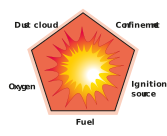
Figure: Factors for fire and dust explosion
Dust is also classified as a hazardous substance that must be controlled. Exposure to dust can have short and long-term impacts on the human body. The dust may contain chemicals from farming inputs, like pesticide/herbicide/fungicide residues, or biological contaminants such as fungal spores, bacteria, pollens, excrement of animals or insects. All these can cause irritation, infection or could exasperate any current medical condition, like asthma or bronchitis.
Individuals with allergies to malt, or who are predisposed to respiratory diseases, can be affected by chronic sinusitis, bronchitis, increased asthma attacks and this can lead to permanent damage to the lungs.