Lesson 8 - Malt Final SAQ
This lesson allows you to test yourself on the material covered in all previous malt lessons and determine the level to which you have attained the outcomes.
Suggested Response - Q6
**The fermenting vessels in your plant take four brews. During the analysis of the first brew in the kettle, you notice the colour is extremely high, and extract is lower than specification. There were no delays in the brewhouse, and no speciality malt is added for colour.
(a) What is the root cause of the high colour? What could have gone wrong within the process?
(b) How will this process abnormality affect starch conversion?
Response:
(a)
The base malt colour is too high for the brand that is being produced. This should have been picked up during both malt procurement and on the CoA. Colour in the base malt is formed during kilning via the Maillard reaction. The Maillard reaction is a reaction between breakdown products of starch (namely sugars) and protein into peptides and amino acids. The formation of melanoidins is responsible for the colour of the malt.
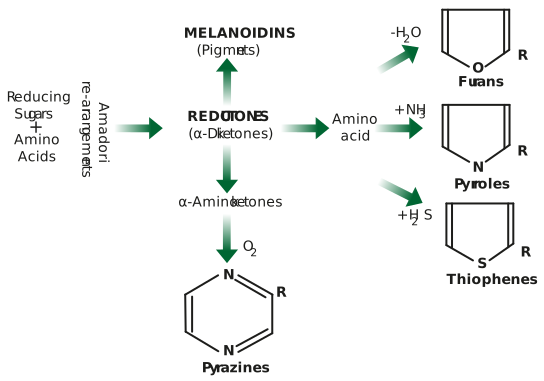
To have a high colour, you need good sugar and amino acid levels, to promote a reaction. Over-modified malt is inclined to have high colour due to extensive starch and protein matrix breakdown. Colour also develops over time at high temperatures, like the curing phase of kilning. The base malt may have been delayed during kilning. Or, it was an over-modified malt with high moisture levels that spent too much time in the kiln to achieve the correct moisture.
(b)
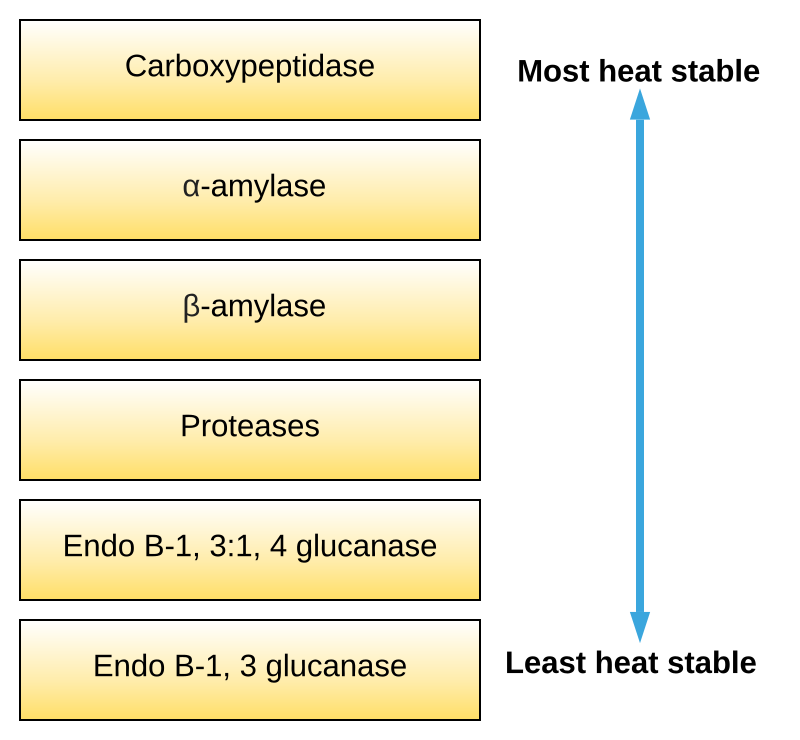
There will be a reduction in enzymes, since they are denatured during high temperatures. This should not be enough to hinder the conversion process.