
Lesson 1 - Introduction to Process Control and Instrumentation
This lesson introduces the Process Control and Instrumentation unit. It also contains a brief overview of the topics that you will study in the forthcoming unit.
Topics Covered in This Unit
This unit does not require any formal pre-requisite knowledge, but that does not mean we are starting with a blank slate. We will all be familiar with some of the concepts of process control, as we regularly encounter it in our daily lives. When we set geyser (hot water tank with a heating element) and oven temperatures, adjust the temperature of a shower, or even drive a car, we are controlling processes.
We will now provide a brief overview of some of the topics covered in this unit. These topics will:
-
Describe what process control is and explain why it is important.
-
Show the hierarchy of automation systems and highlight the different levels in the organisation within which they interact.
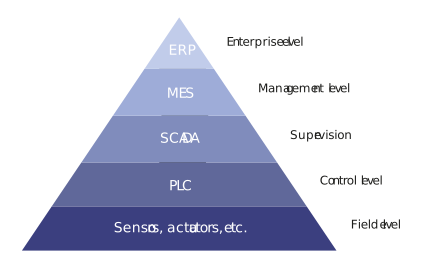
Figure: Typical hierarchy of process automation
-
Compare PLC (programmable logic controller) and PC (personal computer) based control systems.
-
Summarise the different types of signal communication available. (An example is given below, which will be discussed in more detail in the Principles of Process Control lesson.)
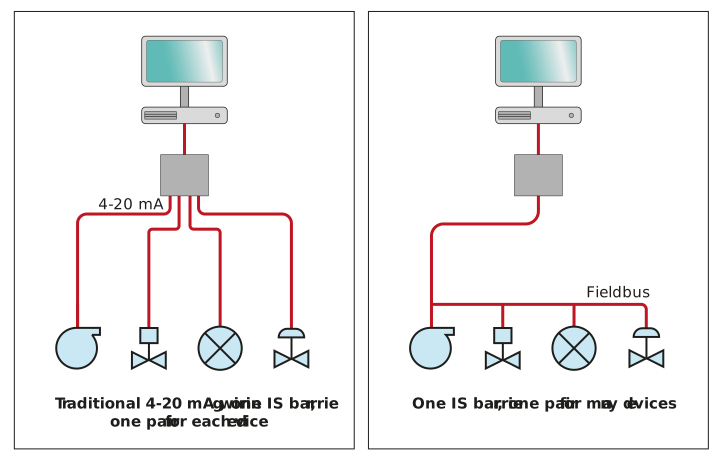
Figure: Comparing conventional wiring to a fieldbus
- Explain how to interpret and draw up basic process and instrumentation diagrams (P&IDs). Once we have completed this, diagrams such as the one below will appear much more accessible!
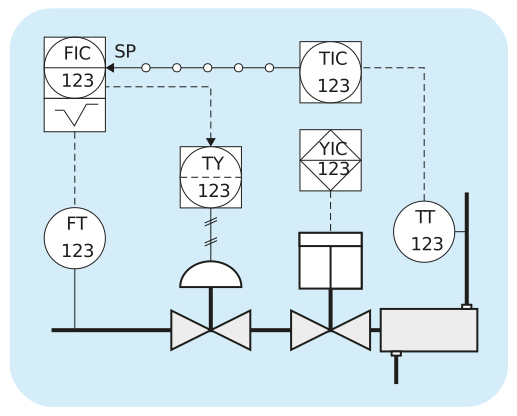
Figure: Part of a P&ID
- Help you to understand the factors that influence instrument selection and learn how you would choose your instruments with this in mind. In turn, these topics will help you to understand the definitions and importance of the various instruments’ attributes.
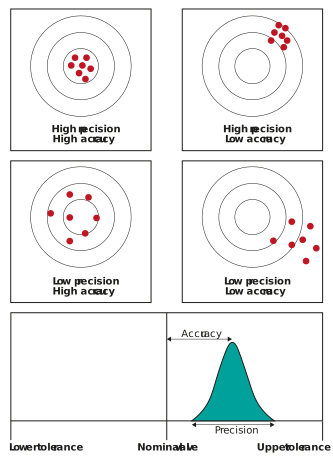
Figure: Accuracy vs precision
-
Briefly explore the workings of the common instruments used for measuring physical parameters such as temperature, flow, and pressure. These topics will also explore those instruments used for measuring analytical parameters such as density, turbidity, pH, alcohol, oxygen, and CO2.
-
Identify the most suitable instruments for the various brewery applications.
-
Give us a clear understanding of all the components within a process control loop.
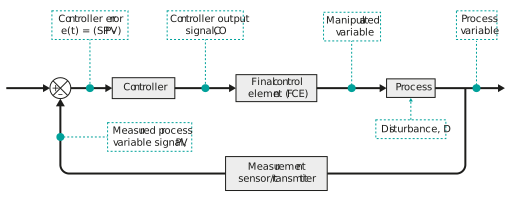
Figure: Components of a typical control loop
-
Highlight how basic self-acting mechanisms of control work and identify the applications they are suitable for.
-
Explore the mechanisms of continuous process control loops in the form of PID (proportional, integral, derivative) controllers.
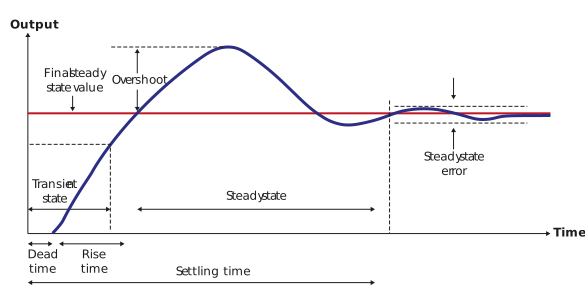
Figure: Typical controller action
- Highlight a number of different control configurations and explain where and when we should ideally use each one.
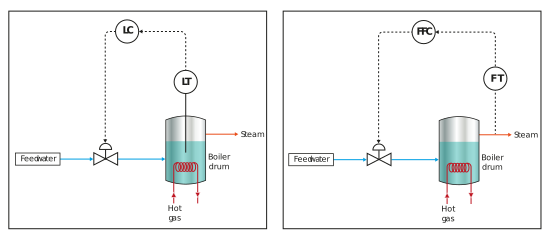
Figure: Typical feedback and feedforward control loops
- Introduce us to sequence control and some of its associated concepts.