You have earned 0 point(s) out of 0 point(s) thus far.

Topics Covered in This Unit

We will now provide a brief overview of some of the topics covered in this unit. The topics are:

  • How to illustrate with suitable drawings, the maturation vessels and requirements used in brewing
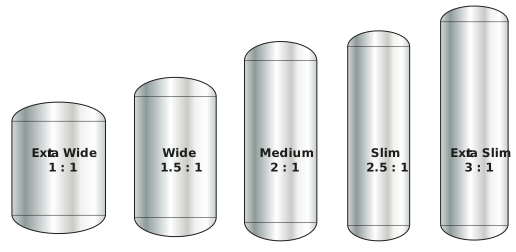
Figure: Illustration of vertical cylindrical maturation tank aspect ratios

Figure: Illustration of vertical cylindrical maturation tank aspect ratios

  • The principles of warm maturation and flavour development

  • The process of continuous maturation

  • The principles of cold maturation and its effect on the precipitation of beer components
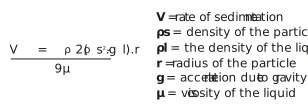
Table: Stokes’ Law

  • The principle of dry-hopping and wood-ageing, and its impact on final beer flavour
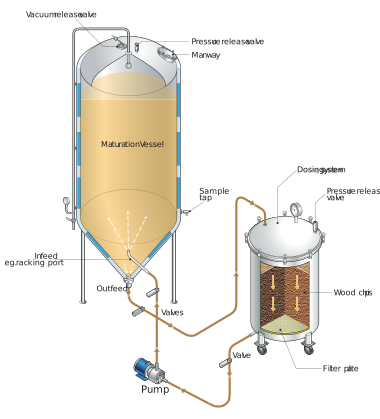
Figure: Continuous extraction of wood chips in a vessel

Figure: Continuous extraction of wood chips in a vessel

  • The requirements of a centrifuge system

  • The principles of centrifugal sedimentation

  • The importance of centrifuge process control on adverse flavour development

  • How to illustrate with suitable drawings, the centrifuge technologies available to a brewer
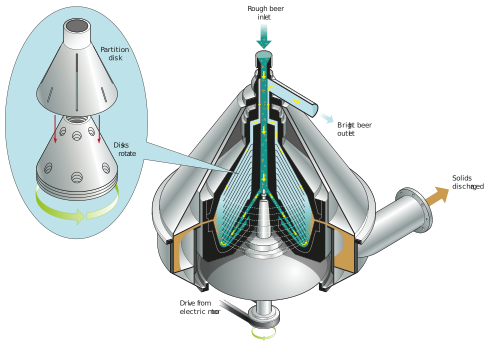
Figure: Self-cleaning clarifier – disc stack centrifuge

Figure: Self-cleaning clarifier – disc stack centrifuge

  • The importance of process control and key quality parameters

  • The nature of non-biological hazes and the importance of process aids in the brewing process
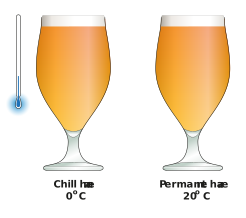
chill

Forms on chilling

Reversible complex

Dissolves on warming

Forms over time from chill haze

Irreversible complex

Stable haze at 20 °C

Figure. Chill haze and permanent haze

  • The process aid chemistry and its benefits of use during maturation

  • How to illustrate with suitable diagrams, a process aid dosing plant
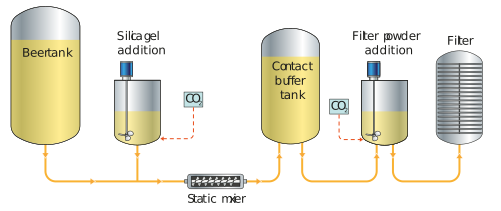
Figure: Illustration of silica dose system

Figure: Illustration of silica dose system

  • The role of filter aids and their application on the filter

  • The benefits of post-fermentation additions and the impact on the final product

  • How deaerated water is made and the benefits it affords in the brewing process

  • The principles of filtration and understanding the mechanisms of solid component removal
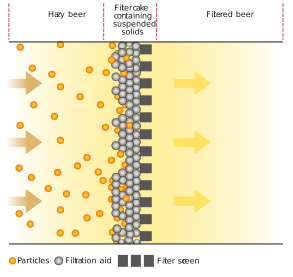
Figure: Illustration of a filter bed

Figure: Illustration of a filter bed

  • How to illustrate with suitable diagrams, filtration technologies and the reasons for selection


`qwr
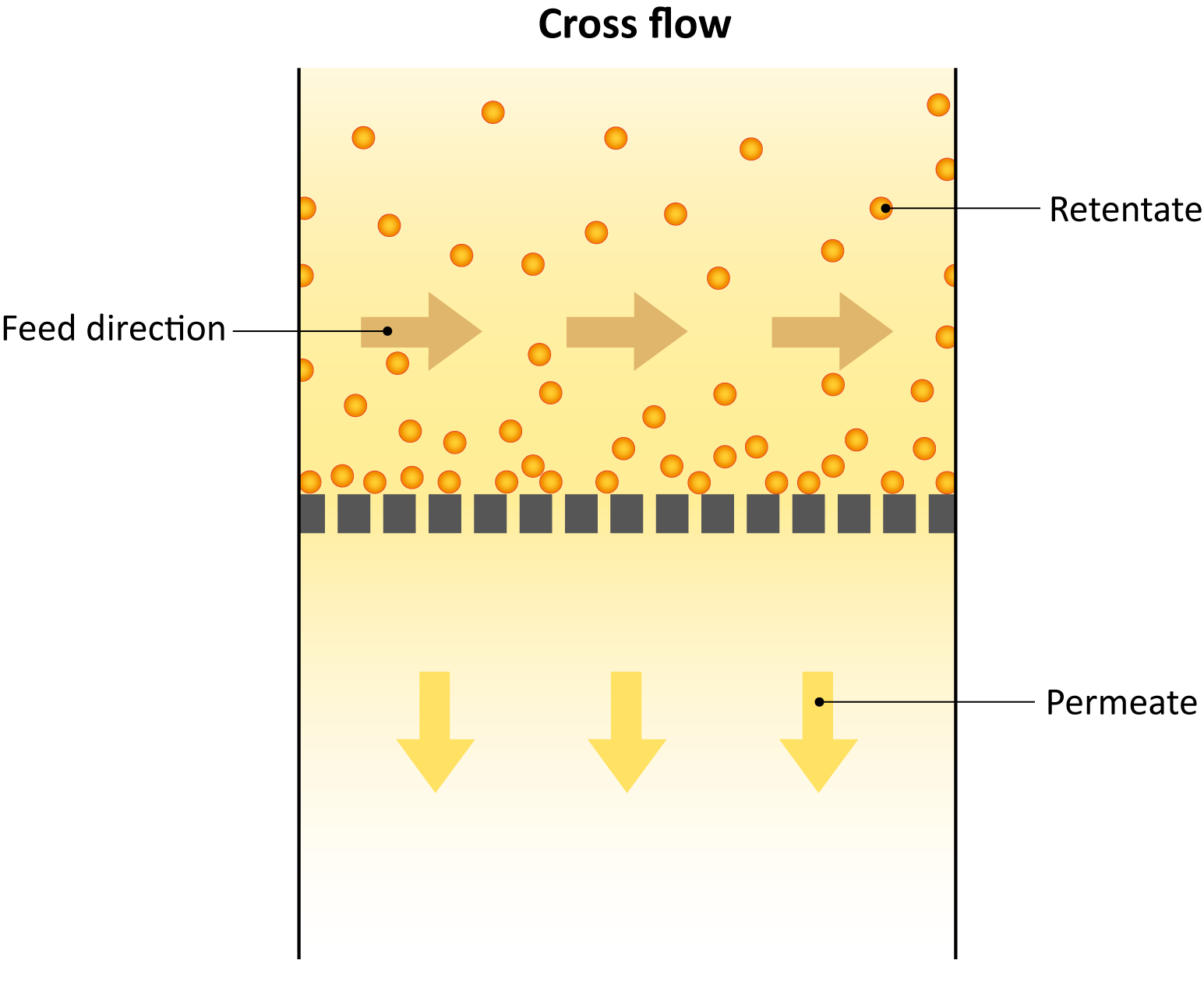
Figure: Principle of cross-flow filtration

  • The importance of filter process control and its impact on quality

  • The process of beer transfer from filter to bright beer tank

Parameter

Importance of control

Minimise fountaining and fobbing during filling of tanks

  • Production of fob during filling of vessels should be avoided to minimise loss of foam positive proteins or collapsed foam which may lead to hazy beer, due to dissolution of proteins from the foam into the beer.

  • It also may lead to loss of CO2. Slow fill speeds at the start of transfer and maintaining consistent CO2 top pressures on vessels will aid this.

Minimise/eliminate oxygen ingress into the transfer line

  • Air must be evacuated from all transfer lines, hoses, filters, ancillary equipment and vessels before the product is introduced, to avoid oxidation and development of staling flavours in the beer.

  • This is best achieved by filling lines with deaerated water and then displacing the water to drain with beer.

  • Another factor is to ensure BBTs are not drawn 100% empty (this risks air being pulled into the line). An appropriately positioned low-level probe can control this and when uncovered, causes the beer transfer from that vessel to cease.

No deterioration in microbiological quality

  • The presence of any bacteria or wold yeast in the vessel is undesirable.

  • Presence of microorganisms will give rise to off-flavours in the beer.

  • Effective CIP protocols should be put in place and frequency of cleans adhered to.

Minimise temperature pick-up

  • Warm beer can cause gushing or fobbing at the filler.

  • BBTs should be well insulated, and the temperature kept < 2 ºC at all times.

Minimise residence/ holding time in BBT

  • It is good practice to hold beer in BBT for as short a time as possible.

  • Extended times can lead to microbiological instability and potentially lead to colloidal instability if any foam created during filling, dissolves back into the beer.

Maximise right-first-time controls

  • Correction of any out of specification parameter results in splitting tanks or topping up. Both of these practices should be avoided as they are time-consuming and may have negative quality implications, for example, increasing the chances of microbiological contamination.

  • The key quality parameters that are deemed critical to successful management of bright beer handling are:

  • Taste – the beer must be true to type
  • Dissolved oxygen – high oxygen levels can cause oxidation

  • Chill haze – high hazes are unacceptable unless the product has not been filtered

  • Alcohol level – alcohol level must comply with consumer legislation requirements

  • Original extract and real extract – extract level must comply with consumer legislation requirements

  • pH – low or high values may indicate acid or caustic contamination

  • Colour – must be reflective of the brand and not be too light or dark

  • CO2 or N2 – must be representative of the brand, under or over carbonation is not acceptable and will also cause issues in packaging

  • The importance of design and role of a bright beer tank

You have completed 0% of the lesson
0%