
Lesson 3 - Speciality Malt SAQ
This lesson provides the opportunity for you to test yourself on the material covered in Lesson 2 (Speciality malt) and determine the level to which you have attained the expected outcomes.
Suggested Response - Q4
4. ** Your malt supplier has accidently sent you 100 kg of dark speciality malt with two identification labels. One label says roasted barley and the other says black malt. The figure below shows a sample from each of the bags containing the dark grain product.
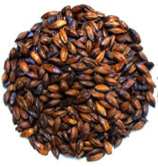
Figure: Sample from the bags you have received
a. What action should you take?
b. How do the differences between how the products are made affect their properties and their effect on the finished beer?
Response:
a. We have laid a bit of a trap in this question! You should never accept delivery of raw materials that you cannot identify definitively or doesn’t come with a reliable batch code. The worst case scenario is that the bags are neither of the speciality malts and are not safe to consume. Plus, should there be a quality or food safety problem with a batch of either product, we won’t really know if it has been used so will need to destroy more beer than would otherwise be the case and could potentially have to recall a large volume of product. Unless you perform a lab mash and measure all the parameters on the malt specification you have no idea if this malt matches your spec and will thus perform as required in the brewery. The malt supplier might compensate you for the beer, but they can’t repair your reputation.
b. To produce roasted barley the barley is heated in a roasting drum for around 2.5 h. Over the first 2 h, the temperature within the drum rises from 80˚C to 230˚C. This brings about very rapid colour formation, which needs to be frequently monitored by inspecting the grain every 2-3 min. The heat applied to the grain in the final stage is reduced to 215˚C. Once the correct colour is achieved, roasting is halted by using water to cool the grain. Water also helps to remove unpleasant burnt flavours, which are volatile and thus removed in the resulting steam. The grains typically appear reddish, shiny, black and swollen, and are almost double their normal size. Consequently, approximately 50% of the grains will be split. Roasted barley colour range is 1200-1500 EBC, with moistures of ≤ 3%. As a result, roasted barley adds a very characteristic sharp, dry, acidic, astringent and burnt flavour to beer. It contributes a small amount of fermentable extract but this is not detectable in the beer taste.
Black malt is produced by gradual heating to 205°C over two hours followed by intense roasting up to 235°C. The fact that it is malted before roasting means that more sugar and amino nitrogen are available to take part in the Maillard reaction and sugars are available for caramelisation. However, at the temperatures used to roast the malt, pyrolysis predominates in flavour formation. The result is a less astringent and acrid grain that imparts smoky, burnt coffee/toast notes to the beer.